At Amerex we are committed to providing the best biotechnology solutions for the food industry. We are therefore pleased to announce that Amerex Research and Development has launched its innovative Biamex FP product, designed to improve food preservation and further enhance the range of natural preservatives in our Biamex range.
This new development is designed to extend the commercial shelf life of food that are close to their best before date, providing advanced protection against Listeria and preventing heterofermentation. In addition, at a higher dosage, Biamex FP is also effective against enterobacteria and yeasts, offering a global solution to many food safety challenges.
Biamex FP has undergone extensive testing in our pilot plant, as well as demanding challenge tests at customers where Listeria and Salmonella were inoculated, with excellent results in terms of effectiveness.
In addition, Amerex has introduced more than five new preservatives to the market this year. Our wide range of solutions is designed to meet the specific needs of each food producer. Our team of biotech consultants is available to evaluate our customers’ manufacturing processes and offer the best recommendation, whether it is Biamex FP or other products in our product portfolio, always looking for a customised solution.
For more information about our new references or how to improve production processes, we have an expert team available to advise you, do not hesitate to contact us!
Patricia Rodrigo is Head of Marketing & Product at Amerex. With a background in Biotechnology and a Master’s in Biotechnology Business Management, her work focuses on research and communication of natural alternatives to additives, conservation strategies, and pathogen control in various food groups for the industry.
https://amerexingredientes.com/wp-content/uploads/2024/10/Productos-4-scaled.jpg19272560Patricia Rodrigohttps://amerexingredientes.com/wp-content/uploads/2017/11/Logo-web-amerex-madrid-2.pngPatricia Rodrigo2024-10-08 08:40:372025-04-28 10:07:06Amerex launches BIAMEX FP and more than five new preservatives in 2024
The production of sausages requires specific processes to ensure the safety and quality of the final product. One of the most important stages is the treatment of the casings used for stuffing.
Traditionally, chemical additives such as sorbate have been used to protect these casings from microbiological issues, especially fungal growth. However, the food industry is increasingly seeking natural solutions.
At Amerex Ingredients, we offer Biamex YM, a natural alternative to sorbate for antifungal treatment in sausage casings. Below, we answer some of the most common questions about the use of casings and additives in this process.
What types of casings are used in sausage production?
In the sausage industry, two main types of casings are used:
Natural casings: These are obtained from the intestines of animals like pigs, sheep, or cattle. Natural casings have the advantage of allowing the sausage to breathe, which contributes to the development of traditional flavors and textures. Additionally, they are typically more elastic, making the stuffing process easier.
Artificial casings: These are made from materials such as collagen, cellulose, or plastics. They are mainly used in industrial sausage production due to their uniformity and ease of handling. They are a more economical option and are available in different thicknesses and lengths, adapting to various types of meat products.
What chemical additives are used for antifugal bath?
Casings, whether natural or artificial, require specific treatment (an antifugal bath) to prevent the proliferation of microorganisms that could affect the quality and safety of the sausage.
Traditionally the additives used for this purpose are:
Potassium sorbate (E-202): A preservative widely used in the food industry for its effectiveness in inhibiting the growth of mold and yeast. It is used in casing baths to prevent microbiological deterioration during storage and handling.
Sodium benzoate (E-211): Another preservative used to control the growth of bacteria and mold in food products. Its use in casings is common due to its antibacterial effect.
However, both sorbate and benzoate, are chemical additives with associated “E-numbers,” which may raise concerns among consumers seeking more natural and healthier products, as well as manufacturers striving for clean label production with minimal chemical additives.
Natural alternative to sorbate for antifungal baths of sausage casings
At Amerex Ingredients, we offer a natural alternative to sorbate specifically designed for the antifungal bath of sausage casings. Biamex YM is a natural preservative that offers the following benefits:
Antifungal efficacy: Biamex YM acts effectively against molds and yeasts that can affect the quality of both natural and artificial casings.
Food safety: Being a natural product, Biamex YM is safe for human consumption and complies with food safety regulations, making it an excellent choice for manufacturers looking to reduce the use of synthetic additives in their products.
Complete sorbate replacement: Biamex YM can effectively replace sorbate, eliminating the need to use this chemical preservative without compromising the quality or safety of the final product.
The use of natural alternatives to sorbate is increasingly sought after by manufacturers in the meat industry.
What are the advantages of using a natural antifugal like Biamex YM in sausage casings?
More and more consumers prefer natural, additive-free food products. Therefore, using Biamex YM in the treatment of sausage casings offers several advantages, as it meets the trend for “clean label” products. This trend is something today’s consumers are looking for, as they value products with cleaner labels and fewer artificial additives. Biamex YM allows sausage manufacturers to offer more natural products, which can be a key differentiator in a competitive market.
Furthermore, it reduces the risk of allergic reactions, as some consumers are sensitive to chemical preservatives like sorbate. By using a natural preservative, the risk of causing adverse reactions in susceptible individuals is reduced.
Finally, sustainability and environmental respect. As a natural product, Biamex YM is a more environmentally friendly option, helping manufacturers reduce their ecological footprint.
How is Biamex YM applied in sausage casing treatment?
Biamex YM is applied similarly to other preservatives used in casing treatment. It can be dissolved in the casing bath to ensure uniform distribution of the product and provide effective protection against fungal growth. This natural preservative is compatible with the treatment of both natural and artificial casings, ensuring the protection of the sausage from the initial production stage.
The sausage industry is evolving to meet the demands of consumers seeking healthier and more natural products. In this context, the sorbate alternative offered by Amerex Ingredients, Biamex YM, presents itself as an effective and safe solution for protecting sausage casings from fungi, without resorting to traditional chemical preservatives. This way, it is possible to guarantee the quality and safety of the final product while aligning with trends toward more natural and sustainable products.
Patricia Rodrigo is Head of Marketing & Product at Amerex. With a background in Biotechnology and a Master’s in Biotechnology Business Management, her work focuses on research and communication of natural alternatives to additives, conservation strategies, and pathogen control in various food groups for the industry.
https://amerexingredientes.com/wp-content/uploads/2024/09/Tripas-embutidos.png400400Patricia Rodrigohttps://amerexingredientes.com/wp-content/uploads/2017/11/Logo-web-amerex-madrid-2.pngPatricia Rodrigo2024-09-18 12:07:072025-04-28 10:07:06ANTIFUGAL FOR CASING BATH FOR CURED SAUSAGES
Plant based food offer an alternative to traditional meat or fish products for those seeking a vegan option, and it’s becoming more common to see these foods in restaurants. However, it is important to be aware of the microbiological issues and additives that may be present in this food.
Choosing natural preservatives can not only help maintain food safety but also meet consumer demand for more natural and less processed products, as these ultra-processed foods contain some chemical additives that are controversial due to their effects on human health.
At Amerex Ingredients, we offer innovative and natural solutions for the food industry, helping to create safe products and clean up chemical additive labels. Keep reading to learn more about our new natural preservative for plant-based analogs such as vegan burgers: Safemix Antos.
What ingredients do plant based food include?
Vegan burgers, is an example of plant based food that have gained popularity in recent years, not only among the vegan community but also among those looking to reduce their meat consumption for health, sustainability, or ethical reasons. But what ingredients are used to make a plant-based food? Unlike traditional burgers made from beef, vegan burgers are made with a variety of plant-based ingredients, that are commoly used in other plant based food:
Plant proteins: The most common are tofu, tempeh, lentils, chickpeas, and pea or soy protein. These provide the necessary texture and protein content.
Vegetables: Carrots, mushrooms, spinach, and other vegetables are included not only for their nutritional value but also for flavor and texture.
Healthy fats: Vegetable oils such as coconut oil or canola oil are used to improve texture and flavor.
Seasonings and spices: To mimic the taste of meat, spices like paprika, black pepper, garlic, and onion powder are used, along with sauces like soy sauce.
Binding agents: Ingredients like corn starch, oat flour, or wheat gluten are used to give the mixture cohesion.
What microbiological problems do plant based food have?
Although plant based food eliminate the risks of pathogens commonly found in meat or fish, they are not free from other microbiological issues. Some of the most common problems include:
Mold and yeast contamination: Since plant-based ingredients tend to have a high water content, they can be a breeding ground for molds and yeasts if not stored properly.
Bacterial growth: Especially in fresh meat analogs that haven’t undergone pasteurization, the growth of coliforms and mesophiles is a common problem. Additionally, the use of various spices can be another source of contamination.
Therefore, just like with meat or fish products, the use of additives and preservatives is necessary to avoid microbiological contamination and the loss of good organoleptic qualities.
What controversial additives are used in plant based food?
Some commercial plant based food use additives to improve flavor, texture, and shelf life that are currently quite controversial.
Among the most notable are:
Monosodium glutamate (MSG): Used to enhance flavor, it can cause adverse reactions in some sensitive individuals.
Carrageenan: A gelling agent that has been linked to digestive inflammation in some studies.
Nitrites and nitrates: Used in some products to preserve and add color, they have been associated with health problems at high levels of consumption.
Textured soy protein (TSP): Although not inherently controversial, soy is a common allergen and is often grown using intensive agricultural methods that involve pesticides.
As a result, while consumers generally perceive these types of foods as healthier than traditional meat burgers, in reality, they often contain a greater number of chemical additives on their labels.
What natural preservative options are available for plant based food?
For those looking to avoid artificial preservatives, there are several natural preservative options that can extend the shelf life without compromising quality. In most cases, they include plant extracts:
Rosemary extract: Acts as a natural antioxidant, helping to prevent rancidity and extend the product’s freshness.
Vitamin E (tocopherol): Another natural antioxidant commonly used to prevent fat oxidation in foods.
Citrus extract: Used for its antimicrobial and antioxidant properties.
However, these extracts are often not enough to prevent contamination by enterobacteria, Clostridium botulinum, or molds and yeasts that can affect plant based food. Therefore, Amerex provides a wide range of natural preservatives suitable for vegans and highly effective.
What natural preservatives for plant based food does Amerex offer?Safemix Antos
Amerex offers a wide range of natural preservatives that not only preserve the freshness of burgers or other meat analogs but also prevent contamination by pathogens like Salmonella or enterobacteria.
Recently, the R&D department at Amerex launched a new product, SAFEMIX ANTOS. This product offers a broad action, covering a wide variety of microorganisms such as heterofermentative lactobacilli, Listeria, Salmonella, Clostridium, or molds and yeasts, among others. It is the most complete mixture developed by Amerex, suitable for any type of matrix, and labeled as an aroma.
Before its launch, Amerex conducted a study on a vegan matrix with a shelf life of only 7 days, achieving a doubling of its durability. Discover how Amerex’s natural preservatives can improve the quality of your products. Contact us today for more information!
Amerex’s Technical Director, Alejandro Rodríguez, holds a degree in Biology and a master’s degree in biotechnology applied to food preservation. With a solid track record of over 10 years developing natural solutions, he leads projects focused on protective fermentation and innovative technologies to ensure food safety and quality.
https://amerexingredientes.com/wp-content/uploads/2024/09/Fotos-portada-Blog.png400400Alejandro Rodríguezhttps://amerexingredientes.com/wp-content/uploads/2017/11/Logo-web-amerex-madrid-2.pngAlejandro Rodríguez2024-09-02 12:44:062025-05-19 10:41:53NATURAL PLANT BASED FOOD PRESERVATIVES
La búsqueda de alternativas a los nitritos para alimentos como el jamón cocido es uno de los objetivos de la industria de los ingredientes actualmente. El jamón cocido es un alimento muy popular en muchas partes del mundo, conocido por su sabor y versatilidad en una variedad de platos. Sin embargo, muchas personas desconocen los detalles sobre su elaboración, la regulación que lo afecta, y la controversia con algunos de los aditivos que se utilizan para su conservación, entre ellos los nitritos.
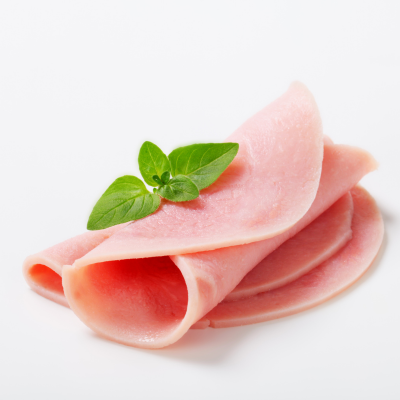
El jamón cocido es un producto cárnico elaborado a partir de la carne de cerdo que ha sido tratada mediante un proceso de cocción. Este tipo de jamón se caracteriza por su textura tierna y sabor delicado, lo que lo convierte en un ingrediente ideal para ensaladas, sándwiches y platos principales.
Durante su elaboración, la carne se somete a un proceso de curado, cocción y a menudo, se le añaden diversos aditivos para mejorar su sabor, textura y vida útil. Es importante mencionar que el jamón cocido es diferente del jamón curado, ya que este último pasa por un proceso de secado y envejecimiento, sin cocción.
¿Qué regulación afecta al jamón cocido?
La producción y comercialización del jamón cocido están reguladas por normativas específicas que garantizan la calidad y seguridad del producto. En la Unión Europea, por ejemplo, el Reglamento (UE) n.º 1169/2011 sobre la información alimentaria facilitada al consumidor y el Reglamento (CE) n.º 853/2004 sobre normas específicas de higiene para los alimentos de origen animal, establecen criterios para la producción de productos cárnicos.
En cuanto a los aditivos, el uso de conservantes como los nitritos está regulado por el Reglamento (UE) n.º 1333/2008, que establece los niveles máximos permitidos y las condiciones de uso. Estas regulaciones buscan proteger la salud del consumidor y asegurar que el jamón cocido que llega a nuestras mesas cumpla con altos estándares de calidad.
¿Qué aditivos se pueden añadir al jamón cocido?
En la producción del jamón cocido se utilizan varios aditivos para mejorar sus características organolépticas y aumentar su vida útil. Algunos de los aditivos más comunes incluyen:
Nitritos y nitratos: Se utilizan como conservantes para prevenir el crecimiento de bacterias peligrosas, como Clostridium botulinum, y para mantener el color rosado característico del jamón.
Fosfatos: Ayudan a retener la humedad, mejorando la jugosidad y textura del producto.
Antioxidantes: Protegen el jamón de la oxidación, manteniendo su sabor y apariencia fresca.
Estabilizantes y emulgentes: Mejoran la consistencia y textura del producto final.
¿Qué función tecnológica tienen los nitritos en el jamón cocido?
Los nitritos desempeñan un papel crucial en la producción del jamón cocido por varias razones tecnológicas:
Conservación: Inhiben el crecimiento de bacterias y microorganismos, especialmente Clostridium botulinum, que puede causar intoxicaciones alimentarias graves.
Coloración: Los nitritos contribuyen a desarrollar y mantener el color rosado del jamón cocido, haciéndolo más atractivo para los consumidores.
Sabor: Aportan un sabor característico al producto que muchos consumidores esperan.
Textura: Ayudan a mantener una textura firme y jugosa en el jamón cocido.
Todo esto hace que les resulte difícil a los fabricantes, eliminar el uso de nitritos y buscar alternativas naturales a ellos. En Amerex contamos con alternativas a nitritos para jamón cocido que igualan la acción de estos aditivos.
¿Por qué evitar los nitritos en jamón cocido?
A pesar de sus beneficios tecnológicos, los nitritos han sido objeto de debate debido a sus posibles efectos negativos sobre la salud. Cuando los nitritos se combinan con aminas en el estómago, pueden formar compuestos llamados nitrosaminas, que han sido asociados con un mayor riesgo de cáncer en algunos estudios. Por esta razón, existe una creciente demanda por alternativas más naturales que reduzcan o eliminen la necesidad de nitritos en la producción de jamón cocido.
Además, los consumidores actuales están cada vez más preocupados por el contenido de aditivos artificiales en sus alimentos, buscando productos más naturales y menos procesados.
Esto ha impulsado a la industria alimentaria a buscar soluciones innovadoras que mantengan la seguridad y calidad del jamón cocido sin recurrir a los nitritos.
¿Qué alternativas a nitritos ofrece Amerex?
En Amerex Ingredientes, estamos comprometidos con la innovación y la sostenibilidad, ofreciendo alternativas a nitritos que son seguras y efectivas. En concreto, nuestra especialidad es el uso de conservantes a base de Fermentos: Utilizamos cultivos bacterianos específicos que mejoran la seguridad y calidad del jamón cocido, reduciendo la necesidad de nitritos.
Contamos además con otros antioxidantes naturales que complementan la acción de los nitritos; Ingredientes como los extractos naturales pueden ayudar a mantener la frescura y apariencia del jamón cocido sin necesidad de conservantes artificiales.
En Amerex, entendemos la importancia de ofrecer productos que no solo cumplan con los estándares de seguridad alimentaria, sino que también respondan a las expectativas de los consumidores. Nuestras alternativas naturales no solo conservan la calidad del jamón cocido, sino que también promueven una alimentación más saludable y consciente.
Para más información sobre nuestras alternativas a nitritos y otros ingredientes innovadores, no dudes en contactarnos:
Patricia Rodrigo is Head of Marketing & Product at Amerex. With a background in Biotechnology and a Master’s in Biotechnology Business Management, her work focuses on research and communication of natural alternatives to additives, conservation strategies, and pathogen control in various food groups for the industry.
https://amerexingredientes.com/wp-content/uploads/2024/06/Diseno-sin-titulo.png400400Patricia Rodrigohttps://amerexingredientes.com/wp-content/uploads/2017/11/Logo-web-amerex-madrid-2.pngPatricia Rodrigo2024-07-30 11:25:382025-04-28 10:13:09TODO LO QUE NECESITAS SABER SOBRE EL JAMÓN COCIDO Y LAS ALTERNATIVAS A LOS NITRITOS
Lactic acid and lactates are used as preservatives, mainly against yeasts, molds, and other food-degrading bacteria, but natural alternatives exist to achieve clean label foods.
Below, we will detail the functionality of these chemical additives, which are also used to increase the stability of antioxidants and to prevent water loss in various products.
What is the function of Lactic Acid in food?
Lactic acid (E-270) is an organic compound that is naturally produced during the fermentation of carbohydrates by lactic acid bacteria. In the food industry, lactic acid is used as a preservative and acidulant.
It’s use is recognized and regulated by Regulation (EC) No 1331/2008 of the European Parliament and Council of December 16, 2008, establishing a common authorization procedure for food additives, enzymes, and flavorings, and is identified on food labels with the number E-270. Lactic acid can be obtained naturally or synthetically by fermenting various types of sugar with lactic acid bacteria. From lactic acid, other commonly used food preservatives in the industry, particularly in cooked meat products, can be derived.
These food preservatives are lactates and can be identified on food labels with the following numbers:
Sodium Lactate (E-325)
Potassium Lactate (E-326)
Calcium Lactate (E-327)
Ammonium Lactate (E-328)
Magnesium Lactate (E-329)
Ferrous Lactate (E-585)
Choline Lactate (E-1001vi)
Which food contain lactate?
Lactate is a salt derived from lactic acid that is present as a food additive in many foods. Some foods containing lactates include:
Cooked meat products, such as cooked ham and sausages.
Bakery and pastry products.
Fermented beverages, such as beer and wine.
Dairy products, such as cheeses and yogurts.
As mentioned earlier, there are different types of lactate salts, for example, calcium lactate used in packaged products like desserts and ice creams, bakery products, or sodium lactate widely used in cooked meat products.
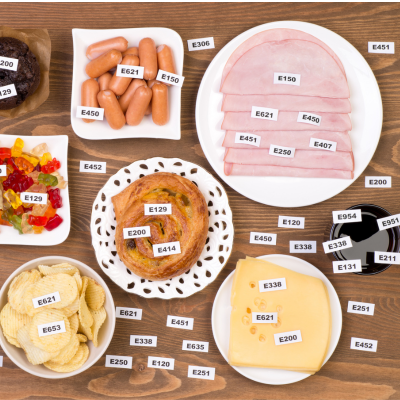
By reading the label of any cooked ham, you can find the following ingredients and additives:
Cooked ham is an example of a food that consumers consider healthy yet has a fairly extensive list of chemical additives. At Amerex, for example, we work with natural preservatives to replace lactate in cooked products, as well as to replace the rest of the chemical additives.
What is the mechanism of action of sodium lactate?
The mechanism of action of sodium lactate is based on two principles:
pH Reduction: By reducing the product’s pH, it creates a hostile environment for the growth of pathogenic bacteria and undesirable microorganisms.
Osmotic Interference: Sodium lactate affects the osmotic pressure within bacterial cells, making their survival and multiplication difficult.
In summary, sodium lactate is a salt that acts as an undissociated acid that passes through the microbial membrane to acidify the cellular interior. As a result, intracellular pH acidifies, and cellular metabolism can rapidly decrease, leading to cell death.
What role does Lactate play in cooked meat like cooked ham?
In cooked meat products, such as cooked ham, lactate plays a crucial role. It is added to inhibit the growth of pathogenic bacteria and prolong the product’s shelf life by regulating acidity. Additionally, lactates help maintain the texture and juiciness of the meat, improving water retention and the firmness of the final product.
In the food industry, lactate is a widely used additive, especially in meat products that are susceptible to deterioration by lipid oxidation and the production of rancid off-flavors, particularly in sausages due to their high-fat content. Lactate helps delay this bacterial decomposition, increasing the shelf life and sensory quality of the food.
However, there are natural substitutes for lactate and lactic acid whose action is equivalent to these chemical additives and can sometimes even improve it. If you want to know what lactate substitutes for cooked products we have at Amerex, keep reading!
What natural substitutes for Lactates and Lactic Acid do Amerex offer?
At Amerex, we are a biotechnology company with over 40 years of experience in natural preservatives, and we are committed to offering healthy and safe solutions for food preservation. We aim to provide our customers with natural preservatives that not only ensure food safety and quality but also respond to consumer demands for healthier products with cleaner labels.
From the Biamex range of fermentates to the Safemix range of natural flavors, we have multiple products that can be used as substitutes for lactate or lactic acid, for example, or other chemical additives like nitrites.
If you want more information about our natural preservation solutions, don’t hesitate to contact us!
Patricia Rodrigo is Head of Marketing & Product at Amerex. With a background in Biotechnology and a Master’s in Biotechnology Business Management, her work focuses on research and communication of natural alternatives to additives, conservation strategies, and pathogen control in various food groups for the industry.
https://amerexingredientes.com/wp-content/uploads/2024/06/Diseno-sin-titulo.png400400Patricia Rodrigohttps://amerexingredientes.com/wp-content/uploads/2017/11/Logo-web-amerex-madrid-2.pngPatricia Rodrigo2024-06-14 09:17:292025-04-28 10:11:21LACTIC ACID (E-270) AND LACTATES SUBSTITUTE IN COOKED MEAT
In food industry, Listeria is a worldwide known bacterium. In this blog we will talk about the risk of contamination in a sector as attractive as the bakery industry due to the risk of contamination of pastry cream and sour cream .
In the world of confectionery there is a great variety of cakes, pies and other sweets, being a sector that always seeks excellence in taste and quality. However, food safety is a constant concern, especially when it comes to perishable products such as creams and cream. One of the main microbiological risks faced by confectionery is contamination by the well known Listeria monocytogenes a bacterium that can cause serious health problems.
Which pathogenic microorganism is Listeria monocytogenes?
Listeria monocytogenes is a gram-positive pathogenic bacterium that can be found in a wide variety of foods. Its presence is well known in the meat sector, with very well known cases at national level, but it can also be present in dairy products such as different cheeses, milk or also in cream and creams used in pastry fillings.
This bacterium is especially dangerous because it is very resistant to unfavorable environments. It can survive and multiply in conditions of acidity, salinity (up to 10%), oxygen scarcity (even under vacuum) and refrigeration temperatures (as low as 2º-4º C), which means that even foods stored in cold conditions are not completely safe. Other factors such as pH (between 4.4-9.4) and water activity (>0.92) also play a role.
Why is Listeria dangerous?
Listeria infection, known as listeriosis, can cause severe symptoms such as fever, muscle aches and gastrointestinal problems. In people with weakened immune systems, pregnant women, newborns and the elderly, listeriosis can be fatal.
In addition, as discussed above, the ability of Listeria to grow in cold environments makes it a challenge to keep it under control in refrigerated dairy products, such as any type of cake, pie, or pastry food with a cream or custard filling. In addition, although it does not continue to proliferate during freezing, its presence is maintained, so there is still a risk of contamination in frozen cakes, especially when they begin to thaw and the bacteria, if present, continue to multiply.
What factors favor contamination in sour cream and pastry cream in bakery?
As mentioned above, creams and cream, which are dairy-based products, are especially vulnerable to microbiological contamination due to several factors:
Water and Nutrient Content: These products are rich in water and nutrients, making them an ideal medium for the growth of bacteria and in particular listeria.
Handling and Processing: Handling during processing and storage can facilitate the introduction of contaminants.
Storage Temperature: Although stored refrigerated, Listeria can survive and multiply at low temperatures.
Pastry preservatives against listeria in cream in bakery
Currently, there are several preservatives against Listeria and other microorganisms. At Amerex we specialize in natural preservatives based on biotechnology that offer an innovative, safe and clean label solution.
Our preservatives can be used in different food matrices, such as sour cream and pastry cream in bakery, but also in other products susceptible to listeria contamination such as meat matrices, fresh pizza doughs, in fish such as salmon, etc.
Thus, our preservatives offer the following advantages:
Safety: They are safe for consumption and do not present risks associated with synthetic chemicals.
Efficacy: They are effective against a wide range of microorganisms, including Listeria due to their use of protective fermentation.
Sustainability: They are environmentally sustainable and are aligned with trends towards more natural and less processed products.
Shelf Life Extension: Extends the shelf life of products without the addition of unwanted chemical additives.
Maintain Quality: They do not negatively affect the organoleptic properties of the product: taste, texture or appearance.
Safety in bakery as in other food sectors is essential and combating microbiological contaminations in products such as sour and pastry creams are a challenge that cannot be ignored.
Our company is dedicated to providing natural and effective solutions to protect your products and ensure that they reach consumers in the best possible condition. At Amerex we have different specialized preservatives with very good results against listeria in frozen and refrigerated cream and custard cakes.
If you would like more information about our products, please do not hesitate to contact us!
Patricia Rodrigo is Head of Marketing & Product at Amerex. With a background in Biotechnology and a Master’s in Biotechnology Business Management, her work focuses on research and communication of natural alternatives to additives, conservation strategies, and pathogen control in various food groups for the industry.
https://amerexingredientes.com/wp-content/uploads/2024/05/Miniatura-listeria-en-reposteria.png400400Patricia Rodrigohttps://amerexingredientes.com/wp-content/uploads/2017/11/Logo-web-amerex-madrid-2.pngPatricia Rodrigo2024-05-21 09:01:262025-04-28 10:11:21MICROBIOLOGICAL PROBLEMS IN BAKERY: LISTERIA IN SOUR AND PASTRY CREAM
In the food industry there are several sectors in which the chemical additives nitrates and nitrites are commonly used. In the meat or fish sector, for example, nitrates and nitrites are considered necessary to carry out the nitrification process that gives a characteristic colour to the final product as well as protection against anaerobic pathogens and sporogens.
Below we explain why nitrites are used in feed and introduce you to Amerex’s specialist product for the natural replacement of nitrites: Biamex NC.
What is the nitrification process of nitrites?
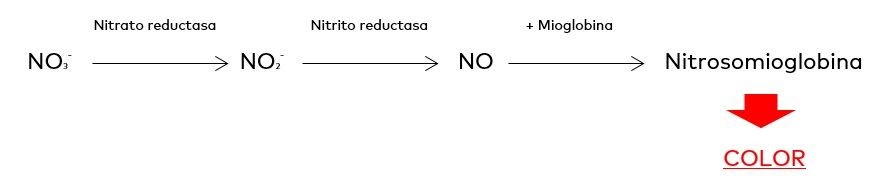
In the nitrification process, nitrate is reduced to nitrite, from which nitric oxide is produced. Nitric oxide combines with muscle myoglobin to form nitrosomyoglobin, which is responsible for the typical colour of cured meats, e.g. in the meat industry. In the case of cooked meats, the temperature causes this nitrosomioglobin to be transformed into nitrosylhaemochrome, which is responsible for the characteristic pink colour.
Why have nitrites been considered necessary in the food industry?
Nitrates and nitrites have been considered necessary in the food sector, in addition to the generation of colour that they provide to food, making it more attractive to consumers, because they guarantee certain safety in products by preventing the development of pathogenic bacteria, specifically Clostridium botulinum, which causes the well-known botulism disease.
Like any other additive, nitrites are regulated by Annex II of Regulation (EC) No 1333/2008 of the European Parliament and of the Council and the Annex to Commission Regulation (EU) No 231/2012. It regulates the maximum dose that can be incorporated in each foodstuff under a specific legislation.
Why is nitrite substitution being pursued in different food sectors?
There is increasing talk of replacing nitrites with other types of natural preservatives and of regulating more strictly the permitted dosage in the various foods in which they are used.
The problem is that, although nitrates occur naturally, for example in various vegetables (e.g. lettuce, celery) or even in water, some of them are converted into nitrites during the digestion process, reacting with amino acids in the stomach and giving rise to nitrosamines, which are carcinogenic substances. In the case of foodstuffs from the above-mentioned sectors they are found directly in the form of nitrites. For this reason it is important to find substitutes that avoid the presence of these additives in products that we normally consume.
What nitrite substitutes are available on the market and what does Amerex offer?
There are many natural substitutes for nitrites on the market. As mentioned above, they are found naturally in vegetables such as lettuce and celery, and some companies use natural extracts of this type. We must not forget also the risk of sporogen poisoning that can be caused by poor nitrite substitution.
In our case, we have a transparent natural technology for nitrite substitution: the use of starters.
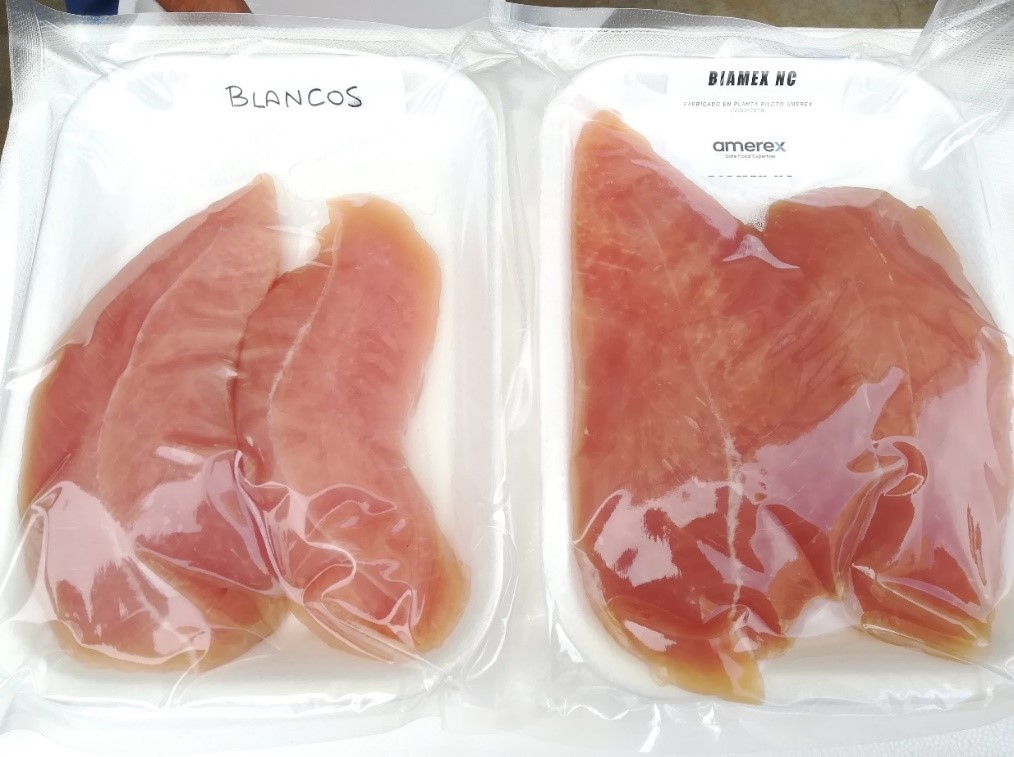
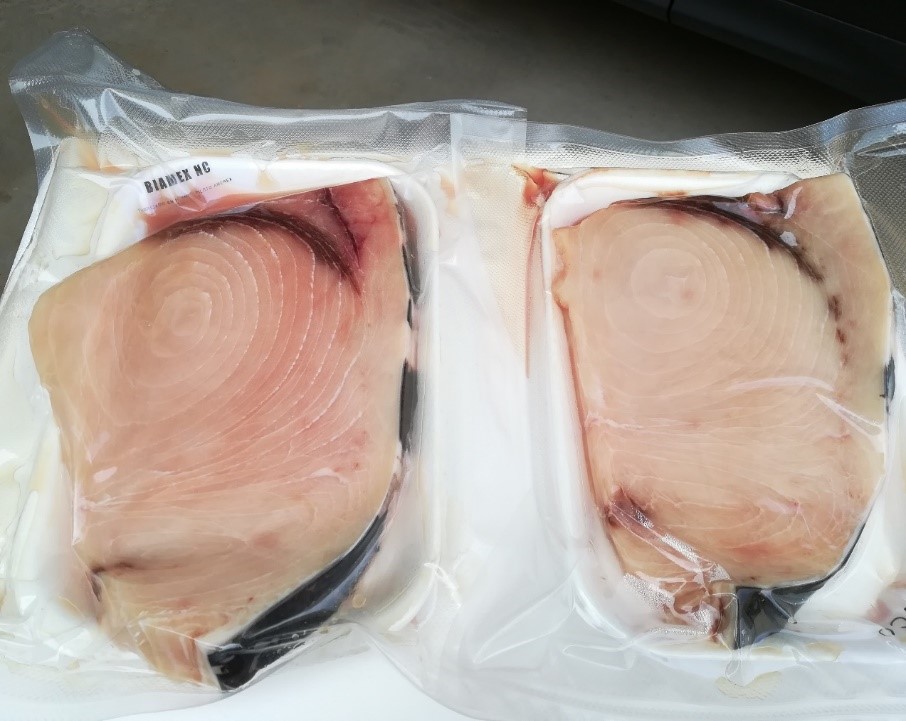
Our product Biamex NC, has a very innovative technology for the generation of the typical colour that nitrifiers would provide. In this way, thanks to a fixation reaction of the meat/fish protein itself, you can achieve an optimum replacement of nitrates, nitrites and/or nitro salts. In addition, this product incorporates another of our strains of ferments specialised in the action against sporogens such as clostridium botulinum.
In which products can Amerex nitrite substitute Biamex NC be used?
Biamex NC, as a nitrite substitute, can be applied in any food where a substitution of this chemical additive is necessary.
It is very common to substitute nitrites in meat products as we have mentioned above. Here is an example of injected turkey:
Another food where the use of nitrites is also common is in various fish. Biamex NC also has experience with this type of food. Here is a test on injected swordfish:
In conclusion, we can state that the use of starters is a very good alternative to nitrites, in particular the use of the Amerex Biamex NC product, as it significantly reduces the appearance of this colour in meat and fish products. In addition, this product includes Amerex’s protective technology to maintain product safety equivalent to the protection provided by nitrites.
Would you like more information about this starter culture? You can contact us for a personalised recomendation:
Amerex’s Technical Director, Alejandro Rodríguez, holds a degree in Biology and a master’s degree in biotechnology applied to food preservation. With a solid track record of over 10 years developing natural solutions, he leads projects focused on protective fermentation and innovative technologies to ensure food safety and quality.
https://amerexingredientes.com/wp-content/uploads/2024/04/jamon-york.jpg6801024Alejandro Rodríguezhttps://amerexingredientes.com/wp-content/uploads/2017/11/Logo-web-amerex-madrid-2.pngAlejandro Rodríguez2024-04-23 07:18:502025-12-23 10:56:34WITHDRAWAL OR REPLACEMENT OF NITRITES WITH NATURAL PRESERVATIVES
The search for natural alternatives to chemical additives is one of the main objectives of the food industry. In today’s age, where health and wellbeing are a priority, the food industry is undergoing a revolution in terms of the ingredients and processes they use in food. More and more consumers are demanding less processed and more natural foods, free of artificial additives.
Ultra-processed foods are known for the large number of chemical additives on their labels. These additives are used to improve organoleptic or safety aspects of the food, but are there natural options to replace them? In today’s blog we bring you a guide to the best natural alternatives to additives in your ultra-processed foods, so you can offer a healthier and microbiologically safer food!
What chemical additives are used in ultra-processed foods and why do consumers want to avoid them?
Chemical additives are substances added to foodstuffs for the purpose of improving their taste, texture, colour or durability. They are regulated by Regulation (EC) No 1333/2008 of the European Parliament and of the Council of 16 December 2008, which lists, under the associated E number, all additives permitted in the European Union and their restrictions on use.
The current concern about these additives is due to studies that have suggested that excessive consumption of additives in ultra-processed foods (such as sausages, ready meals, pastries, etc.) could be linked to various health risks: such as allergies, metabolic disorders and adverse effects on gastrointestinal health.
The lack of transparency in product labelling often also makes it difficult for consumers to make informed food choices. This is why consumers are increasingly looking for natural alternatives that are free of artificial additives.
What natural alternatives to chemical additives are there on the market?
There is a wide variety of natural alternatives to chemical additives in the ingredients market. Ultra-processed foods often need additives to help maintain colour, give a specific flavour or preserve the food for more days than a fresh product, however, natural ingredients can be used to provide the same benefits as artificial additives.
The best known additive substitutes are herbal and spice extracts, fruit or vegetable juices, and other natural extracts that can act as preservatives, colourings and flavour enhancers in a safe and healthy way. They are a good natural and environmentally friendly option. However, there are also other natural ingredients that are more effective as preservatives, such as ferments or lactic acid bacteria.
What are starters as an alternative to chemical additives?
It is traditionally known that the way in which starters perform this preservative function is through the maturation of the product. This usually includes an organoleptic change in the food due to acidification, which lowers the pH and modifies the organoleptic characteristics of the matrix. They not only improve the preservation of the food, but also enhance its taste and nutritional value. Traditionally, these starters have been used in the maturation of sausages and cheeses and are well known to manufacturers.
Amerex stands out in this case as a supplier of natural preservatives based on ferments, offering innovative and healthy solutions for the food industry as an alternative to chemical additives.
What are the benefits of opting for natural alternatives to ultra-processed foods?
By choosing foods that are free of artificial additives and rich in natural ingredients, you gain a multitude of benefits. Firstly, you are promoting a healthier and more nutritious diet, and by avoiding synthetic additives, you reduce exposure to harmful chemicals and promote a more natural and sustainable lifestyle.
On the other hand, the use of these natural alternatives in ultra-processed foods, such as ferments, allows for the reduction of food processing resulting in a more “homemade” product. Together with the elimination of chemical additives, the consumer will get a more positive image of that food.
Where to find a supplier of Natural Alternatives to additives in ultra-processed foods?
As a supplier of natural alternatives to food additives, Amerex has more than 40 years’ experience in providing innovative and sustainable solutions for the food industry.
Our natural ferment-based preservatives are an excellent alternative to artificial additives, guaranteeing the quality and safety of your food products without compromising taste or freshness. We have different product ranges, such as the Biamex range of ferments or Safemix natural flavourings, which include preservatives for specific problems, such as protection against Listeria or Salmonella, or for the removal of additives such as nitrite or sorbate.
In short, by choosing natural alternatives free of artificial additives, you are taking a step towards a healthier and more conscious diet. With options such as fermented foods as an alternative to additives and the commitment of companies like Amerex, it is easier than ever to enjoy delicious and nutritious food by offering the best choice to the consumer.
If you would like to know more about these natural options, please contact us for more information:
Patricia Rodrigo is Head of Marketing & Product at Amerex. With a background in Biotechnology and a Master’s in Biotechnology Business Management, her work focuses on research and communication of natural alternatives to additives, conservation strategies, and pathogen control in various food groups for the industry.
https://amerexingredientes.com/wp-content/uploads/2024/03/Miniatura-Alternativa-Aditivos.png400400Patricia Rodrigohttps://amerexingredientes.com/wp-content/uploads/2017/11/Logo-web-amerex-madrid-2.pngPatricia Rodrigo2024-03-21 11:27:302025-04-28 10:11:22DISCOVER THE BEST NATURAL ALTERNATIVES TO CHEMICAL ADDITIVES IN ULTRA-PROCESSED FOODS
In January, the Council of Ministers approved a draft Law on the Prevention of Food Losses and Waste. The law makes it compulsory for all actors in the food chain to have a loss and waste prevention plan, prioritising human consumption through food donation or redistribution.
The aim is to achieve a 50% reduction in food waste per capita at retail and consumer level, and a 20% reduction in food losses along the production and supply chains by 2030. This has triggered a very deep movement and awareness among retailers and manufacturers on how to avoid and manage their surplus, which corresponds to 1-2% of their annual turnover.
What can food and ingredient manufacturers do to reduce waste and encourage better use? The importance of food preservation and safety is particularly relevant here, with natural food preservatives being the future of the world’s food supply. Food with a longer shelf life and which is microbiologically safe will help to avoid food waste.
What are natural food preservatives?
Natural food preservatives are substances derived from natural sources, such as plants, herbs, spices or microorganisms, which are used to prolong the shelf life of food.
These preservatives are a more sustainable and healthier alternative to synthetic additives, as they do not contain artificial chemicals or ingredients that are harmful to health. Regulation is becoming increasingly stringent in terms of the dosage and use of such chemical additives. In France, for example, legislation was recently amended to reduce the application rates of nitrites in some foods. Natural preservatives are therefore the future of food preservation.
What are some examples of natural food preservatives?
There are numerous examples of natural preservatives used in the food industry.
Some of them are well known and include rosemary extract, vinegar, essential oils, vitamin E (tocopherol), among others. However, we already see among them one example that has recently been included as a food additive, listed in the legislation as E-267, such as fermented vinegar.
Microorganisms are another source of natural preservatives, and thanks to new technologies such as biotechnology, the use of microorganisms such as lactic acid bacteria and thanks to protective fermentation, we can obtain new preservation strategies.
These preservatives not only help to preserve the freshness and quality of food, but can also provide additional health benefits.
What is the relationship between protective fermentation and natural preservation?
Protective fermentation is a natural process in which beneficial microorganisms, such as lactic acid bacteria or yeasts, are used to ferment foods and create a hostile environment for the growth of undesirable microorganisms, such as pathogenic bacteria. This process not only helps preserve food, but can also improve its taste, texture and nutritional value.
Bio-based natural preservatives often take advantage of the principles of protective fermentation to provide natural and effective food preservation.
Best natural food preservative manufacturers: Amerex Ingredients
Natural food preservatives are increasingly available on the market. It is important to look for reliable suppliers that offer high quality, certified organic products if possible. At Amerex, we have specialised in biotechnology-based natural preservatives for over 40 years and offer a wide range of products designed to meet the needs of the food industry.
Thanks to our natural preservatives, you can extend the shelf life of your food while maintaining optimum organoleptic and safety properties and avoiding food waste. Some of our best-selling products are part of the Biamex range, where we have specialists against listeria, for example, or more general products such as Biamex SP, for the complete preservation of food.
Natural food preservatives are an excellent option for those looking for a healthier and more sustainable alternative to synthetic additives. Harnessing the principles of protective fermentation and using biotechnology-based natural preservatives can help ensure food safety and quality, while promoting sustainability and overall wellbeing. Do not hesitate to contact us if you want to know more!
Nuria Lázaro is the R&D and Quality Manager for Amerex’s technical team. She holds a degree in Biology and a master’s degree in Biotechnology. She brings her experience in food preservation and safety, specializing in legislation and the development of new preservatives and antioxidants.
Refrigerated sauces are used in a wide variety of dishes, from salads to fast foods and snacks. These foods offer great convenience and taste, but also challenges in terms of shelf life and food safety due to the pathogenic microorganisms that thrive in them. That is why potassium sorbate is commonly used in in this type of sauces.
In this blog, we will explore the types of refrigerated sauces along with the microbiological problems they face and the most common pathogenic microorganisms, potassium sorbate as a food preservative (it is one of the most commonly used chemical food preservatives) and finally, a clean label alternative to this chemical preservative currently on the market.
What types of refrigerated sauces are in market?
There are many types of refrigerated sauces that can be found in a wide variety of flavours and textures. Some common examples include mayonnaise sauce, mustard sauce, guacamole and many others. These sauces are popular because of their freshness and taste, but that same freshness also makes them susceptible to the growth of microorganisms.
We could classify the types of sauces according to the processes they have undergone:
Fresh
HPP
Pasteurised
Each of them suffers from a specific shelf-life problem, the freshest sauces spoil in a short time and are more vulnerable to pathogenic microorganisms, while the most treated products (HPP or pasteurised) lose their organoleptic freshness over time, which is why different food preservatives are used.
What are the typical microbiological problems with refrigerated sauces?
Refrigerated sauces, which include classics such as mayonnaise and guacamole sauce, face similar microbiological problems. These sauces often contain fresh ingredients such as avocado, tomato or onion that may be contaminated with pathogenic microorganisms such as Salmonella or E. coli. Cross-contamination is a real risk during the handling and preparation of these ingredients, increasing the risk of foodborne illness. In addition, the high moisture and water content in these sauces provides a favourable environment for the growth of moulds and yeasts.
This can lead to problems such as the proliferation of harmful microorganisms, affecting both food safety and product quality, necessitating the use of food preservatives such as potassium sorbate by manufacturers to ensure product safety.
What are the microbiological problems with guacamole sauce?
In particular, guacamole sauce presents a specific set of challenges.
– Discolouration and browning: Guacamole is prone to discolouration and browning due to oxidation of the avocado components. While this is not a microbiological problem in the food safety sense, it can negatively affect the quality and appearance of the product.
– Mould and bacterial growth: The high humidity and water content in guacamole sauce provides an environment conducive to bacterial and mould growth. Microorganisms such as Listeria, Salmonella and E. coli can proliferate if the sauce is not kept at the proper temperature and stored for long periods.
– Texture and Consistency: Unwanted microorganisms can affect the texture and consistency of guacamole sauce, causing it to become runny or take on an unpleasant texture. This can lead to consumer dissatisfaction.
What chemical preservatives are used in refrigerated sauces?
To combat these microbiological problems, the industry has traditionally relied on chemical food preservatives. These chemical preservatives can include potassium sorbate, sodium benzoate and other ingredients that extend the shelf life of refrigerated sauces. While these food preservatives have been effective, some consumers are concerned about their impact on health and prefer to avoid chemical additives.
These food preservatives can be identified on food labels by the following numbers:
E202 Potassium sorbate – is a derivative of sorbic acid (E200).
E211 Sodium benzoate – is obtained industrially by reaction of sodium hydroxide (E254) and benzoic acid (E210).
What Clean Label alternatives to potassium sorbate are available for refrigerated sauces?
There are clean label alternatives to potassium sorbate to combat these microbiological problems in sauces.
Amerex offers a natural alternative to potassium sorbate called Biamex YM or Biamex Aroma Global, a biotechnology-based natural preservative. This product is particularly effective in the fight against moulds and yeasts, two of the main microbiological challenges in refrigerated sauces and in guacamole sauce in particular. Biamex is not only a safe and effective option, but also meets the demands of consumers concerned about the absence of chemical preservatives in food. This makes it a truly clean label alternative also for manufacturers looking to remove E numbers such as potassium sorbate from their food labels, while maintaining food safety.
In summary, both refrigerated sauces and guacamole sauce are delicious and very common in gastronomy, but their microbiological problems can affect both food safety and quality. Instead of resorting to chemical food preservatives, Amerex’s alternative to potassium sorbate, Biamex YM or Biamex Aroma Global, offers a natural and effective clean label option to combat these problems, while ensuring the satisfaction of both consumers and food producers.
Patricia Rodrigo is Head of Marketing & Product at Amerex. With a background in Biotechnology and a Master’s in Biotechnology Business Management, her work focuses on research and communication of natural alternatives to additives, conservation strategies, and pathogen control in various food groups for the industry.
https://amerexingredientes.com/wp-content/uploads/2023/10/Miniatura-publicacion-salsas.png400400Patricia Rodrigohttps://amerexingredientes.com/wp-content/uploads/2017/11/Logo-web-amerex-madrid-2.pngPatricia Rodrigo2023-12-14 10:34:302025-04-28 10:11:23POTASSIUM SORBATE ALTERNATIVE AS A FOOD PRESERVATIVE IN SAUCES
To offer the best experiences, we use technologies such as cookies to store and/or access device information. Consent to these technologies will allow us to process data such as browsing behavior or unique IDs on this site. Failure to consent, or withdrawal of consent, may adversely affect certain features and functions.
Funcional
Always active
El almacenamiento o acceso técnico es estrictamente necesario para el propósito legítimo de permitir el uso de un servicio específico explícitamente solicitado por el abonado o usuario, o con el único propósito de llevar a cabo la transmisión de una comunicación a través de una red de comunicaciones electrónicas.
Preferences
El almacenamiento o acceso técnico es necesario para la finalidad legítima de almacenar preferencias no solicitadas por el abonado o usuario.
Statistics
El almacenamiento o acceso técnico que es utilizado exclusivamente con fines estadísticos.El almacenamiento o acceso técnico que se utiliza exclusivamente con fines estadísticos anónimos. Sin un requerimiento, el cumplimiento voluntario por parte de tu proveedor de servicios de Internet, o los registros adicionales de un tercero, la información almacenada o recuperada sólo para este propósito no se puede utilizar para identificarte.
Marketing
El almacenamiento o acceso técnico es necesario para crear perfiles de usuario para enviar publicidad, o para rastrear al usuario en una web o en varias web con fines de marketing similares.