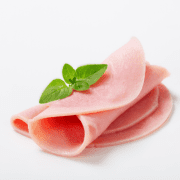
LACTIC ACID (E-270) AND LACTATES SUBSTITUTE IN COOKED MEAT
Lactic acid and lactates are used as preservatives, mainly against yeasts, molds, and other food-degrading bacteria, but natural alternatives exist to achieve clean label foods.
Below, we will detail the functionality of these chemical additives, which are also used to increase the stability of antioxidants and to prevent water loss in various products.
What is the function of Lactic Acid in food?
Lactic acid (E-270) is an organic compound that is naturally produced during the fermentation of carbohydrates by lactic acid bacteria. In the food industry, lactic acid is used as a preservative and acidulant.
It’s use is recognized and regulated by Regulation (EC) No 1331/2008 of the European Parliament and Council of December 16, 2008, establishing a common authorization procedure for food additives, enzymes, and flavorings, and is identified on food labels with the number E-270. Lactic acid can be obtained naturally or synthetically by fermenting various types of sugar with lactic acid bacteria. From lactic acid, other commonly used food preservatives in the industry, particularly in cooked meat products, can be derived.
These food preservatives are lactates and can be identified on food labels with the following numbers:
- Sodium Lactate (E-325)
- Potassium Lactate (E-326)
- Calcium Lactate (E-327)
- Ammonium Lactate (E-328)
- Magnesium Lactate (E-329)
- Ferrous Lactate (E-585)
- Choline Lactate (E-1001vi)
Which food contain lactate?
Lactate is a salt derived from lactic acid that is present as a food additive in many foods. Some foods containing lactates include:
- Cooked meat products, such as cooked ham and sausages.
- Bakery and pastry products.
- Fermented beverages, such as beer and wine.
- Dairy products, such as cheeses and yogurts.
As mentioned earlier, there are different types of lactate salts, for example, calcium lactate used in packaged products like desserts and ice creams, bakery products, or sodium lactate widely used in cooked meat products.
By reading the label of any cooked ham, you can find the following ingredients and additives:
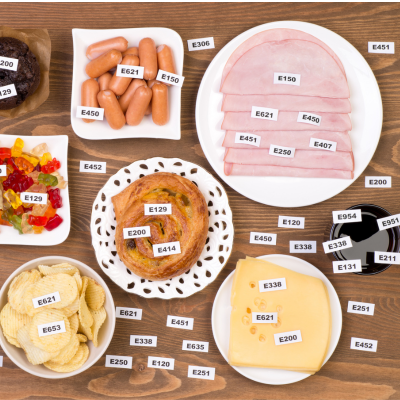
Cooked ham: pork ham, water, sodium lactate, salt, dextrose, lactose, stabilizers (E-451, E-462), gelling agents (E-407, E-416), flavors, antioxidant (E-301), preservatives (E-250, E-243).
Cooked ham is an example of a food that consumers consider healthy yet has a fairly extensive list of chemical additives. At Amerex, for example, we work with natural preservatives to replace lactate in cooked products, as well as to replace the rest of the chemical additives.
What is the mechanism of action of sodium lactate?
The mechanism of action of sodium lactate is based on two principles:
- pH Reduction: By reducing the product’s pH, it creates a hostile environment for the growth of pathogenic bacteria and undesirable microorganisms.
- Osmotic Interference: Sodium lactate affects the osmotic pressure within bacterial cells, making their survival and multiplication difficult.
In summary, sodium lactate is a salt that acts as an undissociated acid that passes through the microbial membrane to acidify the cellular interior. As a result, intracellular pH acidifies, and cellular metabolism can rapidly decrease, leading to cell death.
What role does Lactate play in cooked meat like cooked ham?
In cooked meat products, such as cooked ham, lactate plays a crucial role. It is added to inhibit the growth of pathogenic bacteria and prolong the product’s shelf life by regulating acidity. Additionally, lactates help maintain the texture and juiciness of the meat, improving water retention and the firmness of the final product.
In the food industry, lactate is a widely used additive, especially in meat products that are susceptible to deterioration by lipid oxidation and the production of rancid off-flavors, particularly in sausages due to their high-fat content. Lactate helps delay this bacterial decomposition, increasing the shelf life and sensory quality of the food.
However, there are natural substitutes for lactate and lactic acid whose action is equivalent to these chemical additives and can sometimes even improve it. If you want to know what lactate substitutes for cooked products we have at Amerex, keep reading!
What natural substitutes for Lactates and Lactic Acid do Amerex offer?
At Amerex, we are a biotechnology company with over 40 years of experience in natural preservatives, and we are committed to offering healthy and safe solutions for food preservation. We aim to provide our customers with natural preservatives that not only ensure food safety and quality but also respond to consumer demands for healthier products with cleaner labels.
From the Biamex range of fermentates to the Safemix range of natural flavors, we have multiple products that can be used as substitutes for lactate or lactic acid, for example, or other chemical additives like nitrites.
If you want more information about our natural preservation solutions, don’t hesitate to contact us!
- You can email us at: imasd@amerexingredientes.com
- Call us at: +34 91 845 42 14
- Fill out the form below


Patricia Rodrigo is Head of Marketing & Product at Amerex. With a background in Biotechnology and a Master’s in Biotechnology Business Management, her work focuses on research and communication of natural alternatives to additives, conservation strategies, and pathogen control in various food groups for the industry.