At Amerex we are committed to providing the best biotechnology solutions for the food industry. We are therefore pleased to announce that Amerex Research and Development has launched its innovative Biamex FP product, designed to improve food preservation and further enhance the range of natural preservatives in our Biamex range.
This new development is designed to extend the commercial shelf life of food that are close to their best before date, providing advanced protection against Listeria and preventing heterofermentation. In addition, at a higher dosage, Biamex FP is also effective against enterobacteria and yeasts, offering a global solution to many food safety challenges.
Biamex FP has undergone extensive testing in our pilot plant, as well as demanding challenge tests at customers where Listeria and Salmonella were inoculated, with excellent results in terms of effectiveness.
In addition, Amerex has introduced more than five new preservatives to the market this year. Our wide range of solutions is designed to meet the specific needs of each food producer. Our team of biotech consultants is available to evaluate our customers’ manufacturing processes and offer the best recommendation, whether it is Biamex FP or other products in our product portfolio, always looking for a customised solution.
For more information about our new references or how to improve production processes, we have an expert team available to advise you, do not hesitate to contact us!
Patricia Rodrigo is Head of Marketing & Product at Amerex. With a background in Biotechnology and a Master’s in Biotechnology Business Management, her work focuses on research and communication of natural alternatives to additives, conservation strategies, and pathogen control in various food groups for the industry.
https://amerexingredientes.com/wp-content/uploads/2024/10/Productos-4-scaled.jpg19272560Patricia Rodrigohttps://amerexingredientes.com/wp-content/uploads/2017/11/Logo-web-amerex-madrid-2.pngPatricia Rodrigo2024-10-08 08:40:372025-04-28 10:07:06Amerex launches BIAMEX FP and more than five new preservatives in 2024
The production of sausages requires specific processes to ensure the safety and quality of the final product. One of the most important stages is the treatment of the casings used for stuffing.
Traditionally, chemical additives such as sorbate have been used to protect these casings from microbiological issues, especially fungal growth. However, the food industry is increasingly seeking natural solutions.
At Amerex Ingredients, we offer Biamex YM, a natural alternative to sorbate for antifungal treatment in sausage casings. Below, we answer some of the most common questions about the use of casings and additives in this process.
What types of casings are used in sausage production?
In the sausage industry, two main types of casings are used:
Natural casings: These are obtained from the intestines of animals like pigs, sheep, or cattle. Natural casings have the advantage of allowing the sausage to breathe, which contributes to the development of traditional flavors and textures. Additionally, they are typically more elastic, making the stuffing process easier.
Artificial casings: These are made from materials such as collagen, cellulose, or plastics. They are mainly used in industrial sausage production due to their uniformity and ease of handling. They are a more economical option and are available in different thicknesses and lengths, adapting to various types of meat products.
What chemical additives are used for antifugal bath?
Casings, whether natural or artificial, require specific treatment (an antifugal bath) to prevent the proliferation of microorganisms that could affect the quality and safety of the sausage.
Traditionally the additives used for this purpose are:
Potassium sorbate (E-202): A preservative widely used in the food industry for its effectiveness in inhibiting the growth of mold and yeast. It is used in casing baths to prevent microbiological deterioration during storage and handling.
Sodium benzoate (E-211): Another preservative used to control the growth of bacteria and mold in food products. Its use in casings is common due to its antibacterial effect.
However, both sorbate and benzoate, are chemical additives with associated “E-numbers,” which may raise concerns among consumers seeking more natural and healthier products, as well as manufacturers striving for clean label production with minimal chemical additives.
Natural alternative to sorbate for antifungal baths of sausage casings
At Amerex Ingredients, we offer a natural alternative to sorbate specifically designed for the antifungal bath of sausage casings. Biamex YM is a natural preservative that offers the following benefits:
Antifungal efficacy: Biamex YM acts effectively against molds and yeasts that can affect the quality of both natural and artificial casings.
Food safety: Being a natural product, Biamex YM is safe for human consumption and complies with food safety regulations, making it an excellent choice for manufacturers looking to reduce the use of synthetic additives in their products.
Complete sorbate replacement: Biamex YM can effectively replace sorbate, eliminating the need to use this chemical preservative without compromising the quality or safety of the final product.
The use of natural alternatives to sorbate is increasingly sought after by manufacturers in the meat industry.
What are the advantages of using a natural antifugal like Biamex YM in sausage casings?
More and more consumers prefer natural, additive-free food products. Therefore, using Biamex YM in the treatment of sausage casings offers several advantages, as it meets the trend for “clean label” products. This trend is something today’s consumers are looking for, as they value products with cleaner labels and fewer artificial additives. Biamex YM allows sausage manufacturers to offer more natural products, which can be a key differentiator in a competitive market.
Furthermore, it reduces the risk of allergic reactions, as some consumers are sensitive to chemical preservatives like sorbate. By using a natural preservative, the risk of causing adverse reactions in susceptible individuals is reduced.
Finally, sustainability and environmental respect. As a natural product, Biamex YM is a more environmentally friendly option, helping manufacturers reduce their ecological footprint.
How is Biamex YM applied in sausage casing treatment?
Biamex YM is applied similarly to other preservatives used in casing treatment. It can be dissolved in the casing bath to ensure uniform distribution of the product and provide effective protection against fungal growth. This natural preservative is compatible with the treatment of both natural and artificial casings, ensuring the protection of the sausage from the initial production stage.
The sausage industry is evolving to meet the demands of consumers seeking healthier and more natural products. In this context, the sorbate alternative offered by Amerex Ingredients, Biamex YM, presents itself as an effective and safe solution for protecting sausage casings from fungi, without resorting to traditional chemical preservatives. This way, it is possible to guarantee the quality and safety of the final product while aligning with trends toward more natural and sustainable products.
Patricia Rodrigo is Head of Marketing & Product at Amerex. With a background in Biotechnology and a Master’s in Biotechnology Business Management, her work focuses on research and communication of natural alternatives to additives, conservation strategies, and pathogen control in various food groups for the industry.
https://amerexingredientes.com/wp-content/uploads/2024/09/Tripas-embutidos.png400400Patricia Rodrigohttps://amerexingredientes.com/wp-content/uploads/2017/11/Logo-web-amerex-madrid-2.pngPatricia Rodrigo2024-09-18 12:07:072025-04-28 10:07:06ANTIFUGAL FOR CASING BATH FOR CURED SAUSAGES
Shrimps are one of the most consumed seafood products worldwide. However, their classification can vary based on their size, origin, and species. Below, we explain the main types of shrimps and how to ensure their freshness with sulfite-free preservatives.
What varieties of shrimps are in the market?
There are various types of shrimps, often classified by their size and place of capture.
Among the most popular are:
Tiger shrimp (Penaeus monodon): Large in size, commonly found in Asia.
Southern shrimp (Pleoticus muelleri): Sourced from the southwestern Atlantic, highly valued for its flavor.
Patagonian shrimp (Pleoticus muelleri): Characteristic of the cold waters of Argentine Patagonia, with a firm texture and exquisite flavor.
Vannamei or Pacific white shrimp : Primarily farmed in Latin America and Asia, it is one of the most consumed worldwide.
Each variety of prawn has unique characteristics in terms of flavor and texture, but all face similar challenges regarding shelf life and preservation.
What shelf life issues do shrimps have?
One of the biggest challenges in the commercialization of shrimps is their shelf life. As a highly perishable product, proper handling from capture or farming to the consumer is crucial.
The main shelf life issues include:
Rapid decomposition: Without proper refrigeration or freezing, shrimps begin to decompose within hours.
Color changes: Fresh shrimps have a bright color, but over time and with oxygen exposure, their color can turn dull or gray.
Bacterial growth: The presence of bacteria such as Listeria or Salmonella poses a food safety risk if proper preservation measures are not taken.
Thus, shrimp manufacturers resort to the use of additives and preservatives to maintain the shelf life of products until they reach the end consumer.
What additives are commonly used to improve the color and safety of shrimps?
To preserve both the appearance and safety of shrimps, the food industry uses various chemical additives and preservatives. The most common are:
Sodium sulfite (E-221): Traditionally used to prevent prawns from darkening and to preserve their natural color. Despite its widespread use in the industry, sulfites can cause allergic reactions in some people at certain concentrations.
Phosphates: Food industry phosphates (such as potassium phosphate E-340) are used to retain moisture and improve the texture of prawns, preventing them from drying out.
Citric acid and its derivatives: These preservatives are antioxidants that help prevent oxidative deterioration and maintain the color and freshness of the product. Their use is also very common in other foods. Citric acid is labeled with the number E330.
Despite their effectiveness, more and more consumers and manufacturers are seeking more natural, allergen-free alternatives, such as sulfite-free preservatives that maintain the food’s color and safety.
What sulfite-free natural preservatives does Amerex offer?
At Amerex Ingredientes, we understand the importance of offering solutions that not only extend the shelf life of shrimps but are also safe and natural. That’s why we provide natural sulfite-free preservatives that not only ensure the freshness and safety of prawns but also meet the demands of modern consumers who prefer allergen-free and healthier products.
We have extensive experience in using preservatives to maintain the color of various types of fish and shellfish and to improve safety against pathogens like Listeria. You can check out some of our success stories at this link.
Don’t hesitate to contact us if you’re looking for a natural preservative free from E numbers that enhances the organoleptic properties and safety of your foods.
Patricia Rodrigo is Head of Marketing & Product at Amerex. With a background in Biotechnology and a Master’s in Biotechnology Business Management, her work focuses on research and communication of natural alternatives to additives, conservation strategies, and pathogen control in various food groups for the industry.
https://amerexingredientes.com/wp-content/uploads/2024/09/Langostinos.png400400Patricia Rodrigohttps://amerexingredientes.com/wp-content/uploads/2017/11/Logo-web-amerex-madrid-2.pngPatricia Rodrigo2024-09-17 10:32:382025-04-28 10:07:06SULPHITE-FREE PRESERVATIVES FOR SHRIMP
In the food industry there are several sectors in which the chemical additives nitrates and nitrites are commonly used. In the meat or fish sector, for example, nitrates and nitrites are considered necessary to carry out the nitrification process that gives a characteristic colour to the final product as well as protection against anaerobic pathogens and sporogens.
Below we explain why nitrites are used in feed and introduce you to Amerex’s specialist product for the natural replacement of nitrites: Biamex NC.
What is the nitrification process of nitrites?
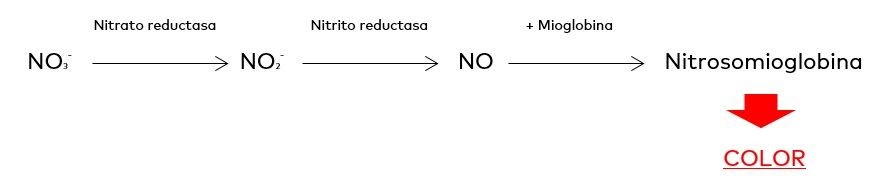
In the nitrification process, nitrate is reduced to nitrite, from which nitric oxide is produced. Nitric oxide combines with muscle myoglobin to form nitrosomyoglobin, which is responsible for the typical colour of cured meats, e.g. in the meat industry. In the case of cooked meats, the temperature causes this nitrosomioglobin to be transformed into nitrosylhaemochrome, which is responsible for the characteristic pink colour.
Why have nitrites been considered necessary in the food industry?
Nitrates and nitrites have been considered necessary in the food sector, in addition to the generation of colour that they provide to food, making it more attractive to consumers, because they guarantee certain safety in products by preventing the development of pathogenic bacteria, specifically Clostridium botulinum, which causes the well-known botulism disease.
Like any other additive, nitrites are regulated by Annex II of Regulation (EC) No 1333/2008 of the European Parliament and of the Council and the Annex to Commission Regulation (EU) No 231/2012. It regulates the maximum dose that can be incorporated in each foodstuff under a specific legislation.
Why is nitrite substitution being pursued in different food sectors?
There is increasing talk of replacing nitrites with other types of natural preservatives and of regulating more strictly the permitted dosage in the various foods in which they are used.
The problem is that, although nitrates occur naturally, for example in various vegetables (e.g. lettuce, celery) or even in water, some of them are converted into nitrites during the digestion process, reacting with amino acids in the stomach and giving rise to nitrosamines, which are carcinogenic substances. In the case of foodstuffs from the above-mentioned sectors they are found directly in the form of nitrites. For this reason it is important to find substitutes that avoid the presence of these additives in products that we normally consume.
What nitrite substitutes are available on the market and what does Amerex offer?
There are many natural substitutes for nitrites on the market. As mentioned above, they are found naturally in vegetables such as lettuce and celery, and some companies use natural extracts of this type. We must not forget also the risk of sporogen poisoning that can be caused by poor nitrite substitution.
In our case, we have a transparent natural technology for nitrite substitution: the use of starters.
Our product Biamex NC, has a very innovative technology for the generation of the typical colour that nitrifiers would provide. In this way, thanks to a fixation reaction of the meat/fish protein itself, you can achieve an optimum replacement of nitrates, nitrites and/or nitro salts. In addition, this product incorporates another of our strains of ferments specialised in the action against sporogens such as clostridium botulinum.
In which products can Amerex nitrite substitute Biamex NC be used?
Biamex NC, as a nitrite substitute, can be applied in any food where a substitution of this chemical additive is necessary.
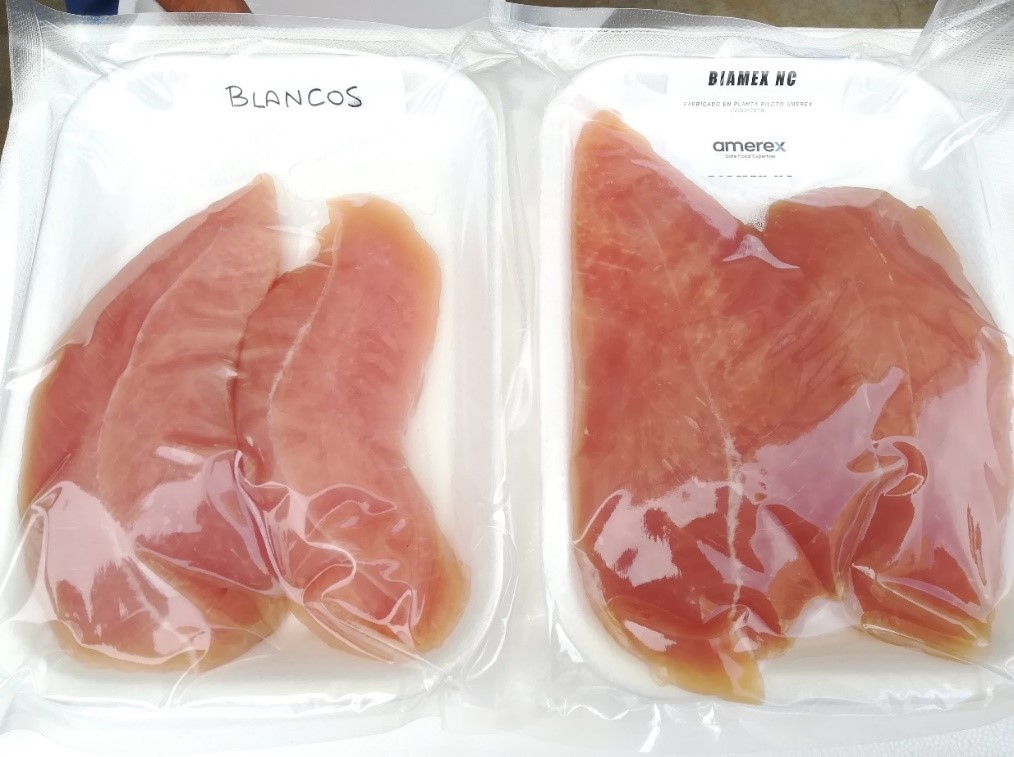
It is very common to substitute nitrites in meat products as we have mentioned above. Here is an example of injected turkey:
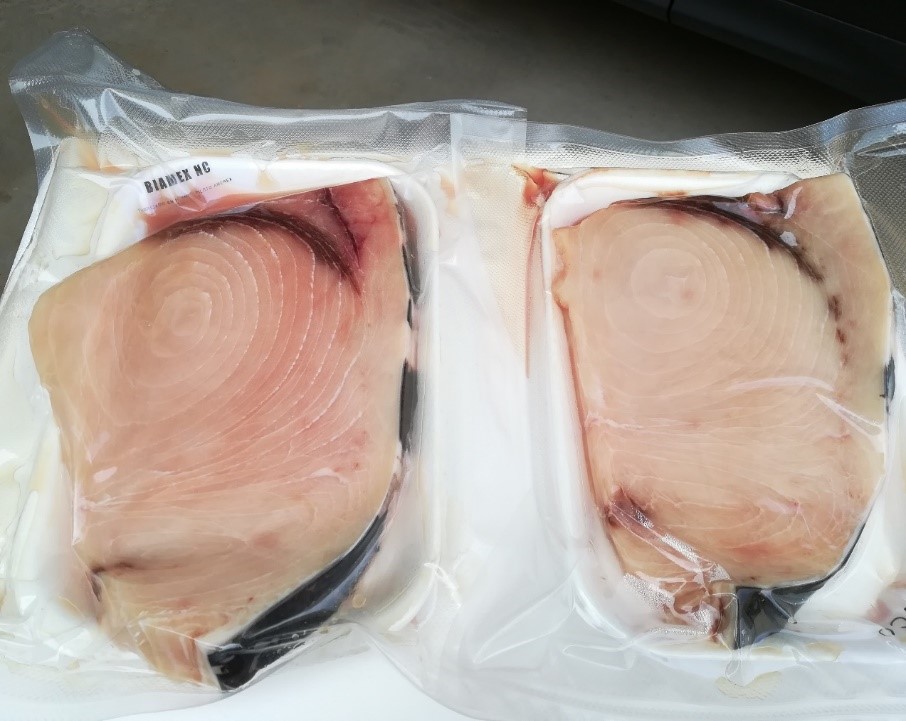
Another food where the use of nitrites is also common is in various fish. Biamex NC also has experience with this type of food. Here is a test on injected swordfish:
In conclusion, we can state that the use of starters is a very good alternative to nitrites, in particular the use of the Amerex Biamex NC product, as it significantly reduces the appearance of this colour in meat and fish products. In addition, this product includes Amerex’s protective technology to maintain product safety equivalent to the protection provided by nitrites.
Would you like more information about this starter culture? You can contact us for a personalised recomendation:
Amerex’s Technical Director, Alejandro Rodríguez, holds a degree in Biology and a master’s degree in biotechnology applied to food preservation. With a solid track record of over 10 years developing natural solutions, he leads projects focused on protective fermentation and innovative technologies to ensure food safety and quality.
https://amerexingredientes.com/wp-content/uploads/2024/04/jamon-york.jpg6801024Alejandro Rodríguezhttps://amerexingredientes.com/wp-content/uploads/2017/11/Logo-web-amerex-madrid-2.pngAlejandro Rodríguez2024-04-23 07:18:502025-12-23 10:56:34WITHDRAWAL OR REPLACEMENT OF NITRITES WITH NATURAL PRESERVATIVES
It is well known that natural remedies have been used since the beginning of time to improve food preservation and extend their shelf-life. Salt, sugar or vinegar are the most significant examples that are still used today. Nowadays, there is a wide variety of food additives that, in addition to preserving food, help to maintain its organoleptic characteristics such as taste, smell, texture, freshness… and even its nutritional value.
On top of this, consumers are increasingly interested in knowing what they are putting into their bodies. Therefore, the general claim is for traditional additives to evolve into more natural alternatives, and above all for their labelling to be clearer and more understandable. This is why the concept of clean labelling has gained popularity. Stay with us and continue reading to explore what is the exact meaning of the term “clean label” and its importance in food preservation.
What is “clean label”?
The term “clean label” refers to the tendency of food companies to use natural and recognisable ingredients in their products, avoiding artificial additives, colourings and synthetic preservatives. This results into simpler and easier to understand labels for consumers. This initiative responds to consumers’ demands for clear and reliable information on the composition of the food they will ultimately consume. Beyond the simple list of ingredients, the clean label represents a commitment to transparency, quality and health. And above all, that the consumer is able to objectively analyse and evaluate the product to draw conclusions about what they are eating.
What are the benefits of clean label?
– Transparency and consumer trust
The aim is to make it easy for consumers to identify the ingredients used in a product. The clean label model promotes transparency by allowing consumers to easily understand what they are eating. In addition, by providing simpler labels free of unknown ingredients, brands can build trust and loyalty among their clients.
– Health and wellness
It is a fact that all authorised additives used in the food industry are considered safe, as they are regulated by the competent authorities (EFSA, in the case of Europe), who set acceptable daily intake amounts to set limits on their incorporation in food. On the other hand, clean label foods are usually composed of natural ingredients, which makes them perceived as healthier by avoiding these synthetic ingredients and some additives that are considered potentially harmful. By choosing clean label products, consumers can reduce their exposure to artificial substances and thus promote a healthier lifestyle.
– Sustainability
Clean label is also linked to more sustainable agricultural practices by promoting the use of natural and organic ingredients. By using natural and organic ingredients, brands can support responsible agriculture and reduce their environmental impact.
What is the connection between food preservation and the term clean label?
The relationship between food preservation and the term clean label is fundamental to understanding the evolution of the food industry towards healthier and more sustainable practices. Traditionally, food preservation has entailed the use of a variety of additives and artificial preservatives to prolong the shelf-life of products. However, with consumers’ growing interest in transparency and naturalness of food, there is a need to find healthier and cleaner alternatives for preservation.
This is where the concept of clean label comes into play. By prioritising natural and recognisable ingredients, brands can offer products with cleaner labels and free from synthetic additives, while maintaining quality and food safety. This not only responds to consumer demands, but also promotes a more responsible approach to food production, encouraging sustainable agricultural practices and reducing environmental impact.
What natural alternatives do exist for preservation?
In the search for natural alternatives for food preservation, the food industry has explored a wide range of ingredients and methods that offer efficacy without compromising the quality or naturalness of products. One of the most prominent alternatives are natural antioxidants, such as ascorbic acid (vitamin C) and tocopherols (vitamin E), which can prevent food oxidation and thus prolong shelf-life. These antioxidants are widely found in fruits, vegetables and herbs, making them attractive options for manufacturers seeking to preserve their products naturally. Click here for more information regarding these antioxidant additives.
But of course there are also natural preservation alternatives based on biotechnology, such as the use of ferments which through different mechanisms of action can protect against harmful microorganisms, as we have mentioned in previous blog posts.
Where can I find these clean label – natural preservation alternatives?
Clean label is not only a trend in the food industry, but also a response to the demands of health and transparency-conscious consumers. As a company, by adopting clean labelling practices and looking for natural alternatives for food preservation, you can meet your customers’ needs and promote a healthier and more sustainable lifestyle.
If you are looking for natural preservation alternatives to embrace clean label for your food products, you have landed in the right place. At Amerex we offer a wide range of natural ingredients for food preservation. Our product selection is designed to meet the needs of the food industry for clean and transparent solutions. For example, the Biamex range of biotechnology-based natural preservatives that target pathogenic microorganisms, as potential substitutes for chemical additives or treatments to make your product cleaner and more accessible to your consumers.
You can check our website to explore our offer and find out how we can help you take your products to the next level with quality ingredients and clean labels. Do not hesitate to contact us!
• By sending an email to: imasd@amerexingredientes.com • By calling us: +34 91 845 42 14 • By filling in the form bellow
Nuria Lázaro is the R&D and Quality Manager for Amerex’s technical team. She holds a degree in Biology and a master’s degree in Biotechnology. She brings her experience in food preservation and safety, specializing in legislation and the development of new preservatives and antioxidants.
https://amerexingredientes.com/wp-content/uploads/2024/03/Clean-label-conservacion-saludable.png400400Nuria Lázarohttps://amerexingredientes.com/wp-content/uploads/2017/11/Logo-web-amerex-madrid-2.pngNuria Lázaro2024-03-05 07:49:002025-05-19 10:55:15FOOD INDUSTRY TRENDS: CLEAN LABEL AND PRESERVATION
In January, the Council of Ministers approved a draft Law on the Prevention of Food Losses and Waste. The law makes it compulsory for all actors in the food chain to have a loss and waste prevention plan, prioritising human consumption through food donation or redistribution.
The aim is to achieve a 50% reduction in food waste per capita at retail and consumer level, and a 20% reduction in food losses along the production and supply chains by 2030. This has triggered a very deep movement and awareness among retailers and manufacturers on how to avoid and manage their surplus, which corresponds to 1-2% of their annual turnover.
What can food and ingredient manufacturers do to reduce waste and encourage better use? The importance of food preservation and safety is particularly relevant here, with natural food preservatives being the future of the world’s food supply. Food with a longer shelf life and which is microbiologically safe will help to avoid food waste.
What are natural food preservatives?
Natural food preservatives are substances derived from natural sources, such as plants, herbs, spices or microorganisms, which are used to prolong the shelf life of food.
These preservatives are a more sustainable and healthier alternative to synthetic additives, as they do not contain artificial chemicals or ingredients that are harmful to health. Regulation is becoming increasingly stringent in terms of the dosage and use of such chemical additives. In France, for example, legislation was recently amended to reduce the application rates of nitrites in some foods. Natural preservatives are therefore the future of food preservation.
What are some examples of natural food preservatives?
There are numerous examples of natural preservatives used in the food industry.
Some of them are well known and include rosemary extract, vinegar, essential oils, vitamin E (tocopherol), among others. However, we already see among them one example that has recently been included as a food additive, listed in the legislation as E-267, such as fermented vinegar.
Microorganisms are another source of natural preservatives, and thanks to new technologies such as biotechnology, the use of microorganisms such as lactic acid bacteria and thanks to protective fermentation, we can obtain new preservation strategies.
These preservatives not only help to preserve the freshness and quality of food, but can also provide additional health benefits.
What is the relationship between protective fermentation and natural preservation?
Protective fermentation is a natural process in which beneficial microorganisms, such as lactic acid bacteria or yeasts, are used to ferment foods and create a hostile environment for the growth of undesirable microorganisms, such as pathogenic bacteria. This process not only helps preserve food, but can also improve its taste, texture and nutritional value.
Bio-based natural preservatives often take advantage of the principles of protective fermentation to provide natural and effective food preservation.
Best natural food preservative manufacturers: Amerex Ingredients
Natural food preservatives are increasingly available on the market. It is important to look for reliable suppliers that offer high quality, certified organic products if possible. At Amerex, we have specialised in biotechnology-based natural preservatives for over 40 years and offer a wide range of products designed to meet the needs of the food industry.
Thanks to our natural preservatives, you can extend the shelf life of your food while maintaining optimum organoleptic and safety properties and avoiding food waste. Some of our best-selling products are part of the Biamex range, where we have specialists against listeria, for example, or more general products such as Biamex SP, for the complete preservation of food.
Natural food preservatives are an excellent option for those looking for a healthier and more sustainable alternative to synthetic additives. Harnessing the principles of protective fermentation and using biotechnology-based natural preservatives can help ensure food safety and quality, while promoting sustainability and overall wellbeing. Do not hesitate to contact us if you want to know more!
Nuria Lázaro is the R&D and Quality Manager for Amerex’s technical team. She holds a degree in Biology and a master’s degree in Biotechnology. She brings her experience in food preservation and safety, specializing in legislation and the development of new preservatives and antioxidants.
Last September, the European Commission authorised the use of buffered vinegar as a food additive by assigning it the number E-267 in the list of food additives. Through the publication of Commission Regulation (EU) 2023/2086 of 28 September 2023 amending Annex II to Regulation (EC) No 1333/2008 of the European Parliament and of the Council and the Annex to Commission Regulation (EU) No 231/2012 as regards the use of buffered vinegar as a preservative and acidity regulator.
Below you will find all the information on the inclusion of this food preservative in the list of food additives:
What food preservative is buffered vinegar?
Buffered vinegar is a liquid or powdered product which is prepared by adding buffers to vinegar, according to the above mentioned regulation.
The buffers used for its preparation are sodium/potassium hydroxide (E-524 to E-525) and sodium/potassium carbonate (E-500 to E-501). Buffered vinegar complies with the European standard EN 13188:2000 and has an exclusively agricultural origin (except wood/cellulose) by double fermentation, alcoholic and acetic. The main components are acetic acid and its salts.
Buffered vinegar has been used until now as a clean label alternative to other authorised preservatives or acidity correctors, in particular for the above mentioned acetic acid and its salts, whose numbers are: E-260-263. These food preservatives are mainly used for their power to protect against gram-negative microorganisms, as these types of bacteria are the most difficult to control. Among them we can find the worldwide known Salmonella or E.coli.
How is buffered vinegar included in the list of food preservatives?
Buffered vinegar is included in the list of food preservatives under the number E-267.
Following the submission of an application to the Commission in March 2021, authorisation was requested for the use of buffered vinegar as a preservative and as an acidity regulator in a wide variety of food categories. These foods include: Meat preparations as defined in Regulation (EC) No 853/2004), potato gnocchi, fresh and pre-cooked pasta, canned fruit and vegetables, cottage cheese, fresh cheese, except products included in category 16.
Following a safety assessment of buffered vinegar as a food additive for the above mentioned uses, it was concluded that there is no safety concern for the use of buffered vinegar at the maximum use levels proposed in the standard. The corresponding study was carried out by the European Food Safety Authority (EFSA).
What natural food preservatives are available as an alternative to buffered vinegar?
Currently, the natural food preservatives that exist as an alternative to buffered vinegar (E-267) and that are clean label are plant extracts. However, the effectiveness of these food preservatives is not as high as that of buffered vinegar.
Buffered vinegar has so far been used as an effective alternative to other authorised preservatives or acidity regulators, in particular acetic acid and its salts (E 260-263). As it did not have an E-number assigned to it until now, it was declared as natural flavouring or buffered vinegar. These preservatives are known to be very effective against gram-negative bacteria, whose problem lies in the cell wall that covers them and makes them more resistant to preservatives. Nowadays, natural spice or vegetable extracts cannot match this efficacy.
What clean label food preservatives does Amerex offer?
At Amerex we are experts in clean label food preservatives and we have a wide range of products with different functionalities, from protective action against pathogens to elimination of chemical additives.
For this purpose, we have preservatives that combine different technologies. Our experience is based on the use of protective fermentation. This microbial technology is totally natural and clean label. Within this category we have products such as the Biamex range, which cover a wide range of action.
There are also products that combine protective fermentation with chemical additives. Food preservatives that include buffered vinegar include Safemix AV or Biamex Aroma Global. They are highly effective against bacteria such as E.coli or enterobacteria, and the low recommended dosage (between 0.1%-10%) favours a natural and homemade organoleptic.
These strains of microorganisms act in synergy with additives to enhance their antimicrobial properties, without negatively altering the taste, aroma or texture of the food.
If you are looking to improve the quality of your food by ensuring optimum preservation and organoleptic properties, do not hesitate to contact us! We have different ranges of products to meet the specific needs of our customers.
Nuria Lázaro is the R&D and Quality Manager for Amerex’s technical team. She holds a degree in Biology and a master’s degree in Biotechnology. She brings her experience in food preservation and safety, specializing in legislation and the development of new preservatives and antioxidants.
https://amerexingredientes.com/wp-content/uploads/2023/12/49.-Autorizacion-Vinagre-fermentado-E-267.png400400Nuria Lázarohttps://amerexingredientes.com/wp-content/uploads/2017/11/Logo-web-amerex-madrid-2.pngNuria Lázaro2023-12-28 12:12:592025-05-19 10:55:52APPROVAL OF BUFFERED VINEGAR AS FOOD PRESERVATIVE (E-267)
In the world of food safety, the emergence of emerging pathogens poses constant challenges. Among them, Campylobacter has emerged as a disturbing player in the food safety equation.
As we explore the complexities of this microorganism and its impact on a variety of foods, we will discover how Amerex, a leader in biotechnology-based natural food preservatives, is at the forefront of finding innovative solutions.
Join us in this blog to understand and address the challenge presented by Campylobacter in our food chain.
Pathogenic microorganisms in food. What do we know about Campylobacter?
In the constant quest to ensure food safety, we are faced with a number of challenges, one of which is the emergence of new emerging pathogens in food.
The Campylobacter bacterium has recently captured the attention of the scientific community. Campylobacter belongs to the family Campylobacteraceae. Species of this genus are Gram-negative, comma-shaped, motile bacilli and have proven to be a growing risk in the food chain due to the food poisoning they cause.
Combating Gram-negative bacteria is one of the main challenges for the food industry, as there are not many food additives that are really effective against these pathogens due to the protection afforded by their cell wall. To a lesser extent, we can even find natural food preservatives that are clean-label and really effective in keeping this type of microorganisms at bay.
Which foods are contaminated by the emerging pathogen Campylobacter?
The prevalence of pathogenic microorganisms in food, such as Campylobacter, poses a serious threat to public health as it can cause campylobacteriosis (a common cause of intestinal infection). These bacteria are also one of the many causes of traveller’s diarrhoea or food poisoning.
These bacteria can contaminate a wide range of foods, from poultry to dairy products to raw vegetables, similar to contamination by the world-renowned Salmonella. People are almost always infected by eating contaminated food.
Understanding how these emerging pathogens affect our food chain is essential to implement effective safety measures, both at the production level in the food industry and good food handling practices by consumers at home.
What are the most common types of food additives against Campylobacter?
In the quest to ensure food safety, it is crucial to know which are the most common and effective types of food additives against Gram-negative pathogens such as Campylobacter.
The group of Gram-negative bacteria are among the most difficult to combat in the food industry, including pathogens such as the aforementioned Salmonella and Campylobacter, or E. coli within the group of enterobacteria. All of them can cause diseases of particular relevance to humans as a result of consuming food that has developed them.
The most common types of food additives against these bacteria is the use of acids, such as acetic acid. Acetic acid is widely used in the industry and has been assigned the E number E-260, and also all its salts such as sodium diacetate, the latter being the additive with number E-262ii. Even with this specific activity, acetic acid often requires synergies with other preservatives of different origins to control its occurrence.
Are there natural food preservatives against Gram-negative bacteria?
Amerex, through its use of biotechnology, has developed natural food preservatives that not only extend the shelf life of food, but also act as effective barriers against these unwanted microorganisms.
The combination of technologies in the food industry has become an innovative and effective strategy to improve product safety and quality. At Amerex we have products based on the synergy of acetic acid and protective fermentation, such as Fermitrat Fs, which is a prime example of this highly effective combination.
However, there are other fully clean-label solutions that allow acetic acid to be removed from the equation, resulting in natural food preservatives. Thanks to the use of protective fermentation, the mixture of different strains allows us to obtain products that tackle these types of pathogens, such as Safemix AV.
In summary, the challenge of dealing with emerging food pathogens requires a combination of awareness, research and innovative solutions. Amerex is committed to providing natural food preservatives that not only meet these challenges, but also raise food safety standards in the industry.
Our team of experts is at your disposal to advise you on customised solutions for your specific needs in the food industry to improve the safety, quality and durability of your food products.
Patricia Rodrigo is Head of Marketing & Product at Amerex. With a background in Biotechnology and a Master’s in Biotechnology Business Management, her work focuses on research and communication of natural alternatives to additives, conservation strategies, and pathogen control in various food groups for the industry.
Refrigerated sauces are used in a wide variety of dishes, from salads to fast foods and snacks. These foods offer great convenience and taste, but also challenges in terms of shelf life and food safety due to the pathogenic microorganisms that thrive in them. That is why potassium sorbate is commonly used in in this type of sauces.
In this blog, we will explore the types of refrigerated sauces along with the microbiological problems they face and the most common pathogenic microorganisms, potassium sorbate as a food preservative (it is one of the most commonly used chemical food preservatives) and finally, a clean label alternative to this chemical preservative currently on the market.
What types of refrigerated sauces are in market?
There are many types of refrigerated sauces that can be found in a wide variety of flavours and textures. Some common examples include mayonnaise sauce, mustard sauce, guacamole and many others. These sauces are popular because of their freshness and taste, but that same freshness also makes them susceptible to the growth of microorganisms.
We could classify the types of sauces according to the processes they have undergone:
Fresh
HPP
Pasteurised
Each of them suffers from a specific shelf-life problem, the freshest sauces spoil in a short time and are more vulnerable to pathogenic microorganisms, while the most treated products (HPP or pasteurised) lose their organoleptic freshness over time, which is why different food preservatives are used.
What are the typical microbiological problems with refrigerated sauces?
Refrigerated sauces, which include classics such as mayonnaise and guacamole sauce, face similar microbiological problems. These sauces often contain fresh ingredients such as avocado, tomato or onion that may be contaminated with pathogenic microorganisms such as Salmonella or E. coli. Cross-contamination is a real risk during the handling and preparation of these ingredients, increasing the risk of foodborne illness. In addition, the high moisture and water content in these sauces provides a favourable environment for the growth of moulds and yeasts.
This can lead to problems such as the proliferation of harmful microorganisms, affecting both food safety and product quality, necessitating the use of food preservatives such as potassium sorbate by manufacturers to ensure product safety.
What are the microbiological problems with guacamole sauce?
In particular, guacamole sauce presents a specific set of challenges.
– Discolouration and browning: Guacamole is prone to discolouration and browning due to oxidation of the avocado components. While this is not a microbiological problem in the food safety sense, it can negatively affect the quality and appearance of the product.
– Mould and bacterial growth: The high humidity and water content in guacamole sauce provides an environment conducive to bacterial and mould growth. Microorganisms such as Listeria, Salmonella and E. coli can proliferate if the sauce is not kept at the proper temperature and stored for long periods.
– Texture and Consistency: Unwanted microorganisms can affect the texture and consistency of guacamole sauce, causing it to become runny or take on an unpleasant texture. This can lead to consumer dissatisfaction.
What chemical preservatives are used in refrigerated sauces?
To combat these microbiological problems, the industry has traditionally relied on chemical food preservatives. These chemical preservatives can include potassium sorbate, sodium benzoate and other ingredients that extend the shelf life of refrigerated sauces. While these food preservatives have been effective, some consumers are concerned about their impact on health and prefer to avoid chemical additives.
These food preservatives can be identified on food labels by the following numbers:
E202 Potassium sorbate – is a derivative of sorbic acid (E200).
E211 Sodium benzoate – is obtained industrially by reaction of sodium hydroxide (E254) and benzoic acid (E210).
What Clean Label alternatives to potassium sorbate are available for refrigerated sauces?
There are clean label alternatives to potassium sorbate to combat these microbiological problems in sauces.
Amerex offers a natural alternative to potassium sorbate called Biamex YM or Biamex Aroma Global, a biotechnology-based natural preservative. This product is particularly effective in the fight against moulds and yeasts, two of the main microbiological challenges in refrigerated sauces and in guacamole sauce in particular. Biamex is not only a safe and effective option, but also meets the demands of consumers concerned about the absence of chemical preservatives in food. This makes it a truly clean label alternative also for manufacturers looking to remove E numbers such as potassium sorbate from their food labels, while maintaining food safety.
In summary, both refrigerated sauces and guacamole sauce are delicious and very common in gastronomy, but their microbiological problems can affect both food safety and quality. Instead of resorting to chemical food preservatives, Amerex’s alternative to potassium sorbate, Biamex YM or Biamex Aroma Global, offers a natural and effective clean label option to combat these problems, while ensuring the satisfaction of both consumers and food producers.
Patricia Rodrigo is Head of Marketing & Product at Amerex. With a background in Biotechnology and a Master’s in Biotechnology Business Management, her work focuses on research and communication of natural alternatives to additives, conservation strategies, and pathogen control in various food groups for the industry.
https://amerexingredientes.com/wp-content/uploads/2023/10/Miniatura-publicacion-salsas.png400400Patricia Rodrigohttps://amerexingredientes.com/wp-content/uploads/2017/11/Logo-web-amerex-madrid-2.pngPatricia Rodrigo2023-12-14 10:34:302025-04-28 10:11:23POTASSIUM SORBATE ALTERNATIVE AS A FOOD PRESERVATIVE IN SAUCES
Food production must be carried out according to strict food safety and hygiene standards to prevent any type of contamination from reaching the final consumer.
For this reason, in 1963 the Food and Agriculture Organization of the United Nations (FAO) and the World Health Organization (WHO) created the Codex Alimentarius Commission, whose objective was to ensure the safety and quality of food.
Below, we take a closer look at this set of standards.
What is the Codex Alimentarius or “Food Code”?
The Codex Alimentarius is the grouping of standards, codes and recommendations approved by the largest international food standards body: the Codex Alimentarius Commission (annexed to the FAO and WHO).
This document was created to ensure the proper handling of food by all members of the food industry and to assure consumers of the quality and safety of the products they consume.
What is the Codex Alimentarius for?
The Codex Alimentarius serves to protect the integrity of consumers by promoting a series of practices within the food sector. This list of standards seeks to guide manufacturers and to promote a series of common requirements within the international food trade, harmonising in some way the infinite number of legal differences that exist in each country and seeking an international food legislation.
How many standards does the Codex Alimentarius contain?
The Codex contains more than 200 standards written in different languages and covering the following areas:
As mentioned above, these standards are not mandatory but a recommendation for the governments of each country to decide whether or not to introduce them into their legislation.
What are the regulations in food production?
The regulation of food production depends on each country, but several countries have used this code as a basis for introducing their own food legislation. The Codex Alimentarius is an international reference that helps to harmonise standards related to food safety and comprises 188 member states.
Among the functions of the Codex Alimentarius Commission is also to organise a multitude of meetings between the various international experts in the sector to raise awareness and ensure compliance with food safety standards. It is a meeting point not only for manufacturers and governments, but also for scientists, consumer groups and food authorities, as its standards include evaluations of food medicines, information on additives and limits on pesticides.
What is the relationship between Codex Alimentarius and food labelling?
One of the issues addressed by the Codex Alimentarius is the information that food labelling should contain to ensure proper understanding by consumers. The general principle (and one that should be self-evident) is that no false or misleading information should be provided on a food label. This also includes any health claims that are intended to be made about the product and which mislead the consumer.
According to these rules, the following information must be compulsory on food labels to ensure that the information is clear and specific:
Name of the specific food.
Treatment to which it has been subjected.
List of ingredients in descending order of content.
Allergenic or intolerant ingredients (eggs, soya or crustaceans).
Food additives.
Net content and drained weight by volume and weight.
Name and address of the manufacturer.
Country of origin.
Batch identification.
Storage instructions.
Use by date.
Instructions for use, if any.
What does clean labelling or clean label mean today?
Clean labelling (like the Food Codex) aims to ensure the truthfulness of the information on food labels. This trend, which has been at the forefront of the industry for some time now, is well known at Amerex.
Like the standards mentioned above, Amerex is characterised by transparency with our customers when it comes to our products. With more than 40 years of history in the industry, our goal has been to research and design tailor-made products for all types of food. As a result, 95% of our products are clean label.
Food safety and quality do not have to be at odds with a clean label. At Amerex we have the Biamex or Safemix range, whose purpose is to ensure the protection of the food by being able to remove/decrease the use of additives; or the Fermitrat range of maturation starters for sausages.
If you want to know more about our clean label, organic and vegan ingredients, do not hesitate to contact us!
Nuria Lázaro is the R&D and Quality Manager for Amerex’s technical team. She holds a degree in Biology and a master’s degree in Biotechnology. She brings her experience in food preservation and safety, specializing in legislation and the development of new preservatives and antioxidants.
https://amerexingredientes.com/wp-content/uploads/2023/07/Miniatura-Codex-Alimentarius.png400400Nuria Lázarohttps://amerexingredientes.com/wp-content/uploads/2017/11/Logo-web-amerex-madrid-2.pngNuria Lázaro2023-07-27 10:42:152025-05-19 10:56:44Codex Alimentarius in food production
To offer the best experiences, we use technologies such as cookies to store and/or access device information. Consent to these technologies will allow us to process data such as browsing behavior or unique IDs on this site. Failure to consent, or withdrawal of consent, may adversely affect certain features and functions.
Funcional
Always active
El almacenamiento o acceso técnico es estrictamente necesario para el propósito legítimo de permitir el uso de un servicio específico explícitamente solicitado por el abonado o usuario, o con el único propósito de llevar a cabo la transmisión de una comunicación a través de una red de comunicaciones electrónicas.
Preferences
El almacenamiento o acceso técnico es necesario para la finalidad legítima de almacenar preferencias no solicitadas por el abonado o usuario.
Statistics
El almacenamiento o acceso técnico que es utilizado exclusivamente con fines estadísticos.El almacenamiento o acceso técnico que se utiliza exclusivamente con fines estadísticos anónimos. Sin un requerimiento, el cumplimiento voluntario por parte de tu proveedor de servicios de Internet, o los registros adicionales de un tercero, la información almacenada o recuperada sólo para este propósito no se puede utilizar para identificarte.
Marketing
El almacenamiento o acceso técnico es necesario para crear perfiles de usuario para enviar publicidad, o para rastrear al usuario en una web o en varias web con fines de marketing similares.