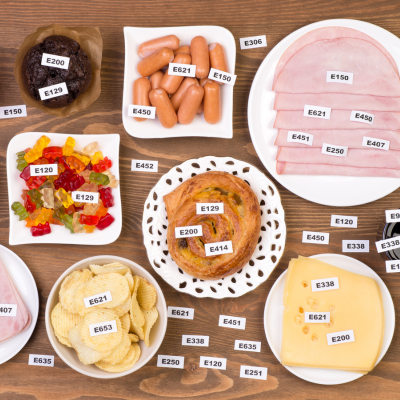
Posts

LACTIC ACID (E-270) AND LACTATES SUBSTITUTE IN COOKED MEAT

Lactic acid and lactates are used as preservatives, mainly against yeasts, molds, and other food-degrading bacteria, but natural alternatives exist to achieve clean label foods.

Below, we will detail the functionality of these chemical additives, which are also used to increase the stability of antioxidants and to prevent water loss in various products.

Lactic acid (E-270) is an organic compound that is naturally produced during the fermentation of carbohydrates by lactic acid bacteria. In the food industry, lactic acid is used as a preservative and acidulant.

It’s use is recognized and regulated by Regulation (EC) No 1331/2008 of the European Parliament and Council of December 16, 2008, establishing a common authorization procedure for food additives, enzymes, and flavorings, and is identified on food labels with the number E-270. Lactic acid can be obtained naturally or synthetically by fermenting various types of sugar with lactic acid bacteria. From lactic acid, other commonly used food preservatives in the industry, particularly in cooked meat products, can be derived.

These food preservatives are lactates and can be identified on food labels with the following numbers:

  • Sodium Lactate (E-325)
  • Potassium Lactate (E-326)
  • Calcium Lactate (E-327)
  • Ammonium Lactate (E-328)
  • Magnesium Lactate (E-329)
  • Ferrous Lactate (E-585)
  • Choline Lactate (E-1001vi)

Lactate is a salt derived from lactic acid that is present as a food additive in many foods. Some foods containing lactates include:

  • Cooked meat products, such as cooked ham and sausages.
  • Bakery and pastry products.
  • Fermented beverages, such as beer and wine.
  • Dairy products, such as cheeses and yogurts.

As mentioned earlier, there are different types of lactate salts, for example, calcium lactate used in packaged products like desserts and ice creams, bakery products, or sodium lactate widely used in cooked meat products.

By reading the label of any cooked ham, you can find the following ingredients and additives:

Cooked ham: pork ham, water, sodium lactate, salt, dextrose, lactose, stabilizers (E-451, E-462), gelling agents (E-407, E-416), flavors, antioxidant (E-301), preservatives (E-250, E-243).

Cooked ham is an example of a food that consumers consider healthy yet has a fairly extensive list of chemical additives. At Amerex, for example, we work with natural preservatives to replace lactate in cooked products, as well as to replace the rest of the chemical additives.
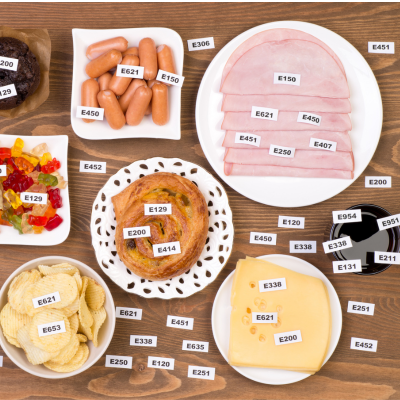
Jamón cocido lactato y ácido láctico

The mechanism of action of sodium lactate is based on two principles:

  • pH Reduction: By reducing the product’s pH, it creates a hostile environment for the growth of pathogenic bacteria and undesirable microorganisms.
  • Osmotic Interference: Sodium lactate affects the osmotic pressure within bacterial cells, making their survival and multiplication difficult.

In summary, sodium lactate is a salt that acts as an undissociated acid that passes through the microbial membrane to acidify the cellular interior. As a result, intracellular pH acidifies, and cellular metabolism can rapidly decrease, leading to cell death.

In cooked meat products, such as cooked ham, lactate plays a crucial role. It is added to inhibit the growth of pathogenic bacteria and prolong the product’s shelf life by regulating acidity. Additionally, lactates help maintain the texture and juiciness of the meat, improving water retention and the firmness of the final product.

In the food industry, lactate is a widely used additive, especially in meat products that are susceptible to deterioration by lipid oxidation and the production of rancid off-flavors, particularly in sausages due to their high-fat content. Lactate helps delay this bacterial decomposition, increasing the shelf life and sensory quality of the food.

However, there are natural substitutes for lactate and lactic acid whose action is equivalent to these chemical additives and can sometimes even improve it. If you want to know what lactate substitutes for cooked products we have at Amerex, keep reading!

At Amerex, we are a biotechnology company with over 40 years of experience in natural preservatives, and we are committed to offering healthy and safe solutions for food preservation. We aim to provide our customers with natural preservatives that not only ensure food safety and quality but also respond to consumer demands for healthier products with cleaner labels.

From the Biamex range of fermentates to the Safemix range of natural flavors, we have multiple products that can be used as substitutes for lactate or lactic acid, for example, or other chemical additives like nitrites.

If you want more information about our natural preservation solutions, don’t hesitate to contact us!

Amerex see you neXt time

Contact us at

4 + 3 = ?

DISCOVER THE BEST NATURAL ALTERNATIVES TO CHEMICAL ADDITIVES IN ULTRA-PROCESSED FOODS

The search for natural alternatives to chemical additives is one of the main objectives of the food industry. In today’s age, where health and wellbeing are a priority, the food industry is undergoing a revolution in terms of the ingredients and processes they use in food. More and more consumers are demanding less processed and more natural foods, free of artificial additives.

Ultra-processed foods are known for the large number of chemical additives on their labels. These additives are used to improve organoleptic or safety aspects of the food, but are there natural options to replace them?
In today’s blog we bring you a guide to the best natural alternatives to additives in your ultra-processed foods, so you can offer a healthier and microbiologically safer food!

Chemical additives are substances added to foodstuffs for the purpose of improving their taste, texture, colour or durability. They are regulated by Regulation (EC) No 1333/2008 of the European Parliament and of the Council of 16 December 2008, which lists, under the associated E number, all additives permitted in the European Union and their restrictions on use.

The current concern about these additives is due to studies that have suggested that excessive consumption of additives in ultra-processed foods (such as sausages, ready meals, pastries, etc.) could be linked to various health risks: such as allergies, metabolic disorders and adverse effects on gastrointestinal health.

The lack of transparency in product labelling often also makes it difficult for consumers to make informed food choices. This is why consumers are increasingly looking for natural alternatives that are free of artificial additives.

Chemical additives used in ultra-processed

There is a wide variety of natural alternatives to chemical additives in the ingredients market. Ultra-processed foods often need additives to help maintain colour, give a specific flavour or preserve the food for more days than a fresh product, however, natural ingredients can be used to provide the same benefits as artificial additives.

The best known additive substitutes are herbal and spice extracts, fruit or vegetable juices, and other natural extracts that can act as preservatives, colourings and flavour enhancers in a safe and healthy way. They are a good natural and environmentally friendly option. However, there are also other natural ingredients that are more effective as preservatives, such as ferments or lactic acid bacteria.

Starters are groups of lactic acid bacteria that offer an excellent alternative to artificial additives.

It is traditionally known that the way in which starters perform this preservative function is through the maturation of the product. This usually includes an organoleptic change in the food due to acidification, which lowers the pH and modifies the organoleptic characteristics of the matrix. They not only improve the preservation of the food, but also enhance its taste and nutritional value. Traditionally, these starters have been used in the maturation of sausages and cheeses and are well known to manufacturers.

There are, however, ferments that do not produce acidification in the product but do carry out food preservation by different mechanisms such as competition.

Amerex stands out in this case as a supplier of natural preservatives based on ferments, offering innovative and healthy solutions for the food industry as an alternative to chemical additives.

By choosing foods that are free of artificial additives and rich in natural ingredients, you gain a multitude of benefits. Firstly, you are promoting a healthier and more nutritious diet, and by avoiding synthetic additives, you reduce exposure to harmful chemicals and promote a more natural and sustainable lifestyle.

On the other hand, the use of these natural alternatives in ultra-processed foods, such as ferments, allows for the reduction of food processing resulting in a more “homemade” product. Together with the elimination of chemical additives, the consumer will get a more positive image of that food.

As a supplier of natural alternatives to food additives, Amerex has more than 40 years’ experience in providing innovative and sustainable solutions for the food industry.

Our natural ferment-based preservatives are an excellent alternative to artificial additives, guaranteeing the quality and safety of your food products without compromising taste or freshness. We have different product ranges, such as the Biamex range of ferments or Safemix natural flavourings, which include preservatives for specific problems, such as protection against Listeria or Salmonella, or for the removal of additives such as nitrite or sorbate.

In short, by choosing natural alternatives free of artificial additives, you are taking a step towards a healthier and more conscious diet. With options such as fermented foods as an alternative to additives and the commitment of companies like Amerex, it is easier than ever to enjoy delicious and nutritious food by offering the best choice to the consumer.

If you would like to know more about these natural options, please contact us for more information:

Amerex see you neXt time
Our Products

Contact us

2 + 2 = ?

2019 MEETING AT THE UNIVERSITY OF LLEIDA – Use of starters in the food industry

Hello again and welcome to a new Blog post. For one more year, we have participated in a meeting to share our knowledge with the students of the Master in Innovation and Management in the Food Industry, taught at the University of Lleida. Here is the whole experience!

The conference was impeccable thanks to this centre where we always feel like home whenever they invite us to share our experience and our thoughts about today’s industry.

For many years Luciano and Alejandro, Amerex’s technical experts, dealt with some topics such as the application of starters in the meat industry, but this year the rest of the food industries were presented with a special emphasis.

Other industries in the food sector: dairy, fish, ready meals, sauces, vegans and vegetables and bakery

As we have already mentioned in other occasions, starter or ripening cultures are commonly used for a traditional purpose, which is to actively intervening in the creation of organoleptic properties of the final product during the manufacturing of fermented foods. This is performed through the production of acid and enzymes, as well as ensuring sanitary quality.

Particularly, preservative cultures increase shelf-life and safety of the final product, so they can last longer. Let’s see some examples!

Comparison of fresh loin with a chemical additive vs. Fermitrat Export, an Amerex's natural solution. The loin with the chemical additive has a considerably worse appearance due to gas formation, exudate, weak texture and yeast colonies

In the meat sector, we can see a comparison between two cooked loins, one of them injected with a common chemical additive while the other has been injected with one of our preservatives. The results of adding a preservative are remarkable and profitable, thanks to their capacity to control factors that negatively affect the final product, both microbiological and organoleptic.

Comparison between spanish omelettes with and without Fermitrat Export, an Amerex's natural solution. The omelette with the preservative has a better appearance

In the case of these two spanish omelettes subjected to high temperature conditions up to 33ºC, we can also see the difference between adding a preservative or not. Both organoleptic (gas generation, texture) and microbiological (analysis of total mesophilic and enterobacteria) results were worse in the spanish omelette without the preservative.

Comparison between fresh salmon with and without Fermitrat Export, an Amerex's natural solution. Salmon without the preservative has a completely discarded texture, and a greater liquid formation

Alternatively, in these salmon pieces, with and without preservative. Above all we can observe the liquid formation and texture. It can be stated then that the addition of a preservative clearly provides an advantage at least in an organoleptic level in this matrix.

What will be next? Our Pilot Plant is already preparing to carry out further trials in other applications. This year, the two top products in terms of preservatives that had not been tested so far are salmon and sauces for vegetable matrixes. Stay tuned, because we will continue reporting!

Image showing new applications of preservatives in different industries of the food sector, such as fish or ready meals

imasd@amerexingredientes.es

Phone number: +34 91 845 42 14

Amerex see you neXt time
Our Products

Contact us

2 + 1 = ?