Posts

ADDITIVES AND PRESERVATIVES FOR CEPHALOPODS

Cephalopods, such as squid, octopus, and cuttlefish, are highly valued seafood products in both global and national gastronomy. However, the processes of catching, handling, and preparing these animals pose specific challenges related to preservation and yield optimization.

In this article, we address key questions about cephalopods and explore how Amerex’s clean-label additives and preservatives can improve the yield and quality of these products.

What are cephalopods?

Cephalopods are a group of marine mollusks known for their intelligence and complex behavior, including species like squid and octopus. Anatomically, their large head is accompanied by limbs and tentacles surrounding the mouth, aiding in navigation and feeding. This aligns with their name derived from the Greek “cephalos” (head) and “podos” (feet), as their tentacles are directly connected to their head.

The current orders with existing species include:

  • Sepiida (Cuttlefish)
  • Teuthida (Squid)
  • Octopoda (Octopus)
  • Cephalopoda (Pota)

What types of cephalopods are most common in the Food Industry?

In the fishing and food industry, cephalopods stand out for their delicious meat, unique texture, and culinary versatility. The consume of these molluscs at home is becoming more and more common thanks to the fact that the food industry has made it easier to buy them in supermarkets.

The most valued molluscs include:

  • Squid: Highly prized for its tender meat and ease of preparation.
  • Octopus: Appreciated for its firm texture and intense flavor.
  • Cuttlefish: Known for its ink, which is used in various culinary preparations.

Global production of cephalopods exceeds 5,000,000 tons. Spain, for instance, reports catches of 57,797 tons, ranking 17th worldwide. In Spain, the fishing tradition and consumption of seafood, including cephalopods, form the foundation of its culinary culture, with regions such as Galicia and southern Spain standing out.

How are cephalopods processed for sale?

Cephalopods must undergo several processes before being sold and reaching consumers. These processes include:

  1. Cleaning: To remove viscera, skin, and cartilage.
  2. Cutting: Into slices, strips, or whole pieces based on market demand.
  3. Freezing: To preserve freshness and facilitate transportation.
  4. Treatment with additives: To improve characteristics such as texture, color, and shelf life.

In this last step, Amerex offers the industry a wide range of natural preservatives, with extensive experience in cephalopods focusing on three main objectives:

  • Improving and maintaining color
  • Food safety
  • Increasing yield or water retention

What does the yield parameter mean in relation to cephalopods?

Yield refers to the amount of usable final product after cleaning and preparation processes.

For example, in squid, yield can vary depending on the type of cut, water retention, and post-harvest handling. Optimizing this parameter is crucial for profitability, especially for products intended for export or the HORECA market.

To achieve this, Amerex provides manufacturers with preservatives capable of improving yield by up to 28%.

What additives are commonly used for cephalopods preservation?

Certain additives are used in the food industry to improve the quality and yield of cephalopods, as listed in Annex II of Regulation (EC) No 1333/2008. Among the most common are:

  1. E451 (Triphosphates): Help increase water retention in muscle tissues, reducing drip loss after thawing.
  2. E452 (Polyphosphates): Similar to triphosphates, they improve texture and prolong freshness but must be used within regulatory limits.
  3. E331 (Sodium citrate): An antioxidant that prevents protein oxidation and helps maintain the natural color of the product.
  4. E301 (Sodium ascorbate): Helps preserve freshness by inhibiting oxidation processes.
  5. E262 (Sodium acetate): Acts as a preservative, preventing bacterial growth during storage.

Although these additives are effective, there is a growing demand for natural alternatives and clean-label solutions that reduce the perception of artificial additives in products.

What preservatives does Amerex offer for Cephalopods preservation?

Amerex Ingredients provides a wide range of natural preservatives based on biotechnological solutions designed to enhance the quality and yield of seafood products. Some of these solutions stand out for their water retention capabilities (yield), based on ferments that minimize weight loss without compromising texture or flavor. Additionally, antimicrobial cultures containing beneficial bacteria inhibit pathogens and microorganisms responsible for spoilage. These are clean-label ingredients, serving as phosphate alternatives to meet the demand for more natural products.

Optimizing cephalopod yield not only improves the profitability of fishing and processing companies but also ensures high-quality products that meet consumer expectations. With Amerex Ingredients’ preservatives, companies can reduce the use of artificial additives, embrace natural ingredients, and achieve exceptional results in their seafood products.

Want to learn more about our clean-label solutions? Contact us and discover how Amerex can transform the yield of your cephalopods!

Amerex see you neXt time


Contact us at

8 + 0 = ?

LACTIC ACID (E-270) AND LACTATES SUBSTITUTE IN COOKED MEAT

Lactic acid and lactates are used as preservatives, mainly against yeasts, molds, and other food-degrading bacteria, but natural alternatives exist to achieve clean label foods.

Below, we will detail the functionality of these chemical additives, which are also used to increase the stability of antioxidants and to prevent water loss in various products.

Lactic acid (E-270) is an organic compound that is naturally produced during the fermentation of carbohydrates by lactic acid bacteria. In the food industry, lactic acid is used as a preservative and acidulant.

It’s use is recognized and regulated by Regulation (EC) No 1331/2008 of the European Parliament and Council of December 16, 2008, establishing a common authorization procedure for food additives, enzymes, and flavorings, and is identified on food labels with the number E-270. Lactic acid can be obtained naturally or synthetically by fermenting various types of sugar with lactic acid bacteria. From lactic acid, other commonly used food preservatives in the industry, particularly in cooked meat products, can be derived.

These food preservatives are lactates and can be identified on food labels with the following numbers:

  • Sodium Lactate (E-325)
  • Potassium Lactate (E-326)
  • Calcium Lactate (E-327)
  • Ammonium Lactate (E-328)
  • Magnesium Lactate (E-329)
  • Ferrous Lactate (E-585)
  • Choline Lactate (E-1001vi)

Lactate is a salt derived from lactic acid that is present as a food additive in many foods. Some foods containing lactates include:

  • Cooked meat products, such as cooked ham and sausages.
  • Bakery and pastry products.
  • Fermented beverages, such as beer and wine.
  • Dairy products, such as cheeses and yogurts.

As mentioned earlier, there are different types of lactate salts, for example, calcium lactate used in packaged products like desserts and ice creams, bakery products, or sodium lactate widely used in cooked meat products.

By reading the label of any cooked ham, you can find the following ingredients and additives:

Cooked ham: pork ham, water, sodium lactate, salt, dextrose, lactose, stabilizers (E-451, E-462), gelling agents (E-407, E-416), flavors, antioxidant (E-301), preservatives (E-250, E-243).

Cooked ham is an example of a food that consumers consider healthy yet has a fairly extensive list of chemical additives. At Amerex, for example, we work with natural preservatives to replace lactate in cooked products, as well as to replace the rest of the chemical additives.

Jamón cocido lactato y ácido láctico

The mechanism of action of sodium lactate is based on two principles:

  • pH Reduction: By reducing the product’s pH, it creates a hostile environment for the growth of pathogenic bacteria and undesirable microorganisms.
  • Osmotic Interference: Sodium lactate affects the osmotic pressure within bacterial cells, making their survival and multiplication difficult.

In summary, sodium lactate is a salt that acts as an undissociated acid that passes through the microbial membrane to acidify the cellular interior. As a result, intracellular pH acidifies, and cellular metabolism can rapidly decrease, leading to cell death.

In cooked meat products, such as cooked ham, lactate plays a crucial role. It is added to inhibit the growth of pathogenic bacteria and prolong the product’s shelf life by regulating acidity. Additionally, lactates help maintain the texture and juiciness of the meat, improving water retention and the firmness of the final product.

In the food industry, lactate is a widely used additive, especially in meat products that are susceptible to deterioration by lipid oxidation and the production of rancid off-flavors, particularly in sausages due to their high-fat content. Lactate helps delay this bacterial decomposition, increasing the shelf life and sensory quality of the food.

However, there are natural substitutes for lactate and lactic acid whose action is equivalent to these chemical additives and can sometimes even improve it. If you want to know what lactate substitutes for cooked products we have at Amerex, keep reading!

At Amerex, we are a biotechnology company with over 40 years of experience in natural preservatives, and we are committed to offering healthy and safe solutions for food preservation. We aim to provide our customers with natural preservatives that not only ensure food safety and quality but also respond to consumer demands for healthier products with cleaner labels.

From the Biamex range of fermentates to the Safemix range of natural flavors, we have multiple products that can be used as substitutes for lactate or lactic acid, for example, or other chemical additives like nitrites.

If you want more information about our natural preservation solutions, don’t hesitate to contact us!

Amerex see you neXt time

Contact us at

2 + 2 = ?

DISCOVER THE BEST NATURAL ALTERNATIVES TO CHEMICAL ADDITIVES IN ULTRA-PROCESSED FOODS

The search for natural alternatives to chemical additives is one of the main objectives of the food industry. In today’s age, where health and wellbeing are a priority, the food industry is undergoing a revolution in terms of the ingredients and processes they use in food. More and more consumers are demanding less processed and more natural foods, free of artificial additives.

Ultra-processed foods are known for the large number of chemical additives on their labels. These additives are used to improve organoleptic or safety aspects of the food, but are there natural options to replace them?
In today’s blog we bring you a guide to the best natural alternatives to additives in your ultra-processed foods, so you can offer a healthier and microbiologically safer food!

Chemical additives are substances added to foodstuffs for the purpose of improving their taste, texture, colour or durability. They are regulated by Regulation (EC) No 1333/2008 of the European Parliament and of the Council of 16 December 2008, which lists, under the associated E number, all additives permitted in the European Union and their restrictions on use.

The current concern about these additives is due to studies that have suggested that excessive consumption of additives in ultra-processed foods (such as sausages, ready meals, pastries, etc.) could be linked to various health risks: such as allergies, metabolic disorders and adverse effects on gastrointestinal health.

The lack of transparency in product labelling often also makes it difficult for consumers to make informed food choices. This is why consumers are increasingly looking for natural alternatives that are free of artificial additives.

Chemical additives used in ultra-processed

There is a wide variety of natural alternatives to chemical additives in the ingredients market. Ultra-processed foods often need additives to help maintain colour, give a specific flavour or preserve the food for more days than a fresh product, however, natural ingredients can be used to provide the same benefits as artificial additives.

The best known additive substitutes are herbal and spice extracts, fruit or vegetable juices, and other natural extracts that can act as preservatives, colourings and flavour enhancers in a safe and healthy way. They are a good natural and environmentally friendly option. However, there are also other natural ingredients that are more effective as preservatives, such as ferments or lactic acid bacteria.

Starters are groups of lactic acid bacteria that offer an excellent alternative to artificial additives.

It is traditionally known that the way in which starters perform this preservative function is through the maturation of the product. This usually includes an organoleptic change in the food due to acidification, which lowers the pH and modifies the organoleptic characteristics of the matrix. They not only improve the preservation of the food, but also enhance its taste and nutritional value. Traditionally, these starters have been used in the maturation of sausages and cheeses and are well known to manufacturers.

There are, however, ferments that do not produce acidification in the product but do carry out food preservation by different mechanisms such as competition.

Amerex stands out in this case as a supplier of natural preservatives based on ferments, offering innovative and healthy solutions for the food industry as an alternative to chemical additives.

By choosing foods that are free of artificial additives and rich in natural ingredients, you gain a multitude of benefits. Firstly, you are promoting a healthier and more nutritious diet, and by avoiding synthetic additives, you reduce exposure to harmful chemicals and promote a more natural and sustainable lifestyle.

On the other hand, the use of these natural alternatives in ultra-processed foods, such as ferments, allows for the reduction of food processing resulting in a more “homemade” product. Together with the elimination of chemical additives, the consumer will get a more positive image of that food.

As a supplier of natural alternatives to food additives, Amerex has more than 40 years’ experience in providing innovative and sustainable solutions for the food industry.

Our natural ferment-based preservatives are an excellent alternative to artificial additives, guaranteeing the quality and safety of your food products without compromising taste or freshness. We have different product ranges, such as the Biamex range of ferments or Safemix natural flavourings, which include preservatives for specific problems, such as protection against Listeria or Salmonella, or for the removal of additives such as nitrite or sorbate.

In short, by choosing natural alternatives free of artificial additives, you are taking a step towards a healthier and more conscious diet. With options such as fermented foods as an alternative to additives and the commitment of companies like Amerex, it is easier than ever to enjoy delicious and nutritious food by offering the best choice to the consumer.

If you would like to know more about these natural options, please contact us for more information:

Amerex see you neXt time
Our Products

Contact us

5 + 1 = ?

FOOD ADDITIVES: ORIGIN, CLASSIFICATION AND ALTERNATIVES

Welcome to Amerex’ Blog! As mentioned in previous posts, it is very common for today’s consumers to take a deeper look at the ingredients shown in food labels. In this blog post we will take a look at the origin, classification and alternatives to food additives to be able to make a conscious decision when buying food on a daily basis.

What are food additives?

The definition of food additives is laid down in Regulation 1333/2008 of the European Parliament and reads as follows: “any substance not normally consumed as a food in itself and not normally used as a characteristic ingredient of food, whether or not it has nutritive value, the intentional addition of which to food for a technological purpose in the manufacture, processing, preparation, treatment, packaging, transport or storage of such food results, or may be reasonably expected to result, in it or its by-products becoming directly or indirectly a component of such foods”.

Essentially, food preservatives are used in the food industry to improve the organoleptic characteristics of foods, increase their shelf-life or facilitate their manufacture.

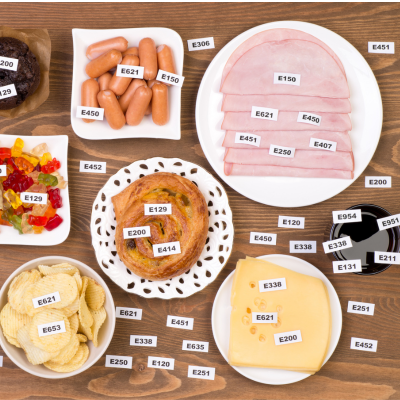
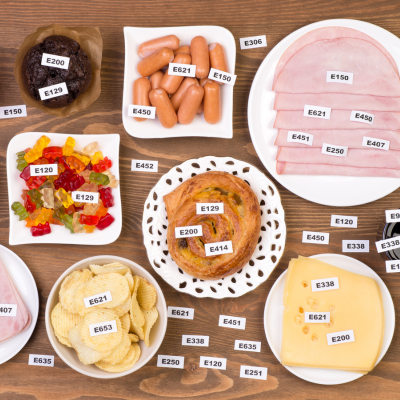
Food selection. Image by Freepik

Are food additives regulated under the law?

The European Food Safety Authority, better known by its acronym EFSA, is the body in charge of evaluating the safety of food additives, either new additives or new uses of existing additives, as well as the re-evaluation of already authorised additives. It states the following data:

  • Identity and characterisation of the additive
  • Stability in food
  • Justification of its necessity
  • Existing authorisations
  • Evaluation of human dietary exposure to the additive
  • Biological and toxicological characteristics

In the framework of its safety evaluations of food additives, EFSA tries to determine the safe levels and the Acceptable Daily Intake (ADI) for each substance. All this information is supported not only by EFSA but also by the Scientific Committee on Food (SCF). This ensures that food additives included in the EU list are considered safe and their limits are correctly identified.Regulation (EC) Nº 1333/2008 and its annexes constitute the legislation under which definitions, the use of food additives and all matters relevant to such additives are regulated.

How are food additives classified?

Additives used in food can be classified according to different criteria such as the origin of the product or, more commonly, according to their functionality. Let’s have a look at these classifications.

Classification according to the origin of the product

A first category would be natural additives, which are those obtained from natural elements through physical methods that do not involve the addition of any other non-natural substance. Examples of natural preservatives are plant-based pectin or agar obtained from algae.

The second category are the synthetic or non-natural additives, which are obtained through the synthesis of products that are not present in nature and/or through processes that generate or include non-natural substances. This category includes most of the preservatives commonly used in the food industry, such as sodium nitrite or citric/acetic acids.

Classification by functionality

Regardless of the natural or synthetic origin of food additives, they can be classified according to their function in the final food. The following is a classification of the most commonly used additives:

  • Colouring agents used to intensify or change the colour of the food and make it more attractive for consumption.
  • Preservatives that are added to extend the shelf-life of the food by protecting against microbiological or enzymatic spoilage.
  • Antioxidants used to also extend shelf-life through mechanisms that prevent or delay oxidation and rancidity caused by physical processes such as exposure to light or oxygen.
  • Emulsifiers that allow the mixture of two or more ingredients that are non-miscible and keep it stable.
  • Thickeners to improve, increase or concentrate the viscosity of a food to ensure an optimal texture for consumption.
  • Flavour enhancers that increase the intensity or durability of the natural flavour of the food.

Other categories of food additives would be e.g. sweeteners, humectants, acidity regulators or flavourings.

What does it mean if an additive is labelled as an E-number in a food?

When us consumers check a label in search of all the ingredients of a foodstuff, we very often find that many of them are labelled as an E number, which is basically an international identification system created for better understanding by consumers.

This E-number system indicates that the food additives listed on the label are approved by the European Union for use in food. In addition, they follow special numbering codes that indicate their classification by functionality as well as the specific substance used. Some examples of how the codes relate to these additives are as follows (they are classified in the hundreds):

  • Antioxidants and acidity regulators: E-300
  • Colouring agents: E-100
  • Preservatives: E-200
  • Stabilisers: E-400
  • Flavour enhancers: E-600

Is it safe to use additives in food?

Historically and for ages, society has been aware of the need to find solutions for food preservation, and therefore salt and vinegar, for example, are traditional preservation methods that many manufacturers still take into account today. Likewise, the use of spices and plants, which are traditional solutions to improve the flavour, aroma and appearance of food. Nowadays, and with the technology being much more advanced, the aforementioned preservatives meet this need, and consumers now place great value on the fact that the use of additives in the food industry must always be safe, justified, transparent and beneficial in its intended purpose.

There are some concerns about the use of some of these ingredients in certain foods and many consumers are more cautious about controlling their dietary intake. For example, one claim is that colouring agents are not safe, as many people develop sensitivity to specific colouring agents such as E-102 or Tartrazine that is mostly used in drinks, sweets and ice cream. Or the cases of infantile hyperactivity developed by some preservatives and their mixtures, equally supported and denied by the scientific community.

The truth is that the additives are regulated by the European Community and have their corresponding authorisation for use, so they meet the requirements established by law. However, this does not mean that all the food additives currently in use should not be monitored and that their functionalities and their suitability for human consumption should not be continuously re-evaluated. It definitely should be.

Are there alternatives to the use of additives in the food industry?

Indeed there are alternatives to food additives. In fact, in the food industry the concern for a clean label and the use of fewer additives and ingredients is becoming more and more relevant, as we mentioned in our previous blog post.

The “chemophobia” or fear of excessive chemicals in processed foods is causing numerous products claiming to be 100% E-number free, and offer more natural alternatives. Therefore, natural preservative alternatives are becoming increasingly popular and are without a doubt the focus of many ingredient manufacturers who want to follow these consumer trends.

Amerex Operator

Where can I get a natural preservative as an alternative to the use of food additives?

At Amerex we design and manufacture E-number free microbiological blends as alternatives to improve the safety and shelf-life of a wide range of products. Some examples of natural preservatives are our Biamex and Safemix ranges, which can achieve a reduction or even removal of these additives (sorbate, nitrites, sulphites, lactate, acetate…).

More specifically, our nitrite replace solution, BIAMEX-NC, is one of the top products of recent years. Or the AMEXOL range as natural antioxidant alternative to replace acids such as citric (E-330) and ascorbic (E-300).

If you like to know more about the use of these alternatives and many others that we have in our product portfolio, we will be happy to offer you expert advice on food preservation.

imasd@amerexingredientes.es

Phone number: +34 91 845 42 14

Amerex see you neXt time
Our Products

Contact us

1 + 3 = ?

SEEN FOR OURSELVES – Ripening starters for nitrites replacement in food industry

Welcome again to our latest blog post! This post will be the first of many in our brand new section called ‘Seen for Ourselves’, as this section is all about empirical results of trials carried out in the pilot plant of Amerex facilities. You will get to know first-hand the experiences at our plant, how things work there and how each day we get a step closer to our goal of creating fully clean label products. Let’s dive in:

Last month we carried out a number of such trials with a common element: one of our starters specially designed to generate colour on the final product without the presence of nitrites. In food industry, particularly in the meat sector, nitrates and nitrites are considered necessary to start the nitrification process that imparts a characteristic colour to the final product. Here is a simple explanation of what happens during this process:

Metabolic reaction from nitrate to nitrosomyoglobin, generating colour in meat products
Nitrate is reduced to nitrite, which is further reduced to produce nitric oxide. This nitric oxide combines with myoglobin in muscles to form nitrosomyoglobin, which is responsible for the typical colour of cured meat. In case of cooked meat, temperature causes this nitrosomyoglobin to be transformed into nitrosylhemochrome, responsible for its characteristic pink colour.

Nitrates and nitrites have been considered a requisite in the food industry not only for their ability to generate colour, but also because they guarantee certain safety in the products by preventing the development of pathogenic bacteria, especially Clostridium botulinum, which causes botulism disease. In addition, the corresponding authority regulates the maximum dosage that can be incorporated into each food under specific legislation. It is apparent that we need to be cautious when it comes to nitrates because even though they are found naturally, for example in various vegetables such as lettuce, celery or even in water, a part of them is transformed into nitrites during the digestion process. These nitrites, in turn react with the stomach amino acids forming nitrosamines, which are carcinogenic substances. Finding nitrites directly in food is even more dangerous. For this reason, it is necessary to find substitutes to evade the presence of these harmful additives in products that we usually consume.

This has led us to conducting numerous trails throughout February using one of our main starters, capable of performing this nitrification reaction sans a natural or artificial source of nitrates or nitrites. Let’s look at one of our trials to see the difference between using nitrites and one of our cultures selected from a wide array of starters. We selected a specific starter for this trial involving a cooked pork loin as the final product.

For these trials, we used fresh pork loins of about 250 – 300 g, which we injected with different brines. Here is a description of each sample:

  • Sample 1: Control sample
  • Brine 2: Starter at 0.2 g/Kg
  • Brine 3: Substrate at 4 g/Kg
  • Brine 4: Starter at 0.2 g/Kg + Substrate at 4 g/Kg
  • Brine 5: 15 ppm of nitrites
  • Brine 6: Starter at 0.2 g/Kg + 2 ppm of nitrites

The amount of brine corresponding to the weight of each loin was injected. The results of storing them for 48 hours at a temperature of 0-4ºC and afterthe subsequent cooking were the following ones:

Comparison between sample 1 cooked loin and brine 3 cooked loin (substrate). Both look pale due to not using nitrites or starters
Image 1. Comparison between Control sample and Brine 3
Comparison between brine 2 cooked loin (starter) and brine 4 cooked loin (starter + substrate). Both look pink since the starter causes the nitrification and this is enhanced thanks to using an additional substrate
Image 2. Comparison between Brines 2 and 4
Comparison between brine 5 cooked loin (nitrites) and brine 6 cooked loin (starter + nitrites). Both look pink thanks to the starter and nitrites which trigger the nitrification reaction.
Image 3. Comparison between Brines 5 and 6

To start describing the results of the trial, in the first picture we can see that the Control sample and Brine 3 look practically the same. The substrate of Brine 3 is made up of components that enhance the growth of the starters. It can be observed that just by itself, i.e. without the addition of a starter, it does not produce any change in the loin’s colour.

Brine 2 and 4 have undergone a noticeable transition to the characteristic pink colour of cooked products. Even within Brine 2 and 4, the latter seems to display a brighter tone of pink as it is made up of the starter plus the substrate. Therefore, we can definitely conclude that the starter culture is key in this type of application and in the final product for the much-needed generation of the colour as required by the food industry.

The final comparison between Brines 5 and 6 shows that the presence of nitrites at a certain dosage also generates the typical pink colour, perhaps brighter than in the other loins. The result of Brine 6 loins is remarkable as they possess an extremely striking colour appealing to consumers even though they contain only a minute dosage of nitrite (the maximum dosage allowed under regulations is 100ppm).

To sum up, we have demonstrated that the use of starters is a very good alternative to nitrites in cooked products, since it causes the appearance of a characteristic colour that is of real interest for the food industry. When complemented with substrate or nitrites, somehow the intensity of that colour is further augmented.

Subsequently we will show you the results of using the same starter on other final products… Do you want to find out more? Stay tuned!

If you are interested in knowing more about this star culture, please contact us on the following email or phone number for a personalized advice:

imasde@amerexingredientes.es

Phone number: +34 91 845 42 14

Amerex see you neXt time
Our Products

Contact us

6 + 1 = ?