MICROBIOLOGICAL PROBLEMS IN BAKERY: LISTERIA IN SOUR AND PASTRY CREAM

In food industry, Listeria is a worldwide known bacterium. In this blog we will talk about the risk of contamination in a sector as attractive as the bakery industry due to the risk of contamination of pastry cream and sour cream .

In the world of confectionery there is a great variety of cakes, pies and other sweets, being a sector that always seeks excellence in taste and quality. However, food safety is a constant concern, especially when it comes to perishable products such as creams and cream. One of the main microbiological risks faced by confectionery is contamination by the well known Listeria monocytogenes a bacterium that can cause serious health problems.

Listeria monocytogenes is a gram-positive pathogenic bacterium that can be found in a wide variety of foods. Its presence is well known in the meat sector, with very well known cases at national level, but it can also be present in dairy products such as different cheeses, milk or also in cream and creams used in pastry fillings.

This bacterium is especially dangerous because it is very resistant to unfavorable environments. It can survive and multiply in conditions of acidity, salinity (up to 10%), oxygen scarcity (even under vacuum) and refrigeration temperatures (as low as 2º-4º C), which means that even foods stored in cold conditions are not completely safe. Other factors such as pH (between 4.4-9.4) and water activity (>0.92) also play a role.

Listeria infection, known as listeriosis, can cause severe symptoms such as fever, muscle aches and gastrointestinal problems. In people with weakened immune systems, pregnant women, newborns and the elderly, listeriosis can be fatal.

In addition, as discussed above, the ability of Listeria to grow in cold environments makes it a challenge to keep it under control in refrigerated dairy products, such as any type of cake, pie, or pastry food with a cream or custard filling. In addition, although it does not continue to proliferate during freezing, its presence is maintained, so there is still a risk of contamination in frozen cakes, especially when they begin to thaw and the bacteria, if present, continue to multiply.

As mentioned above, creams and cream, which are dairy-based products, are especially vulnerable to microbiological contamination due to several factors:

  1. Water and Nutrient Content: These products are rich in water and nutrients, making them an ideal medium for the growth of bacteria and in particular listeria.
  2. Handling and Processing: Handling during processing and storage can facilitate the introduction of contaminants.
  3. Storage Temperature: Although stored refrigerated, Listeria can survive and multiply at low temperatures.

Currently, there are several preservatives against Listeria and other microorganisms. At Amerex we specialize in natural preservatives based on biotechnology that offer an innovative, safe and clean label solution.

Our preservatives can be used in different food matrices, such as sour cream and pastry cream in bakery, but also in other products susceptible to listeria contamination such as meat matrices, fresh pizza doughs, in fish such as salmon, etc.

Thus, our preservatives offer the following advantages:

  • Safety: They are safe for consumption and do not present risks associated with synthetic chemicals.
  • Efficacy: They are effective against a wide range of microorganisms, including Listeria due to their use of protective fermentation.
  • Sustainability: They are environmentally sustainable and are aligned with trends towards more natural and less processed products.
  • Shelf Life Extension: Extends the shelf life of products without the addition of unwanted chemical additives.
  • Maintain Quality: They do not negatively affect the organoleptic properties of the product: taste, texture or appearance.

Safety in bakery as in other food sectors is essential and combating microbiological contaminations in products such as sour and pastry creams are  a challenge that cannot be ignored.

Our company is dedicated to providing natural and effective solutions to protect your products and ensure that they reach consumers in the best possible condition. At Amerex we have different specialized preservatives with very good results against listeria in frozen and refrigerated cream and custard cakes.

If you would like more information about our products, please do not hesitate to contact us!

Amerex see you neXt time

Contact us at

2 + 6 = ?

WITHDRAWAL OR REPLACEMENT OF NITRITES WITH NATURAL PRESERVATIVES

In the food industry there are several sectors in which the chemical additives nitrates and nitrites are commonly used. In the meat or fish sector, for example, nitrates and nitrites are considered necessary to carry out the nitrification process that gives a characteristic colour to the final product as well as protection against anaerobic pathogens and sporogens.

Below we explain why nitrites are used in feed and introduce you to Amerex’s specialist product for the natural replacement of nitrites: Biamex NC.

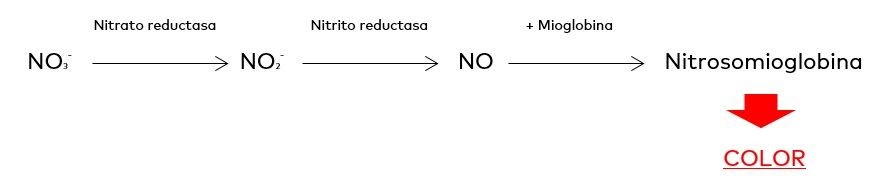
In the nitrification process, nitrate is reduced to nitrite, from which nitric oxide is produced. Nitric oxide combines with muscle myoglobin to form nitrosomyoglobin, which is responsible for the typical colour of cured meats, e.g. in the meat industry. In the case of cooked meats, the temperature causes this nitrosomioglobin to be transformed into nitrosylhaemochrome, which is responsible for the characteristic pink colour.

Nitrates and nitrites have been considered necessary in the food sector, in addition to the generation of colour that they provide to food, making it more attractive to consumers, because they guarantee certain safety in products by preventing the development of pathogenic bacteria, specifically Clostridium botulinum, which causes the well-known botulism disease.

Like any other additive, nitrites are regulated by Annex II of Regulation (EC) No 1333/2008 of the European Parliament and of the Council and the Annex to Commission Regulation (EU) No 231/2012. It regulates the maximum dose that can be incorporated in each foodstuff under a specific legislation.

There is increasing talk of replacing nitrites with other types of natural preservatives and of regulating more strictly the permitted dosage in the various foods in which they are used.

The problem is that, although nitrates occur naturally, for example in various vegetables (e.g. lettuce, celery) or even in water, some of them are converted into nitrites during the digestion process, reacting with amino acids in the stomach and giving rise to nitrosamines, which are carcinogenic substances. In the case of foodstuffs from the above-mentioned sectors they are found directly in the form of nitrites. For this reason it is important to find substitutes that avoid the presence of these additives in products that we normally consume.

There are many natural substitutes for nitrites on the market. As mentioned above, they are found naturally in vegetables such as lettuce and celery, and some companies use natural extracts of this type. We must not forget also the risk of sporogen poisoning that can be caused by poor nitrite substitution.

In our case, we have a transparent natural technology for nitrite substitution: the use of starters.

Our product Biamex NC, has a very innovative technology for the generation of the typical colour that nitrifiers would provide. In this way, thanks to a fixation reaction of the meat/fish protein itself, you can achieve an optimum replacement of nitrates, nitrites and/or nitro salts. In addition, this product incorporates another of our strains of ferments specialised in the action against sporogens such as clostridium botulinum.

Biamex NC, as a nitrite substitute, can be applied in any food where a substitution of this chemical additive is necessary.     

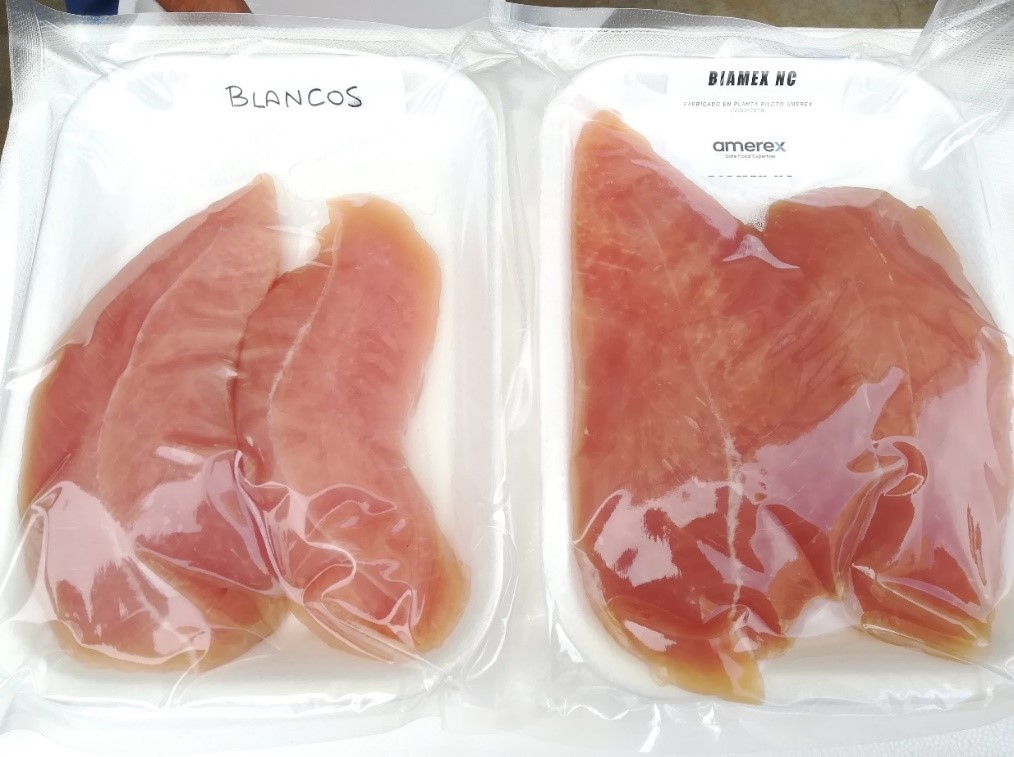
It is very common to substitute nitrites in meat products as we have mentioned above. Here is an example of injected turkey:

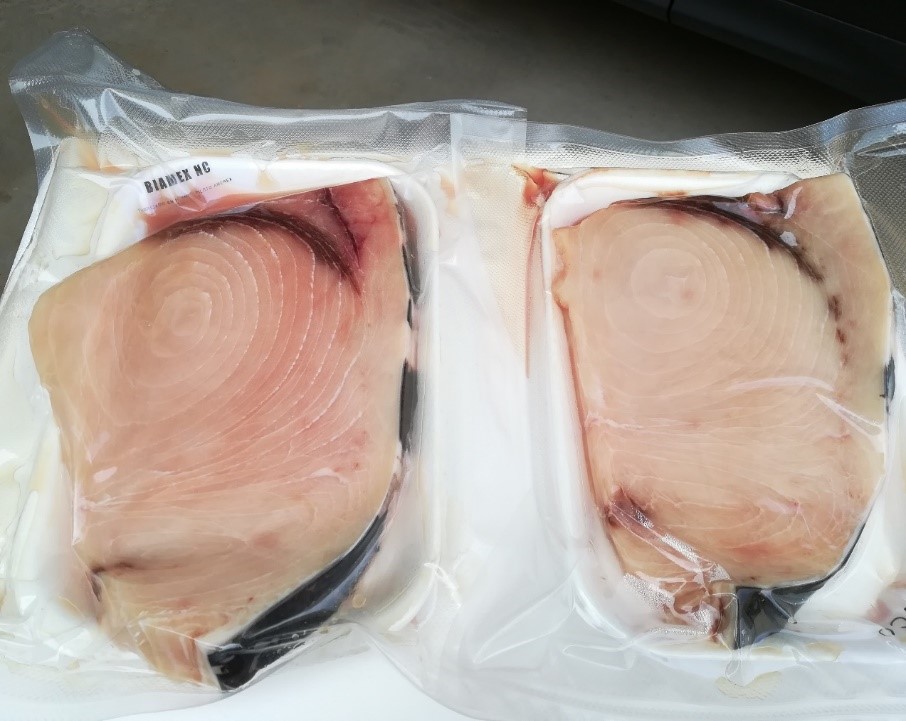
Another food where the use of nitrites is also common is in various fish. Biamex NC also has experience with this type of food. Here is a test on injected swordfish:

In conclusion, we can state that the use of starters is a very good alternative to nitrites, in particular the use of the Amerex Biamex NC product, as it significantly reduces the appearance of this colour in meat and fish products. In addition, this product includes Amerex’s protective technology to maintain product safety equivalent to the protection provided by nitrites.

Would you like more information about this starter culture? You can contact us for a personalised recomendation:

Amerex see you neXt time

Our Products

Contact us

1 + 1 = ?

WHAT ARE PROBIOTICS?

Welcome to our blog for another day! In this new post we will talk in more detail about the definition of probiotics, how they work, which are the most used strains and how they are used in the food industry.

By now, you’ve probably heard the term “probiotic” many times before, right? In recent years, research and development for the use of these microorganisms has increased significantly. It has increased not only for their application in health (where there are more and more studies demonstrating their benefits), but also within the food industry with the development of new products.

In the wake of COVID-19, the global probiotics market has been growing steadily, estimated to register a CAGR (Compound Annual Growth Rate) of 8.08% between the years 2022-2027. As we have mentioned in previous posts: INNOVATION IN THE FOOD INDUSTRY: NEW TECHNOLOGIES, the general concern for health and physical well-being, especially among young people, has led to an increase in demand for products that are healthy and safe and, if possible, help to strengthen our immune system. We see this trend reflected in all the functional foods and drinks being developed by major companies and the advertising of these products.

What are probiotics and what are their mechanisms of action?

Probiotics are living organisms that, once administered, remain active in the gut and can alter the host’s gut microbiota, generating benefits such as facilitating digestion and nutrient absorption and strengthening the immune system. In general terms, the World Health Organisation’s definition of probiotics is “live microorganisms that, when administered in sufficient quantities, provide a health benefit to the host”.

There are many foods or supplements that contain live micro-organisms, but in order to be considered a “probiotic” it needs to be a characterised strain that is scientifically proven to have a health benefit. Thus, a probiotic bacterium needs to be identified according to its specific identity (its genus and strain) and its health benefits.

As for the mechanisms of action of probiotics, these will be different depending on their genus and strain. In general terms, the following can be distinguished:

  • By competition: micro-organisms are able to establish themselves in mucous membranes and thus reproduce, preventing a pathogen from doing so.
  • By generation of antimicrobial compounds: thanks to the production of molecules such as lactic, acetic, propionic acid, etc. or bacteriocins, which are small peptides that inhibit the growth of similar bacteria or strains close to those that produce them.
  • By binding to the pathogen: thus preventing it from being able to attach to mucous membranes to reproduce.
  • By immunomodulation: mediating different components of innate, adaptive or acquired immunity.

How are probiotics identified by genus and strain?

As mentioned above, probiotics are identified according to their genus and strain and because of this they will be used for different applications.

A genus can include more than one species, which in turn includes different strains. For example, you may have heard of bifidobacteria, usually found in the large intestine, or lactobacilli, found in the small intestine, two of the most studied probiotics for supporting digestive health. Both are a genus of gram-positive bacteria of which there are different strains, each used for different purposes. Also important among probiotic organisms are yeasts, such as the genus Sacharomyces.

All these microorganisms have the status of QPS (Qualified Presumption of Safety) from the European Food Safety Authority (EFSA), as it is essential that an evaluation of the safety of the microorganisms used in supplements, feed additives, food additives, food enzymes, flavourings, etc. is carried out to ensure safety for consumers. There are also other references such as the Danish list from the Danish Ministry of Health and Veterinary Affairs, or the USDA GRAS list, where most commercial lactic acid bacteria are considered safe.

What foods are rich in probiotics and what are the applications in food?

As we have seen, the definition of probiotic is closely related to health and it may seem that probiotics are only used as “food supplements”, but the scope of application of probiotic bacteria is very wide and we find a multitude of foods containing natural probiotics such as: sauerkraut, natural yoghurt, kombucha, Kimchi, kefir or pickles.

Thus, the global probiotics market could be segmented on the basis of product type as follows:

– Probiotic foods

– Probiotic drinks

– Dietary supplements

– Animal feed

gut health benefits of probiotics

If we go further, knowing the mechanisms of action of probiotics described in section 1, are there more applications of probiotics than just health benefits? The answer is clearly yes!

People in general relate the main activity of probiotics exclusively to health. In other cases, more informed consumers consume probiotic foods, such as those mentioned above, to support their digestive health and improve their immune system. But what many people do not know is that these same probiotic bacteria can be used within the food industry as natural preservatives.

If the necessary quantities of probiotic bacteria are inoculated into a food, depending on the genus and strain and based on the mechanisms described above, protection against pathogenic organisms such as Listeria, E.coli or Salmonella, three examples of the many pathogens and contaminating microorganisms in food, can be generated. Thanks to this, a new research front is emerging that encompasses the general concern for health and physical well-being together with a healthy diet free of chemical additives.

Is there more information on natural conservation?

At Amerex we are experts in products aimed at preserving the final food by means of natural protection mechanisms. We have more than 40 years of experience selling ripening starters to carry out the maturation of food, which is used to ensure its preservation.

For years, we have also had a wide range of products, such as the Biamex® range, to extend the shelf life of foodstuffs. These are natural preservatives with a biotechnological base, being protective ferments that have a direct action against pathogenic microorganisms.

If you want to know more about probiotic foods or natural preservation thanks to the use of different probiotic strains, do not hesitate to contact us!

imasd@amerexingredientes.es

Telephone number: +34 91 845 42 14

Our Products

Contact us

0 + 5 = ?

FOOD LABELING AND CONSUMER DECISIONS

Welcome one more day to Amerex’ Blog! By the end of last year FAO published a proposed standard to update the definition of one of the most popular claims regarding the nutritional content of foods, the one referring to the term “healthy”. This update on the definition of “healthy” on food labels is a very interesting and relevant topic for the food industry. Providing informative and accessible food labelling empowers consumers and can help foster a healthier food supply for all. In this post we aim to put this proposal into context and highlight again the importance of transparent and clean labelling for consumers.

What does “healthy” mean on food labels?

In 1994, the FDA issued a regulation defining “healthy” as an implied nutrient content claim. At that time, implied nutrient content claims focused on the individual nutrients contained in foods. For example, these specific criteria for individual nutrients that must be complied within the food to be declared as “healthy” are: limits on total fat, saturated fat, cholesterol and sodium, and minimum amounts of nutrients whose consumption is encouraged, such as vitamin A, vitamin C, calcium, iron, protein and dietary fiber.

However, this current definition of “healthy” is outdated. This update of the term is proposed to accurately represent that nutrient levels in food can help consumers maintain healthy dietary practices, since in the United States diet-related chronic diseases are the leading causes of death and disability.

Comida vegetariana, sana y equilibrada. Imagen de Freepik

What changes are being proposed to the definition of “healthy”?

The proposed changes to the definition of “healthy” are in line with the Dietary Guidelines for Americans, 2020-2025 and the updated Nutrition Facts label, focusing on the consumption of key elements of a healthy dietary pattern, which can help consumers maintain healthy dietary practices and achieve a diet in line with recommendations.

For example, to include the “healthy” claim on packaging, a cereal would have to contain a certain amount of whole grains and meet limits for saturated fat, sodium and added sugars. Nuts and seeds, high-fat fish such as salmon, certain oils and water are examples of foods that cannot currently be labelled as “healthy” but are part of a healthy dietary pattern and are recommended by the Dietary Guidelines. Therefore, they could carry the “healthy” claim under the proposed new definition announced by FAO.

Many food companies could certainly benefit from this claim as long as food labelling is accurate, transparent, informative and accessible to consumers, including those who are less nutritionally aware, and they are able to identify foods that will help them build healthy eating patterns.

How does food labelling information affect consumers’ purchasing decisions?

Food labelling is an important tool used by consumers to make informed decisions about the products they purchase. The information provided on product labels, including the list of ingredients, can significantly affect their purchasing decision. For example, the new definition of “healthy” will encourage a healthier food supply that includes fruits, vegetables, dairy and whole grains, and limits saturated fat, sodium and added sugars in its products, and consumers may have the ability to choose based on this.

In particular, the clean label trend has led to an increased focus on the transparency and simplicity of product labels. Consumers are looking for clear and precise labels that allow them to easily understand what they are buying, and by providing transparent and detailed information about product ingredients, food manufacturers can gain consumers’ trust and foster a long-term loyal relationship with them. Proper product labelling is therefore an essential part of succeeding in the food and beverage market.

Muestra una mujer viendo la etiqueta de un zumo. Imagen de Freepik

How can companies of the food industry adapt to changes in clean labelling?

To face changes in a product clean labelling, companies in the food industry can consider several strategies. First, it is important to review and update their product labels to ensure that they comply with the new regulations. This may involve eliminating or reducing artificial ingredients and additives, simplifying the list of ingredients and including clearer information about the origin and quality of ingredients.

Another strategy that companies can follow is to work with high-quality, honest ingredient suppliers. This can help ensure that products are more sustainable and healthy, which at the same time can improve consumer confidence and brand perception.

In addition, it is important to be aware of rising trends and changing consumer demands. The food industry is dynamic and companies must be able to adapt quickly to changes in consumer preferences. Therefore, developing new products or adjusting existing products to meet consumer demands is a very important thing.

To sum up, companies in the food industry can implement clean labelling by reviewing and updating their product labels, collaborating with high-quality ingredient experts to create innovative and customized solutions, and constantly monitoring consumer trends and demands to bring new products to market. To do so, it makes sense to think about improving your brand perception by meeting the needs of consumers who are looking for healthier, more sustainable and transparent foods.

What can Amerex do to help you stay ahead in clean food labelling?

At Amerex we are aware of the importance of offering innovative, high quality solutions that adapt to the changing needs of the market, right now with clean label on the rise. Our product range includes clean label solutions with natural ingredients that can meet these demands. With these solutions we can replace additives and treatments used in manufacturing processes, such as lactic acid or HPP, with successful and achievable results in all types of foods.

In addition, we work closely with our customers to understand their specific needs and develop customized solutions that enable them to meet clean label requirements. We use our ingredient and food formulation expertise to help food companies create products that not only fulfill consumer expectations, but are also cost-effective and sustainable.

Contact us to learn more about these alternatives and to develop products that are aligned with the current trends!

imasd@amerexingredientes.es

Phone number: +34 91 845 42 14

Amerex see you neXt time
Our Products

Contact us

2 + 0 = ?

FOODS WITH SULPHITES: NATURAL ALTERNATIVES AND HOW THEY AFFECT THE CONSUMER

Sulfites are additives that have been used for many years in food preservation, and in some cases are even found naturally in foods.

In this Blog entry we will explain many aspects related to sulfites such as their functions in food as additives, the way they can affect the consumer, the needs of use and labeling according to official regulations and sulfite alternatives. Stay with us and read more about it!

What are sulfites in food?

To answer our first question about what sulfites are, sulfites and their by-products are chemical forms obtained from sulfur that are used as additives for the preservation of many foods. It is easy to recognize them in the labeling of any product since the EU recognizes 8 types of sulfites in food as additives, assigning them an E number (number between E220 and E228) and therefore approving their use.

What is the function of sulfites in foods?

Sulfites are added to foods in order to favor their preservation and maintain their color, achieving in some cases a bacteriostatic effect at high doses and avoiding the negative consequences of microbial growth and the oxidation process.

Typical foods containing sulfites as additives are the following:

  • Wines, musts, ciders and vinegars to prevent the development of molds, bacteria and yeasts.
  • Crustaceans so that they do not darken during marketing and cause consumer rejection.
  • Meat preparations, such as fresh sausages and burger meat, which need to be kept fresh and pink in color.
  • Dried fruits, sauces, canned vegetables…

Therefore, the ultimate goal of sulfites in foods would be to improve their appearance and prolong their shelf life. At Amerex we have no doubt that the color it gives is unsurpassed thanks to its reducing power, as well as giving certain organoleptic properties. However, precisely because of this, it sometimes gives misleading results in the final product, which may have triggered microbiological contamination even though it has an attractive color.

How are sulfites in food labeled? 

Products containing more than 10 mg/kg or 10 mg/L of sulfites must reflect this concentration on food labels. For example, in meat preparations the limit is 450 mg/kg according to the legislation, a dose capable of giving color but which is far from the doses traditionally used that allowed a more potent antimicrobial effect.

The labeling of sulfites in food consists basically of the name of their chemical formula and a number between E220 and E228:

  • E220 for sulfur dioxide.
  • E221 for sodium sulfite.
  • E222 for sodium acid sulfite.
  • E223 for sodium metabisulfite (sodium disulfite).
  • E224 for potassium metabisulfite (potassium disulfite).
  • E226 for calcium sulfite.
  • E227 for calcium acid sulfite (calcium bisulfite).
  • E228 for potassium acid sulfite (potassium bisulfite).
Fresh sausage with sulfites

What are the side effects of consuming foods with sulfites?

Perhaps the most important reason for labeling sulfites in foods is that they can cause health problems in people with sensitivities to these substances.

For the most part, sulfite-containing foods do not represent a health risk, nor are they carcinogenic or teratogenic for the population, and the amounts in which sulfites are present in food are below the maximum amounts allowed by law, and are controlled. Therefore, they meet the requirements of any food additive.

However, the metabolization of sulfites in foods can have negative consequences for people sensitive to these substances. There is an enzyme responsible for metabolizing sulfites from food in the human body, sulfite oxidase. It happens that in people with deficient enzymatic activity, this process can cause negative reactions. Therefore, the only way to avoid it is by not consuming those foods that contain a certain sulfite.

People sensitive to sulfites in food develop reactions such as digestive problems, skin reactions, itching, and respiratory disorders such as asthma, coughing, shortness of breath or wheezing.

About 3% of adults and 6% of children have a food intolerance due to the presence of allergens and sulfites in food. There are 14 allergens that European regulations establish that must be compulsorily reported on food labels, including sulfites if they are in amounts greater than 10 mg/kg or 10 mg/L, and labeled as sulfite or sulfur dioxide.

Effect of sulfites on product naming

As mentioned above, the law allows the formulation of products to contain sulfites and other ingredients, and depending on these, the products will be denominated in one way or another.

The use of sulfites is not allowed in meat in general, but when Regulation (EC) No. 1333/2008 appeared, they wanted to maintain the figures of longaniza or burger meat as a refuge to be used in markets that had traditionally done so, such as the English and Spanish markets.

Currently, these names are used in the market for all types of meat preparations that use this legal umbrella, even if they are not exactly sausages or burger meat. In the Spanish market, the color of products such as hamburgers is often associated with the intense red color of sulfite, forgetting the traditional organoleptic characteristics of a hamburger, although consumer habits are beginning to change.

For the sake of clarity, sausages cannot legally contain sulfites and/or colorants, but sausages can contain a regulated amount of sulfites. The same applies to hamburger or burger meat, the former does not contain sulfites and the latter does. This is a naming issue that protects the consumerif the product is labeled as sausage instead of sausageor as a hamburger instead of a hamburger burger meatThe consumer can now distinguish which has and which does not contain sulfites and/or colorants, since at first glance they may appear to be the same product.

What sulfite-free additive alternatives are on food market?

Amerex manufactures allergen and sulfite-free microbiological blends as an alternative to improve the safety and shelf life of a wide range of products such as sausages and burger meat. Biamex y Safemix are our biotech blends that improve the contamination and spoilage performance of these fresh foods over chemical additive options such as sulfite.

Sulfite-free hamburger

The biggest challenge is in maintaining the color, and currently we can reach more than 10 days of shelf life with a color that, although not as red, remains constant in a natural way as the first day the burger is made. To keep this oxidation at bay, we use our plant extracts Amexol and we even have European funding projects of circular economy where agricultural surpluses are used to obtain innovative polyphenols that help us in this task.

Where can I get a natural preservative alternative to sulfite?

At Amerex we can help you achieve a result that exceeds expectations so that you can replace this additive with clean label alternatives.

We are at your disposal to make our products more natural and safer.

Contact us if you want to know more!

Amerex see you neXt time


Contact us at

8 + 0 = ?

Conoce Nuestros Productos

Contáctanos

2 + 1 = ?