Posts

Case study of protective ferment in mayo salad: safety and flavour without chemical additives

In a context where consumers increasingly value fresh, natural foods with clean labels, ensuring microbiological safety without compromising sensory quality is a major challenge. At Amerex, we have numerous case studies in different processed foods that help guarantee both safety and organoleptic quality.

Below, we present a practical case applied to ensaladilla rusa (Mayo salad), a very typical dish in Spain, which applied to any food coated with a sauce (such as potatoes with mayo).

In this case, we used one of our natural preservatives, Biamex-Aroma-SP, a natural solution that has proven effective against gram-positive bacteria such as the pathogen Listeria monocytogenes, as well as in controlling spoilage heterofermentative bacteria.

What is mayo salad and how is it consumed in Spain?

Mayo salad (ensaladilla rusa) is one of the most consumed ready-to-eat dishes in Spain, especially in foodservice and hospitality. Its basic ingredients, for those unfamiliar, are boiled potato, carrot, peas, and egg, covered with mayo—making it a highly appreciated recipe for its traditional flavour and versatility. Today, there are many variations of the original recipe, such as seafood mayo salad.
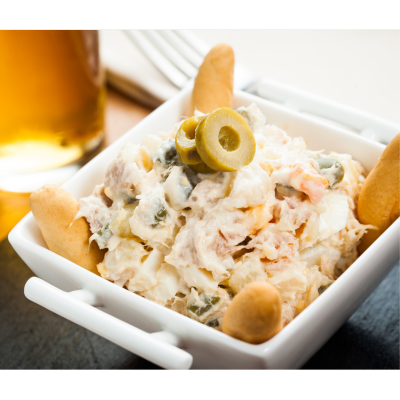
It is commonly consume as a tapa, appetizer, or side dish. Its main consumption occurs in summer, since it is a ready-to-eat dish that does not need heating. Traditionally, it was homemade by boiling the vegetables, chopping them, and mixing them with mayonnaise and tuna. Nowadays, with the rise of fifth-range products, it can be found both in restaurants (as homemade preparations or ready-to-eat versions) and in the supermarket’s prepared food aisle.

What are the physico-chemical characteristics of mayo salad?

To continue, it is necessary to understand the physico-chemical characteristics of Mayo salad, as these determine potential microbiological and organoleptic issues.

From a microbiological perspective, Mayo salad (and similar ready meals) presents high water activity (aw > 0.97) and a pH close to neutrality. Combined with its consumption without final heat treatment moreover, its composition rich in cooked ingredients and plant/animal proteins, it is particularly susceptible to the growth of pathogenic microorganisms such as Listeria monocytogenes.

Listeria is capable of growing at refrigeration temperatures and resisting adverse conditions, so its control requires strategies beyond good hygiene practices. Additionally, as mentioned above, Mayo salad and similar dishes are typical in summer, when high temperatures make it easy for the cold chain to be broken.

What regulation applies to ready-to-eat foods like mayo salad, and what chemical additives are currently used?

As a ready-to-eat product, Mayo salad is subject to the microbiological criteria of Regulation (EC) 2073/2005, updated by Regulation (EU) 2024/2895, which establishes the absence of Listeria monocytogenes throughout the product’s shelf life, except when technical justification based on challenge tests allows the limit of 100 cfu/g.

Traditionally, to control microbiological risk, manufacturers have used preservatives such as sorbates, benzoates, acidulants, or thermal treatments. The issue with these chemical additives is that they lower pH and consequently alter the organoleptic properties of the product. They affect flavour, texture, and consumer perception, giving the final product a “more artificial” appearance. For this reason, the industry is seeking natural solutions that maintain safety without compromising sensory quality.

With this context, we detail the following case study.

Practical case using Amerex protective ferments to improve the microbiological safety of Russian salad without additives that alter sensory quality

We worked with a Mayo salad from a manufacturer aiming for a homemade and less industrial sensory profile. To achieve this, chemical additives were removed, which otherwise gave the mayonnaise a more liquid and yellowish appearance. The challenge that followed was to guarantee microbiological safety and ensure compliance with the legal requirements described above.

Therefore, Amerex’s goal was to offer a clean label solution effective against pathogens. We carried out a challenge test using one of our protective ferments, Biamex-Aroma-SP (2 g/kg), incorporated into the mayonnaise-based sauce applied to the vegetable matrix.

Samples were inoculated with Listeria, Salmonella, and E. coli to evaluate the effectiveness of the natural preservative over time under refrigeration. Additionally, a sensory tasting was conducted to assess changes in flavour, texture, and aroma.

Results obtained without chemical additives: microbiological safety and improved organoleptic profile

Microbiological results:

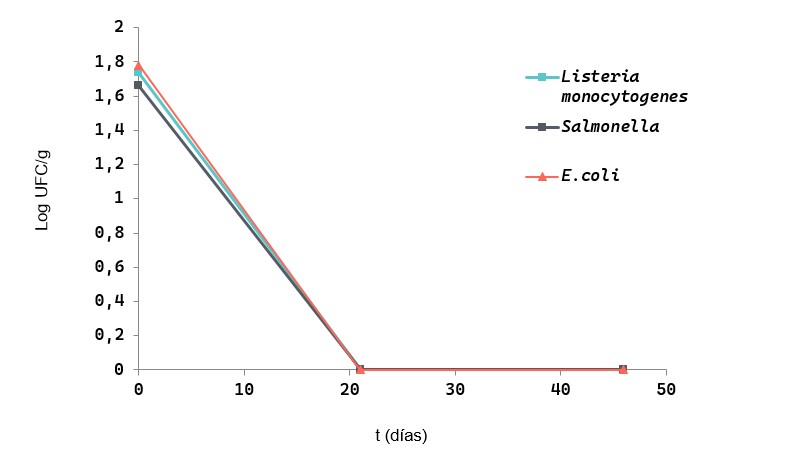
The addition of Biamex-Aroma-SP showed clear inhibition of Listeria monocytogenes growth in treated samples, with either listericidal or bacteriostatic behavior maintained throughout shelf life. A strong reduction of Salmonella and E. coli was also observed, confirming its protective effect.
Organoleptic results:

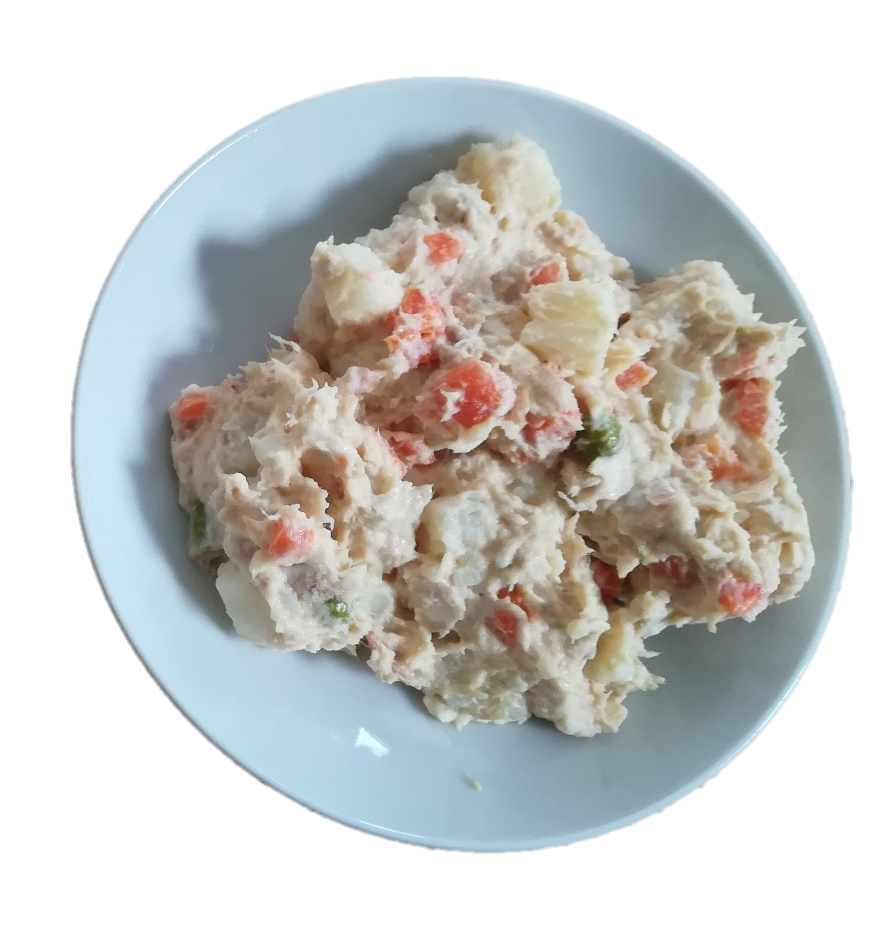
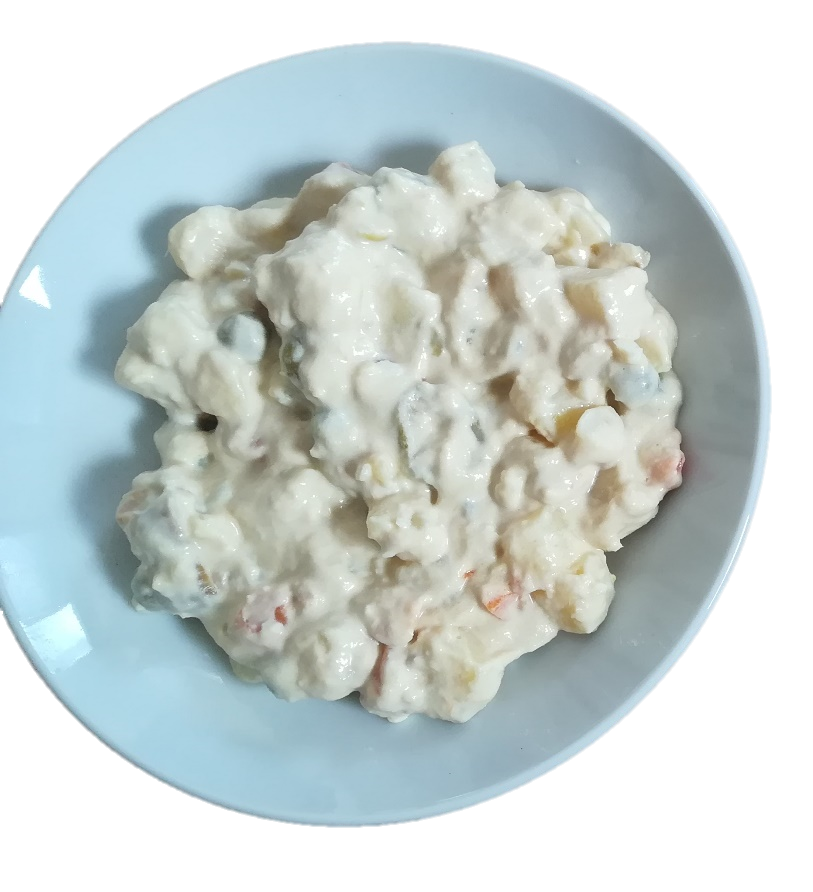
The mayo salad treated with Biamex-Aroma-SP was rated as more homemade and traditional compared to the version without protection. It was described as having a balanced flavor, without excessive acidic notes, and a more pleasant texture, as the formulation allowed for reduced use of acidulants and chemical preservatives. Furthermore, the need for aggressive heat treatments was reduced.

Chemical additive o vs  Amerex preservative
Conclusion: a clean label solution for refrigerated ready-to-eat products

This case study demonstrates that Biamex-Aroma-SP is an effective and natural solution to improve microbiological safety and sensory quality in ready-to-eat products such as mayo salad. Its use allows:

  • Effective inhibition of Listeria monocytogenes and other pathogens.
  • Compliance with new European regulatory requirements.
  • Improvement of the product’s sensory profile.
  • Reduction or elimination of artificial preservatives and acidulants.

At Amerex, we work to provide innovative solutions tailored to the real needs of the food industry. If you are developing or reformulating refrigerated ready-to-eat products such as Russian salad, consult us and discover how we can help you ensure safety, flavor, and naturalness.

📩 Contact us for more information and personalized advice:

  • Email: imasd@amerexingredientes.com
  • Phone: +34 91 845 42 14
  • Fill out the form below

Hasta la próxima


Contact us at

5 + 3 = ?

Sinéresis en los Alimentos: Soluciones Naturales

En la industria alimentaria es fundamental entender la importancia de mantener la calidad y la estabilidad de los alimentos que consumimos. Hoy vamos a profundizar en un fenómeno común pero indeseado en la industria alimentaria: la sinéresis o exudado.

Este término técnico se refiere a la liberación de líquido en ciertos productos alimenticios, lo cual puede afectar negativamente sus características organolépticas. En este artículo, exploraremos las causas de la sinéresis, cómo prevenirla y qué conservantes naturales pueden ayudar a evitar este problema.

La sinéresis se produce cuando los componentes líquidos de un alimento, como el agua, se separan de los sólidos. Comúnmente este fenómeno puede ser causado por varios factores, incluyendo:

  1. Cambios en la estructura del gel: En productos como yogures y gelatinas, la sinéresis ocurre cuando las proteínas o los polisacáridos que forman el gel se descomponen o reorganizan, liberando el líquido atrapado.
  2. Fluctuaciones de temperatura: El enfriamiento y calentamiento repetido pueden romper las estructuras internas del alimento, promoviendo la separación del agua.
  3. Presión osmótica: La presencia de sales u otros solutos puede atraer agua hacia ciertas áreas, causando su liberación.
  4. Deshidratación: La pérdida de agua por evaporación también puede desencadenar la sinéresis, especialmente en productos cárnicos y productos horneados.

Sin embargo, además de estos factores físico/químicos existe otro factor que produce el fenómeno de la sinéresis o exudado: las fermentaciones no deseadas. No solo es un termómetro de que tu alimento está cambiando, sino que este agua es un medio de cultivo ideal para que algunas bacterias no deseadas proliferen. En la práctica verás como la consistencia de tu alimento se pierde y el exudado evolucionará en turbidez y color.

Prevenir la sinéresis es esencial para mantener la calidad y la aceptación del producto por parte de los consumidores. Algunas estrategias efectivas para evitar la formación de exudado incluyen:

  1. Optimización de la formulación: Ajustar la concentración de estabilizantes como almidones modificados y gomas puede ayudar a mantener la estructura del gel. Sin embargo, en la mayoría de las veces esto se logra mediante el uso de aditivos químicos añadiendo más números E a la lista de ingredientes.
  2. Control de temperatura: Almacenar los productos a temperaturas constantes y adecuadas puede minimizar los cambios en la estructura interna del alimento. Sin embargo, no siempre es posible mantener este control de temperatura, desde que el fabricante fabrica el alimento hasta que llega al consumidor final es complicado tener un control exacto y sin variaciones de esto.
  3. Mejorar el empaque: Utilizar envases herméticos que prevengan la deshidratación y la exposición al aire puede reducir significativamente la sinéresis.

Aunque todas estas estrategias son útiles y suman más barreras a la posible generación de sinéresis o exudado, la más recomendada de todas es la siguiente:

  1. Uso de conservantes naturales: Incorporar ingredientes que protejan el alimento desde dentro, desde su fabricación, evitando esas fermentaciones indeseadas que no solo producen sinéresis y exudado, sino cambios en el color y textura y generación de gas.

Existen multitud de alimentos, cárnicos, pescado, lácteos etc que pueden generar sinéresis y esta liberación de agua es un problema común que afecta tanto la apariencia como la textura de los productos. Algunas de las razones incluyen:

  1. Proteólisis: La actividad enzimática descompone las proteínas, liberando agua en el proceso.
  2. Desnaturalización de proteínas: Durante el almacenamiento y procesamiento, las proteínas pueden perder su estructura nativa, lo que conduce a la liberación de agua.
  3. Congelación y descongelación: Los ciclos repetidos de congelación y descongelación pueden romper las estructuras celulares, liberando el agua contenida.

En Amerex, ofrecemos una variedad de conservantes naturales de origen biotecnológico que pueden ayudar a prevenir la sinéresis en los alimentos. Contamos con referencias dentro de nuestra gama de fermentos: Biamex, así como dentro de nuestra gama de aromas naturales: Safemix.

Con nuestras referencias conseguimos una protección integral del alimento que reduce las fermentaciones indeseadas al llevar un control de las bacterias heterofermentativas que pueden desarrollarse en ellos. Conseguimos un aumento de la vida útil reduciendo la sinéresis y demás problemas organolépticos que causan una mala imagen de la marca del fabricante, devoluciones por parte de los consumidores y hasta problemas de salud.

Es fundamental controlar el desarrollo microbiológico, algo muy evidente pero que en muchas ocasiones no se tiene en cuenta. Nuestros conservantes naturales son eficaces en el control de las bacterias lácticas que suelen causar este tipo problema. ¡Contáctanos para obtener más información!

  • Puedes escribirnos un correo a: imasd@amerexingredientes.com
  • Llamarnos al teléfono: +34 91 845 42 14
  • Rellenar el formulario a continuación
Hasta la próxima
Conoce Nuestros Productos

Contáctanos

2 + 0 = ?

THE SENSES: SENSORY TESTING OF FOOD PRODUCTS

The sensory analysis or sensory testing of food has the mission of evaluating the different characteristics of a product using the five senses: sight, taste, smell, touch and hearing. In this way, a series of defined tests are carried out using very rigorous procedures.

According to this definition, sensory analysis is not the same as a “food tasting”. The main difference lies in the series of defined tests that are carried out in sensory analysis and which involve the 5 senses.

In this article we will learn how a food sensory panel can be carried out to develop improvements in the organoleptic of food thanks to sensory analysis.

What are the applications of sensory analysis?

The applications of food sensory analysis are numerous and are used for different purposes: process control, food quality control, acceptability studies or as a tool for making decisions regarding new ingredients or production processes.

Although sensory analysis is traditionally used in the wine and olive oil industry, it is currently used in all types of food. The sensory properties of a food are essential for the product to be accepted by consumers. This is why sensory analysis is so important in the development of new products, as it helps to study whether the organoleptic characteristics of the food will be well accepted by the end consumer and whether it will meet their needs.

What is sensory analysis in the food tasting process?

Sensory analysis in the food tasting process consists of the study of the sensory attributes of food through our senses. This process is carried out through procedures that are governed by a series of rules so that the final results are clear and reproducible. This is what is known as a food sensory panel.

In the following, we will study each sense and the role it plays in the perception of a food’s organoleptic properties:

Sight

The sense of sight will be the first “filter” for the consumer’s acceptance of a food.  Sight can distinguish whether the appearance of the food is normal or abnormal based on the following properties: Colour, Shape, Size and Roughness.

For the sensory analysis of colour, colour scales will be used to study: hue, intensity and brightness. Nowadays, there are very sophisticated devices that allow detecting these variations in the colour of the food in a very precise way, such as the chroma meter.

Smell

Smell is the second “filter” in the acceptance of a food and is based on the stimulation by chemicals in the food that receptors in our nose receive.  Food odour is measured in sensory analysis on the basis of three characteristics: Intensity, Persistence and Saturation Capacity.

Taste

Once we have passed the first two “filters” that can give us an idea of the organoleptic quality of the food, we come to the taste test. The taste or “basic flavour” can detect four types of taste: sweet, salty, sour and bitter. Recently, a fifth taste has also been recognised: the umami taste.

It should be noted that both smell and taste are chemical senses that are closely related to each other, increasing the perception of flavour.

Touch

The sense of touch is closely related to the texture of the food. This sensory property is also composed of what is identified by sight and hearing and detects any deformation of the food.

Food texture can be studied according to the following parameters: Hardness, Cohesiveness, Viscosity, Elasticity, Adhesiveness and Chewiness.

Hearing

The sense of hearing is used to complement the analysis of the texture of the food by means of the sounds detected when the food is evaluated in the mouth.

What are the types of sensory tests?

The types of sensory tests for food analysis are classified into affective tests, discriminatory tests and descriptive tests.

Affective tests

Affective tests are subjective tests. In these tests, the judges state in general terms what they thought of the food: whether they liked it or not, whether they disliked it, whether they preferred one product or another, etc.

These tests are further divided into:

  • Preference tests. Comparative tests between different samples that are analysed by means of a questionnaire and significance tables.
  • Satisfaction tests. A numerical analysis is carried out by means of an analysis panel of the sensation produced by the different samples.
  • Acceptance tests. An attempt is made to measure a person’s desire to purchase a product. It is carried out through complex questionnaires in order to determine the ideal public (target).

Discriminatory tests

Discriminatory testing is used to study the differences between different food samples. It is mainly used in the change of formulation or processing of a food.

Examples of discriminatory tests are: Simple paired comparison test, triangular test, paired comparisons test, multiple comparisons test.

Descriptive tests

Descriptive tests use quantitative methods with the aim of objectively defining the properties of a food. These tests are classified into:

  • Unstructured scale rating. Measures the intensity of an attribute.
  • Ranking tests: Ranking according to the intensity of a sensory attribute.
  • Rating by interval scales. Identifies various characteristics of each sample: level of spiciness, bitterness, sweetness, etc. 
  • Rating by standard scales. These scales are similar to the previous ones, but reference foods are used.
  • Proportional rating or magnitude estimation. To jointly evaluate complex attributes of a food, such as taste, aroma and texture.

What are the optimal conditions for a good sensory analysis?

There are a series of optimal conditions that a room should have in order to carry out a good sensory analysis:

  • Temperature and humidity conditions should be comfortable unless the product requires special conditions.
  • The colour of the room walls and furniture should be neutral to not influence the colour of the samples.
  • The analysis room should be kept odour-free by an extraction system if necessary.
  • Ambient noise should be reduced to avoid distractions. It is best to soundproof the sensory panel area.

It should be taken in mind that a sensory analysis is not a mere tasting, but often involves an exhaustive analysis of the characteristics of a foodstuff and it is therefore necessary to take care of all these details.

How to improve the organoleptic characteristics of food by using natural ingredients?

As we have seen, the sensory analysis of food is often a fundamental requirement to evaluate the organoleptic properties of a product before launching it to the market or modifying its processing or formulation. At Amerex, we are always committed to natural ingredients, such as the preservative solutions in the Biamex or Safemix range, which help to improve the shelf life of foods and maintain or improve their organoleptic properties.

We have a wide range of starters (Fermitrat range) that through the enzymatic activities of the microorganism are able to generate a good colour, flavour and aroma in the sausage.

Write to us if good organoleptic properties are also essential for you and get to know our products for all types of food: meat or vegan, dairy, fish, ready meals, beverages and sauces or bakery. We are available for you!

Contact us:

Amerex see you neXt time

THE INFLUENCE OF ORGANOLEPTIC ANALYSIS ON THE DEVELOPMENT OF NOVEL FOODS

Welcome back to the Amerex Blog! In this post we will talk about the influence of organoleptic analysis in the development of a new food. The organoleptic control of a food is established through qualitative assessments of a sample by experts through the senses of sight, smell, taste and touch. This seems to be a very subjective concept, but it is carried out through quantitative and very rigorous methods that ensure high quality results that can be very relevant for the food industry.

The objective of an organoleptic analysis is to determine how consumers will respond to a new product before its launch, in order to have the possibility of improving and changing it in case its quality is not sufficient to make it a successful launch.

Why should food companies be concerned about organoleptic control?

Manufacturers from the food sector are constantly working on the R&D of their products to meet the demands of consumers. These consumers are continuously evolving and requiring new products (different from those existing) and having different needs that are increasingly oriented towards healthy and clean products. However, the latest statistics tell us that not even 25% of the foods developed by these companies succeed in entering the market.

Therefore, they should use organoleptic analysis to predict the success or not of the launch of a new food or beverage on the market. This method enables the use of expert sensory evaluation to understand the consumer’s perception of a product. It also allows to adapt the product to said consumers and to predict its success before the final launch.

Not only R&D but every department of a food manufacturing company (especially manufacturing, marketing and sales) must be aligned to develop and launch products that meet the demands and expectations of their potential consumers.

What stages must a food go through during its formulation to ensure its organoleptic quality?

There are certain stages in the manufacture of a novel food that allow it to achieve ideal consumer acceptance, and thus ensure that its future performance in the market is positive.

A first stage would include everything related to the organoleptic control of the food. Starting with a screening phase of the organoleptic test to be carried out to determine the quality of the food. In this phase we must choose the most appropriate type of analysis for the food depending on the information we want to gather from it. For example, it is not the same to carry out a sensory evaluation of the organoleptic characteristics to find out if a product is liked, as it is to determine the differences between two formulations and to evaluate these differences. Also, a statistical design will have to be prepared to optimise the tests in order to obtain as much information as possible with as few tastings as possible. And last but not least, the panel of tasters should be selected including expert panel evaluators and/or representative consumers.

The second stage is the actual performance of the sensory test, when the tasters evaluate the different organoleptic characteristics of the food: colour, flavour, smell and texture.

A third stage will be the analysis and interpretation of the results, and will end with the fourth stage of validation and redesign of the product to further adapt its organoleptic characteristics and achieve the final food that will be placed on the supermarket.

As a food manufacturer, what can you do to try to ensure a successful launch of your product?

The truth is that launching a product and making it a hit is difficult, and there is no way to predict exactly how a new product will perform in the supermarket. Nevertheless, there are some recommendations to optimise the sensory evaluation of different samples and increase their chances of success.

You can carry out organoleptic pre-testing with different target population groups for the product you are developing. As part of it, you can focus the conditions of the product so that it completely reflect the result of the analysis that has been carried out.

Other factors such as taking extreme care of the quality of all ingredients that are part of the final food, ensuring good practices and being transparent in the information of these ingredients through labelling and product display help in making the product a hit and not a miss.

Finally, to keep assessing end-customer acceptance through different tools such as satisfaction surveys or other market research.

How can Amerex help you improve the organoleptic qualities of your product?

As we have said before, it should not be forgotten that today’s food and beverage consumers are becoming more demanding and expect certain characteristics in their food that were not so much taken into account until the last few years, such as natural ingredients and additive-free labels.

At Amerex, we manufacture preservation solutions that also help to improve the organoleptic properties of foodstuffs. Not only through starter cultures and their enzymatic activities that give good colour, flavour and aroma in the sausage. Also with our wide range of natural ingredients BIAMEX and SAFEMIX that help to maintain the organoleptic condition of the food during its shelf-life.

Is it possible to create a more homemade product without the use of additives or treatments?

Our company can also help you in the reduction of artificial additives and treatments to obtain a more natural and homemade organoleptic in your final product. For example, in ready-to-eat meals that attempt to imitate the most traditional dishes by removing acidifiers that lower pH and change viscosity and colour. You can see an example here.

We are available to answer your questions about improving the organoleptic quality of your product while maintaining microbiological safety and clean labelling through the use of natural and healthy ingredients. Contact us!

imasd@amerexingredientes.es

Phone number: +34 91 845 42 14

See you next time
Our Products

Contact us

2 + 1 = ?