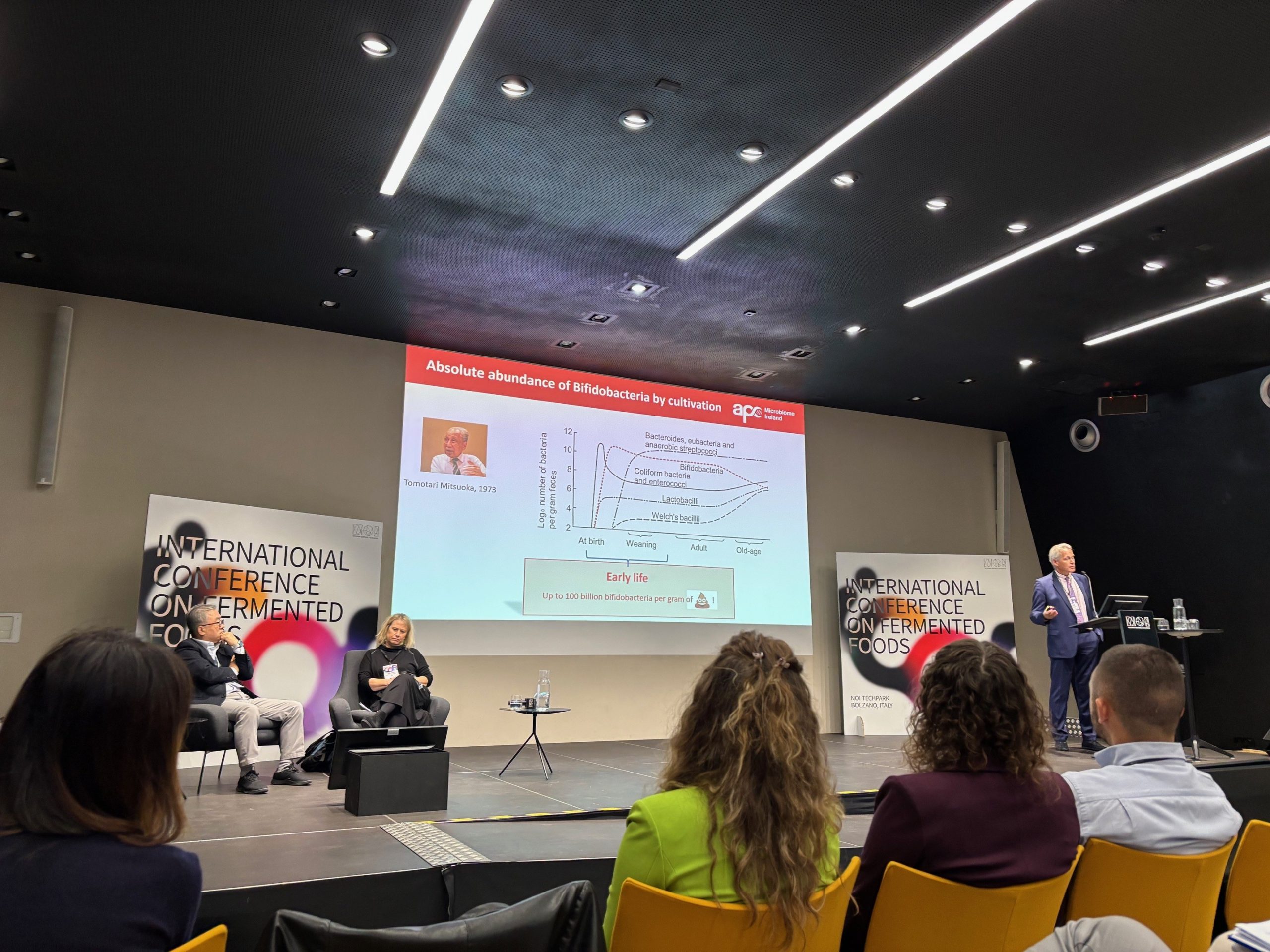
From October 27 to 30, 2025, Amerex took part in the International Conference on Fermented Foods, held at the NOI Techpark in Bolzano, Italy.
This international event brought together leading researchers, universities, and companies to discuss the latest advances in fermentation, biotechnology, and functional foods.
Representing Amerex, our Technical Director Alejandro Rodríguez attended the conference with the aim of learning first-hand about new fermentation trends applied to improving food safety and developing natural ingredients.
Throughout the sessions, innovations were presented related to the microbiota of fermented foods, the valorization of agri-food by-products through fermentation, and new biopreservation strategies — topics directly aligned with Amerex’s ongoing work in natural ferments for food preservation and quality.
Fermentation is consolidating itself as one of the most promising biotechnological tools for the future of the food sector. At Amerex, we have been committed to this field for years, developing protective cultures effective against pathogens such as Listeria monocytogenes and Salmonella, and exploring their potential as natural alternatives to traditional preservatives.
By participating in international forums like this, Amerex aims to remain at the forefront of research and innovation, continuing to provide the food industry with safe, cutting-edge biotechnological solutions.
Patricia Rodrigo is Head of Marketing & Product at Amerex. With a background in Biotechnology and a Master’s in Biotechnology Business Management, her work focuses on research and communication of natural alternatives to additives, conservation strategies, and pathogen control in various food groups for the industry.
https://amerexingredientes.com/wp-content/uploads/2025/11/Fermentacion_Italia-scaled.jpg19202560Patricia Rodrigohttps://amerexingredientes.com/wp-content/uploads/2017/11/Logo-web-amerex-madrid-2.pngPatricia Rodrigo2025-11-05 08:27:382025-11-05 09:36:30Amerex present at the International Conference on Fermented Foods in Italy
Last September, the European Commission authorised the use of buffered vinegar as a food additive by assigning it the number E-267 in the list of food additives. Through the publication of Commission Regulation (EU) 2023/2086 of 28 September 2023 amending Annex II to Regulation (EC) No 1333/2008 of the European Parliament and of the Council and the Annex to Commission Regulation (EU) No 231/2012 as regards the use of buffered vinegar as a preservative and acidity regulator.
Below you will find all the information on the inclusion of this food preservative in the list of food additives:
What food preservative is buffered vinegar?
Buffered vinegar is a liquid or powdered product which is prepared by adding buffers to vinegar, according to the above mentioned regulation.
The buffers used for its preparation are sodium/potassium hydroxide (E-524 to E-525) and sodium/potassium carbonate (E-500 to E-501). Buffered vinegar complies with the European standard EN 13188:2000 and has an exclusively agricultural origin (except wood/cellulose) by double fermentation, alcoholic and acetic. The main components are acetic acid and its salts.
Buffered vinegar has been used until now as a clean label alternative to other authorised preservatives or acidity correctors, in particular for the above mentioned acetic acid and its salts, whose numbers are: E-260-263. These food preservatives are mainly used for their power to protect against gram-negative microorganisms, as these types of bacteria are the most difficult to control. Among them we can find the worldwide known Salmonella or E.coli.
How is buffered vinegar included in the list of food preservatives?
Buffered vinegar is included in the list of food preservatives under the number E-267.
Following the submission of an application to the Commission in March 2021, authorisation was requested for the use of buffered vinegar as a preservative and as an acidity regulator in a wide variety of food categories. These foods include: Meat preparations as defined in Regulation (EC) No 853/2004), potato gnocchi, fresh and pre-cooked pasta, canned fruit and vegetables, cottage cheese, fresh cheese, except products included in category 16.
Following a safety assessment of buffered vinegar as a food additive for the above mentioned uses, it was concluded that there is no safety concern for the use of buffered vinegar at the maximum use levels proposed in the standard. The corresponding study was carried out by the European Food Safety Authority (EFSA).
What natural food preservatives are available as an alternative to buffered vinegar?
Currently, the natural food preservatives that exist as an alternative to buffered vinegar (E-267) and that are clean label are plant extracts. However, the effectiveness of these food preservatives is not as high as that of buffered vinegar.
Buffered vinegar has so far been used as an effective alternative to other authorised preservatives or acidity regulators, in particular acetic acid and its salts (E 260-263). As it did not have an E-number assigned to it until now, it was declared as natural flavouring or buffered vinegar. These preservatives are known to be very effective against gram-negative bacteria, whose problem lies in the cell wall that covers them and makes them more resistant to preservatives. Nowadays, natural spice or vegetable extracts cannot match this efficacy.
What clean label food preservatives does Amerex offer?
At Amerex we are experts in clean label food preservatives and we have a wide range of products with different functionalities, from protective action against pathogens to elimination of chemical additives.
For this purpose, we have preservatives that combine different technologies. Our experience is based on the use of protective fermentation. This microbial technology is totally natural and clean label. Within this category we have products such as the Biamex range, which cover a wide range of action.
There are also products that combine protective fermentation with chemical additives. Food preservatives that include buffered vinegar include Safemix AV or Biamex Aroma Global. They are highly effective against bacteria such as E.coli or enterobacteria, and the low recommended dosage (between 0.1%-10%) favours a natural and homemade organoleptic.
These strains of microorganisms act in synergy with additives to enhance their antimicrobial properties, without negatively altering the taste, aroma or texture of the food.
If you are looking to improve the quality of your food by ensuring optimum preservation and organoleptic properties, do not hesitate to contact us! We have different ranges of products to meet the specific needs of our customers.
Nuria Lázaro is the R&D and Quality Manager for Amerex’s technical team. She holds a degree in Biology and a master’s degree in Biotechnology. She brings her experience in food preservation and safety, specializing in legislation and the development of new preservatives and antioxidants.
https://amerexingredientes.com/wp-content/uploads/2023/12/49.-Autorizacion-Vinagre-fermentado-E-267.png400400Nuria Lázarohttps://amerexingredientes.com/wp-content/uploads/2017/11/Logo-web-amerex-madrid-2.pngNuria Lázaro2023-12-28 12:12:592025-05-19 10:55:52APPROVAL OF BUFFERED VINEGAR AS FOOD PRESERVATIVE (E-267)
Food production must be carried out according to strict food safety and hygiene standards to prevent any type of contamination from reaching the final consumer.
For this reason, in 1963 the Food and Agriculture Organization of the United Nations (FAO) and the World Health Organization (WHO) created the Codex Alimentarius Commission, whose objective was to ensure the safety and quality of food.
Below, we take a closer look at this set of standards.
What is the Codex Alimentarius or “Food Code”?
The Codex Alimentarius is the grouping of standards, codes and recommendations approved by the largest international food standards body: the Codex Alimentarius Commission (annexed to the FAO and WHO).
This document was created to ensure the proper handling of food by all members of the food industry and to assure consumers of the quality and safety of the products they consume.
What is the Codex Alimentarius for?
The Codex Alimentarius serves to protect the integrity of consumers by promoting a series of practices within the food sector. This list of standards seeks to guide manufacturers and to promote a series of common requirements within the international food trade, harmonising in some way the infinite number of legal differences that exist in each country and seeking an international food legislation.
How many standards does the Codex Alimentarius contain?
The Codex contains more than 200 standards written in different languages and covering the following areas:
As mentioned above, these standards are not mandatory but a recommendation for the governments of each country to decide whether or not to introduce them into their legislation.
What are the regulations in food production?
The regulation of food production depends on each country, but several countries have used this code as a basis for introducing their own food legislation. The Codex Alimentarius is an international reference that helps to harmonise standards related to food safety and comprises 188 member states.
Among the functions of the Codex Alimentarius Commission is also to organise a multitude of meetings between the various international experts in the sector to raise awareness and ensure compliance with food safety standards. It is a meeting point not only for manufacturers and governments, but also for scientists, consumer groups and food authorities, as its standards include evaluations of food medicines, information on additives and limits on pesticides.
What is the relationship between Codex Alimentarius and food labelling?
One of the issues addressed by the Codex Alimentarius is the information that food labelling should contain to ensure proper understanding by consumers. The general principle (and one that should be self-evident) is that no false or misleading information should be provided on a food label. This also includes any health claims that are intended to be made about the product and which mislead the consumer.
According to these rules, the following information must be compulsory on food labels to ensure that the information is clear and specific:
Name of the specific food.
Treatment to which it has been subjected.
List of ingredients in descending order of content.
Allergenic or intolerant ingredients (eggs, soya or crustaceans).
Food additives.
Net content and drained weight by volume and weight.
Name and address of the manufacturer.
Country of origin.
Batch identification.
Storage instructions.
Use by date.
Instructions for use, if any.
What does clean labelling or clean label mean today?
Clean labelling (like the Food Codex) aims to ensure the truthfulness of the information on food labels. This trend, which has been at the forefront of the industry for some time now, is well known at Amerex.
Like the standards mentioned above, Amerex is characterised by transparency with our customers when it comes to our products. With more than 40 years of history in the industry, our goal has been to research and design tailor-made products for all types of food. As a result, 95% of our products are clean label.
Food safety and quality do not have to be at odds with a clean label. At Amerex we have the Biamex or Safemix range, whose purpose is to ensure the protection of the food by being able to remove/decrease the use of additives; or the Fermitrat range of maturation starters for sausages.
If you want to know more about our clean label, organic and vegan ingredients, do not hesitate to contact us!
Nuria Lázaro is the R&D and Quality Manager for Amerex’s technical team. She holds a degree in Biology and a master’s degree in Biotechnology. She brings her experience in food preservation and safety, specializing in legislation and the development of new preservatives and antioxidants.
https://amerexingredientes.com/wp-content/uploads/2023/07/Miniatura-Codex-Alimentarius.png400400Nuria Lázarohttps://amerexingredientes.com/wp-content/uploads/2017/11/Logo-web-amerex-madrid-2.pngNuria Lázaro2023-07-27 10:42:152025-05-19 10:56:44Codex Alimentarius in food production
Hello everyone for another day! In this new blog post we are going to focus on a very interesting topic for food manufacturers. It also follows the trend of consumer demand for natural or minimally processed foods: fermented beverages.
Fermentation of beverages (and food in general) is a very ancient method of preservation, with references dating back more than 6,000 years. As we explained in detail in previous posts, this process requires microorganisms (bacteria, yeasts and fungi) that carry out different types of fermentation: acetic, alcoholic, butyric and lactic.
Kombucha, juice or fermented tea Which fermented beverages are currently in fashion?
There are many fermented beverages that are currently in fashion, although the best known are wine, beer and cider:
KombuchaOne of the most popular fermented beverages and one of the most advertised in supermarkets and media. This beverage is prepared from black tea with sugar resulting in an alcoholic beverage of 0.5% to 1.2%. For this purpose, a culture of bacteria and yeasts called scoby is essential.
Jun or honey kombuchaA derivative of Kombucha. It is made by fermenting green tea with honey using a scoby. The final result in alcohol will also be 0.5% to 1.2%.
Beet KvassIt is made by fermenting beets in water, since beets are very rich in sugars.
Kefir (kefir yogurt)Although it is not a beverage, it is a fermented food that is also currently in fashion. It is generated by fermenting milk with kefir nodules (a mixture of bacteria and yeast).
Ginger beerIt is a fermented drink of English origin, with a low alcohol content, prepared with ginger sourdough or “ginger bug”.
These beverage options, which are so fashionable nowadays, triumph because of their low alcohol content and the flavors obtained thanks to fermentation.
What organisms carry out the fermentation of fermented beverages?
The organisms that carry out the fermentation of these beverages are mainly: lactic acid bacteria (LAB) and yeasts.
Lactic acid bacteria transform sugars into lactic acid. Some genera of lactic acid bacteria (LAB) important in food fermentation are: Lactococcus or Lactobacillus.
Yeasts are a more heterogeneous group of microorganisms, although there are some types such as Saccharomyces cerevisiae that are known and used worldwide.
In addition to carrying out the fermentation of fermented beverages, these microorganisms (LAB and yeasts) contribute to the taste, odor and final flavor through the production of hydrolytic enzymes such as proteases and lipases.
What are the benefits of fermented beverages?
The benefits of fermented beverages follow the line of a consumer who is looking for: a healthy lifestyle, natural ingredients, benefits for the body and artisanal foods.
With a decrease in the consumption of sugar and/or alcoholic beverages, fermented beverages are emerging as an option for the leisure time that characterizes this country.
Who hasn’t heard that a glass of wine a day is good for your health?
One of the benefits of fermented beverages is their protective action. Although it is well known the problems that alcohol generates in our organism, it has been proven that the light-moderate consumption of low alcoholic beverages favors the protection against cardiovascular disease, stroke, etc. This is what is known as a J-shaped curve.
Studies indicate that the benefits of fermented beverages are due to increased levels of vitamins (B2, B9, B12, and K) and bioactive peptides with hypotensive effect, generated during fermentation.
What are the microbiological problems of fermented beverages and how to solve them?
Fermented beverages have microbiological problems as with any other food, which affect safety and shelf life. A common problem with these products is bacterial contamination during the fermentation process, from the arrival of the raw material to the end of shelf life. Contaminating bacteria compete for the substrate resulting in: lower yields and the introduction of undesirable microorganisms such as molds.
To solve the microbiological problems of fermented beverages, there are natural alternatives that ensure food safety.
At Amerex, for example, we have ferments of great interest to the food industry due to their potential as antimicrobials and their ease of application in numerous food matrices. By means of natural natural protectionThe different ranges of products, such as Biamex or Safemix, prevent contamination and increase the shelf life of the product without affecting its organoleptic properties. We also have products for specific problems, such as Biamex YM to prevent the appearance of molds and yeasts, very typical in fermented beverages.
If you would like to learn more about these food safety ferments we would be happy to discuss them with you. Do not hesitate to write to us!
Amerex’s Technical Director, Alejandro Rodríguez, holds a degree in Biology and a master’s degree in biotechnology applied to food preservation. With a solid track record of over 10 years developing natural solutions, he leads projects focused on protective fermentation and innovative technologies to ensure food safety and quality.
Welcome to another day on the Amerex Blog! Today we will discuss a topic that has been key throughout the history of mankind: food preservation.
Preserving food for a long period of time and ensuring its safety for when we want to consume it, has been and still is one of the great challenges of the food industry. Read on if you want to know more!
How to preserve food to increase shelf life?
In the past, techniques such as “salting” were used to preserve food longer. This was based on the partial dehydration of the food, the reinforcement of flavour and the inhibition of certain bacteria.
Later on, the artificial preservatives of synthetic origin that we use today emerged, which are identified on labels with the well-known “E number” and are regulated by Efsa.
Much of the food we consume today contains various additives, both natural and synthetic. Sulphites, benzoates and sorbic acids are some examples of chemical additives used to fulfil the preservation function.
Preventing spoilage micro-organisms from developing in the food to keep it in good condition for a longer period of time is also feasible through the use of natural antioxidants. These alternatives were used in the past and are still valid for their efficacy and safety today.
Natural preservatives used in meat (sausages, hamburgers, stews) are a good example of this.
What meat preservatives are available that are not synthetic?
Lipid oxidation is one of the main causes of alteration of meat and meat products during processing, storage and subsequent sale to the consumer. Oxidation affects different characteristics that contribute to meat quality such as flavour, colour and texture, nutritional value and safety. This often results in the food being returned by the customer or discarded due to poor organoleptic.
Spices or spice extracts are among the most commonly used ingredients in meat and other foods to improve flavour during cooking and to prevent oxidation of the food. This preservative capacity is due precisely to the large amount of antioxidants that these spices naturally contain.
Antioxidants are molecules capable of delaying or preventing the oxidation of other molecules, in this case, fats or meat proteins in the presence of oxygen. It is precisely those foods rich in fat that are most prone to the oxidation process: processed meats, some types of oily fish and nuts (widely used as a base for vegan foods).
How to prevent meat rancidity and improve preservation?
The oxidation of meat produces organoleptic changes, generates the loss of nutritional values and can affect the safety of the product. We have talked in previous posts about the demands of the current market: more and more natural foods that are safe and long-lasting are sought after. For this reason, the use of antioxidants is necessary in the food industry.
Antioxidant substances, thanks to different mechanisms of action, are able to prevent this biochemical process and rancidity from a hamburger to a cured sausage.
The antioxidant properties of extracts or spices are due to the phenolic acids and essential oils they contain. It should also be noted that these compounds can have a bacteriostatic effect.
What are the most commonly used preservatives for meat products?
One of the plants that acts as a preservative most commonly used in industry is rosemary.
Rosemary (Rosmarinus officinalis L.) is a common plant species in the Iberian Peninsula that was already used in ancient times in traditional medicine thanks to its multiple properties. One of these multiple properties is the powerful antioxidant capacity of some of its components.
Specifically, there are two types of polyphenols: carnosic acid and rosmarinic acid. These active ingredients have a high capacity to prevent the formation of free radicals and thus delay oxidation.
Although rosemary is one of the best known and most widely used preservative extracts in the industry, there are many others, such as green tea or grape seed extracts. In addition, they not only prevent oxidation but are also involved in the safety against bacteria such as Listeria monocytogenes and other food-borne pathogens.
What are Amerex’s options against oxidation of meat or other foods?
At Amerex we work with 100% natural and sustainable preservatives so that the food we eat every day is much healthier and has a longer shelf life.
This range of natural antioxidants is formulated with spice extracts, so that it is able to maintain the colour of food and reduce rancidity. By preventing lipid and protein oxidation, foods maintain their organoleptic characteristics stable throughout their shelf life.
Our products include not only rosemary extract, but also other extracts whose active ingredients are clean label and, in addition to preventing oxidation, maintain food safety thanks to their antimicrobial effect.
If you want to know more about these natural options to improve your product or clean the label of an existing one, do not hesitate to write us and we will give you more information!
Patricia Rodrigo is Head of Marketing & Product at Amerex. With a background in Biotechnology and a Master’s in Biotechnology Business Management, her work focuses on research and communication of natural alternatives to additives, conservation strategies, and pathogen control in various food groups for the industry.
https://amerexingredientes.com/wp-content/uploads/2023/05/Miniatura-extracto-de-romero.png400400Patricia Rodrigohttps://amerexingredientes.com/wp-content/uploads/2017/11/Logo-web-amerex-madrid-2.pngPatricia Rodrigo2023-05-18 10:57:082025-04-28 10:17:18EXTRACTS WITH PRESERVATIVE POTENTIAL FOR PROCESSED MEAT
Welcome one more day to the Amerex Blog! In this post you will find out all about food fermentation and its importance and application in industry as a way for food preservation.
Fermentation is an oxidation process that does not require the presence of oxygen. Fermentation is carried out by different microorganisms to transform organic matter, by means of enzymes. Therefore, a fermented food would be one that is obtained from the process of converting carbohydrates into alcohol or acids.
This reaction allows different organoleptic characteristics (such as changes in taste) to be obtained while increasing the shelf life of the food.
What are the products obtained from fermentation?
Fermented foods have been with us for many years. Bread, beer and wine are fermented foods, but also foods that are currently in fashion such as kombucha, kimchi or tofu. All of them are referred to by some people as “living foods” because of the micro-organisms that have carried out the process.
The most popularly known fermented foods are those derived from alcoholic fermentation: wines and ciders (fermentation of apple juice), beers, distilled beverages (whisky, cognac, rum, brandy, vodka), kombucha tea and bakery products (carried out by yeasts and lactic bacteria).
However, there are also products generated by lactic fermentation, one of the main processes for the generation of staple foods of both plant and animal origin. Some examples of foods with this type of fermentation are: yoghurt and cheese, fermented milks, sauerkraut or kimchi.
What types of fermentation are used in food production?
Alcoholic fermentation and lactic fermentation are clearly the best known and most used fermentations in the industry. But there are more types of fermentation used in food production.
Let’s go through all of them at the molecular level to understand their differences:
Alcoholic fermentation: process in which from hexose (glucose): ethyl alcohol (ethanol) and other secondary compounds are obtained. For example: wine and beer, bread, kombucha, etc:
C6H12O6 = 2CH3 – CH2OH + 2CO2
Lactic fermentation: process in which lactic acid is obtained from lactose. Examples are yoghurt, cheese, fermented milks, etc:
C12H22O11 = 2C6H12O6
Acetic fermentation: consists of the oxidation of ethanol to form acetic acid. It is used for the production of vinegar, for example:
C2H5OH + O2 = CH3COOH + H2O
Malolactic fermentation: process by which acid lactic acid bacteria transform malic acid into lactic acid mainly. It is mainly used in red wines to eliminate malic acid and give rise to better organoleptic properties.
Propionic fermentation: fermentation carried out by bacteria of the genus Propionobacterium which generates propionic and acetic acid. This fermentation produces the characteristic holes in Emmental cheese.
Butyric fermentation: it is produced by the action of bacteria of the genus Clostridium giving rise to butyric acid. It gives rise to organoleptic modifications in the food. It is used in different types of cheese.
What are the micro-organisms used for food fermentation?
Once the types of fermentation used in the food industry have been defined, it is necessary to define which micro-organisms are responsible for these processes.
The micro-organisms of interest in the food industry can be classified into three types:
Bacteria: Mainly lactic acid bacteria (also known as LAB), which produce lactic acid. They can be divided according to the end product they produce during fermentation into: homofermentative, which only produce lactic acid, and heterofermentative, which produce more compounds. The best known are Lactococcus, Streptococcus, Pediococcus and Lactobacillus. On the other hand, acetic bacteria oxidise alcohol, converting it into acetic acid and lowering the pH of food, thus giving rise to products such as vinegar.
Moulds: these organisms are able to generate protein and lipolytic enzymes in food through their metabolism. These enzymes are essential for preservation, as they can transform substrates of low food value into products with assimilable elements with a good taste. A clear example are the Penicillum moulds. They are present in the manufacture and curing of certain cheeses, such as Roquefort, Cabrales or Brie.
Yeasts: yeasts are single-celled fungi that produce enzymes that give rise to fermentation. In general, yeasts can live both with and without oxygen, but it is in the latter case that fermentation occurs. You are probably familiar with the yeast SaccharomicesCerevisiae, known to everyone as brewer’s yeast. It is the most commonly used yeast and plays a very important role in the production of bread as well as in the production of wine and beer.
What are the benefits of fermentation for food?
Fermentation was traditionally a method of preservation. Milk was preserved by fermenting and from it cheese was obtained, the same happens with meat, thanks to whose fermentation we obtain cured products such as salami, chorizo, etc.
Fermentation is a process that provides different benefits to the food. First of all, fermentation favours the preservation of food for a longer period of time and in many cases without the need for chemicals. In addition, this process allows the elaboration of food by means of PHs and temperatures that improve the nutritional value and organoleptic characteristics of the food. Fermentation allows us to obtain, thanks to the generation of enzymes and other compounds, a series of aromas and textures that would not be possible to obtain through other procedures.
Fermented foods, especially those rich in probiotics, have great health benefits: they help to improve digestion, reduce cholesterol, combat allergies and strengthen the immune system. These characteristics, together with an increasingly health-conscious and health-conscious consumer, have led to a revival of these products.
What are the advantages of preserving food in this way?
As mentioned above, fermentation not only generates a particular taste and texture in the food, but also extends its shelf life and safety, and can even improve its nutritional value.
When we talked about the micro-organisms that carry out this process, we were referring to the “good” bacteria. Many foods (especially raw meat) can sometimes be contaminated by harmful bacteria that cause gastrointestinal illnesses, such as Salmonella, Listeria or Campylobacter.
At Amerex we have a wide range of products used for the fermentation of food, as well as for the preservation of the final food by means of natural protection mechanisms. In this way, we provide solutions to the main challenges of the industry in different matrices such as the appearance of Listeria or Salmonella in dairy products, or Clostridium botulinum in cooked meat products.
Contact us to know all the proposals for food protection and make your final product safe, stable and tasty.
Amerex’s Technical Director, Alejandro Rodríguez, holds a degree in Biology and a master’s degree in biotechnology applied to food preservation. With a solid track record of over 10 years developing natural solutions, he leads projects focused on protective fermentation and innovative technologies to ensure food safety and quality.
https://amerexingredientes.com/wp-content/uploads/2023/04/Diseno-sin-titulo-1.png400400Alejandro Rodríguezhttps://amerexingredientes.com/wp-content/uploads/2017/11/Logo-web-amerex-madrid-2.pngAlejandro Rodríguez2023-05-03 12:14:362025-05-19 10:57:53WHAT IS FERMENTATION AND ITS BENEFITS
Welcome to our blog for another day! In this new post we will talk in more detail about the definition of probiotics, how they work, which are the most used strains and how they are used in the food industry.
By now, you’ve probably heard the term “probiotic” many times before, right? In recent years, research and development for the use of these microorganisms has increased significantly. It has increased not only for their application in health (where there are more and more studies demonstrating their benefits), but also within the food industry with the development of new products.
In the wake of COVID-19, the global probiotics market has been growing steadily, estimated to register a CAGR (Compound Annual Growth Rate) of 8.08% between the years 2022-2027. As we have mentioned in previous posts: INNOVATION IN THE FOOD INDUSTRY: NEW TECHNOLOGIES, the general concern for health and physical well-being, especially among young people, has led to an increase in demand for products that are healthy and safe and, if possible, help to strengthen our immune system. We see this trend reflected in all the functional foods and drinks being developed by major companies and the advertising of these products.
What are probiotics and what are their mechanisms of action?
Probiotics are living organisms that, once administered, remain active in the gut and can alter the host’s gut microbiota, generating benefits such as facilitating digestion and nutrient absorption and strengthening the immune system. In general terms, the World Health Organisation’s definition of probiotics is “live microorganisms that, when administered in sufficient quantities, provide a health benefit to the host”.
There are many foods or supplements that contain live micro-organisms, but in order to be considered a “probiotic” it needs to be a characterised strain that is scientifically proven to have a health benefit. Thus, a probiotic bacterium needs to be identified according to its specific identity (its genus and strain) and its health benefits.
As for the mechanisms of action of probiotics, these will be different depending on their genus and strain. In general terms, the following can be distinguished:
By competition: micro-organisms are able to establish themselves in mucous membranes and thus reproduce, preventing a pathogen from doing so.
By generation of antimicrobial compounds: thanks to the production of molecules such as lactic, acetic, propionic acid, etc. or bacteriocins, which are small peptides that inhibit the growth of similar bacteria or strains close to those that produce them.
By binding to the pathogen: thus preventing it from being able to attach to mucous membranes to reproduce.
By immunomodulation: mediating different components of innate, adaptive or acquired immunity.
How are probiotics identified by genus and strain?
As mentioned above, probiotics are identified according to their genus and strain and because of this they will be used for different applications.
A genus can include more than one species, which in turn includes different strains. For example, you may have heard of bifidobacteria, usually found in the large intestine, or lactobacilli, found in the small intestine, two of the most studied probiotics for supporting digestive health. Both are a genus of gram-positive bacteria of which there are different strains, each used for different purposes. Also important among probiotic organisms are yeasts, such as the genus Sacharomyces.
All these microorganisms have the status of QPS (Qualified Presumption of Safety) from the European Food Safety Authority (EFSA), as it is essential that an evaluation of the safety of the microorganisms used in supplements, feed additives, food additives, food enzymes, flavourings, etc. is carried out to ensure safety for consumers. There are also other references such as the Danish list from the Danish Ministry of Health and Veterinary Affairs, or the USDA GRAS list, where most commercial lactic acid bacteria are considered safe.
What foods are rich in probiotics and what are the applications in food?
As we have seen, the definition of probiotic is closely related to health and it may seem that probiotics are only used as “food supplements”, but the scope of application of probiotic bacteria is very wide and we find a multitude of foods containing natural probiotics such as: sauerkraut, natural yoghurt, kombucha, Kimchi, kefir or pickles.
Thus, the global probiotics market could be segmented on the basis of product type as follows:
– Probiotic foods
– Probiotic drinks
– Dietary supplements
– Animal feed
If we go further, knowing the mechanisms of action of probiotics described in section 1, are there more applications of probiotics than just health benefits? The answer is clearly yes!
People in general relate the main activity of probiotics exclusively to health. In other cases, more informed consumers consume probiotic foods, such as those mentioned above, to support their digestive health and improve their immune system. But what many people do not know is that these same probiotic bacteria can be used within the food industry as natural preservatives.
If the necessary quantities of probiotic bacteria are inoculated into a food, depending on the genus and strain and based on the mechanisms described above, protection against pathogenic organisms such as Listeria, E.coli or Salmonella, three examples of the many pathogens and contaminating microorganisms in food, can be generated. Thanks to this, a new research front is emerging that encompasses the general concern for health and physical well-being together with a healthy diet free of chemical additives.
Is there more information on natural conservation?
At Amerex we are experts in products aimed at preserving the final food by means of natural protection mechanisms. We have more than 40 years of experience selling ripening starters to carry out the maturation of food, which is used to ensure its preservation.
For years, we have also had a wide range of products, such as the Biamex® range, to extend the shelf life of foodstuffs. These are natural preservatives with a biotechnological base, being protective ferments that have a direct action against pathogenic microorganisms.
If you want to know more about probiotic foods or natural preservation thanks to the use of different probiotic strains, do not hesitate to contact us!
Amerex’s Technical Director, Alejandro Rodríguez, holds a degree in Biology and a master’s degree in biotechnology applied to food preservation. With a solid track record of over 10 years developing natural solutions, he leads projects focused on protective fermentation and innovative technologies to ensure food safety and quality.
https://amerexingredientes.com/wp-content/uploads/2023/03/Miniatura-que-son-los-probioticos.png400400Alejandro Rodríguezhttps://amerexingredientes.com/wp-content/uploads/2017/11/Logo-web-amerex-madrid-2.pngAlejandro Rodríguez2023-04-05 10:21:252025-05-19 10:58:13WHAT ARE PROBIOTICS?
Welcome to the Amerex Blog! In this post we will talk about the current trends in the food industry. If you are engaged in product research and development in a company in the food sector surely you will want to know what technological innovation is currently leading and how you can apply it to your food.
We will also review what trends consumers demand, food minimally processed and containing no chemical additives in its composition, and how to respond to these technological challenges, biotechnology haspositioned itself as one of the fundamental tools in this new era of FoodTech.
Which is the origin of food innovation and where is it possible to innovate in the development of a food?
According to the definition of “Innovate”, this act consists of modifying a thing, in this case it could be a food, to introduce innovations that generally improve the above. These modifications can bring more quality to the product, more versatility or improve its use or functionality. Returning to the example of innovation in food, it would therefore be based on modifying these products to improve their nutritional and organoleptic quality, modifying the taste or color in order to make it more attractive to the consumer and also fundamental, to ensure the microbiological safety of the food.
These possibilities of innovation are not limited to modifying “the product”, there is also the possibility of innovating at the level of the production process , from making use of Artificial Intelligence (AI) technologies and robotics to digitize it and automate it or apply a new process such as fermentation (one of the trends that has been hitting hard this year).
In short, innovation in the food industry has been a process of constant evolution, which has impacted both the product itself and the manufacturing process and advertising surrounding it. In this regard, below we will see what changes in consumer behavior have been related to innovation in the agri-food sector, Is it the food industry that adapts to the needs of the consumer or is it the marketing of companies that create needs and new eating habits?
What changes in consumer behavior are related to food innovation?
In any sector there is always the debate about whether it is the companies, through their marketing and communication department, that create new needs in customers or whether on the contrary, companies are the ones adapting to the new trends demanded by consumers. It is not an easy question to answer and most likely there is no single answer, what is clear is that the fundamental objective of innovation will always be to offer a better product to the consumer and to stand out in some way against the competition.
Within any industry, and in the food industry in particular, the search for innovation is a constant that seeks to meet the needs of an increasingly informed consumer and demanding tegracies to access the internet and new technologies. Besides, in this new era referents who through social networks are capable to create new currents have emerged. A clear example of this is the whole debate generated around Carlos Ríos and his Realfooding movement. This with two of the clear examples that have been observed in the sector:
Concern for health: the pursuit of well-being by consumers is increasing, with the focus on products that not only favor their physical health but also their mental health, also closely related to the gut microbiota. We find on many labels claims as “allergen free” or “non-genetically modified“.
Social awareness and sustainability: more and more environmental awareness is a decisive factor when a person goes to choose a product. You are looking for the “Ecological” or everything related to a food trend that for some time has come to stay, such as veganism and all new Plant Based products that provide us a lot of examples of food innovation.
Faced with this new social awareness, it is quite clear that brands seek to adapt to what consumers demand by offering ideas for new food products with a very important focus on the ingredients used: that they are natural, healthy and sustainable. Many brands have also taken advantage of this new way of understanding food to associate these leads to their products and empower them. But how have they managed to develop new products and adapt to this new technological innovation demanded by customers?
What new technologies are revolutionizing the agri-food sector?
Lately we have seen numerous news about disruptive innovations that can revolutionize the sector: create food with different shapes and ingredients as we want thanks to 3D printers, new methods of monitoring the state of food through smart packaging and different detectors, the rise of proteins obtained from different origins, such as algae, to meet the demand for plant based products etc.
All these projects and food products seek to meet the needs mentioned above, but are they profitable today? For our part, we would like to highlight innovative and truly effective existing technologies, which are shaking the food market.
Use of microbiological cultures to replace chemical additives. Ripening starters, lactic acid bacteria… they’re known in different ways. What is clear is that the use of this microbial technology thanks to biotechnology is more than tested and new beneficial are increasingly discovered. Not only as a natural ingredient to avoid the use of chemical additives, but the trend of probiotics (closely related to that consumer concerned about their health) puts at the forefront of the industry these small organisms that, although they have been used for a long time, the new applications and opportunities it offers us are more than satisfactory.
Use of the fermentation process. This technique also millenary seems to be booming again, we do not stop seeing examples of different companies that have promoted the development of beverages and fermented products where we find again the use of starters maturation.
How can Amerex help you join the Foodtech trend?
As we have already mentioned, the current consumer of food and beverages is increasingly demanding and demands certain characteristics in their diet, such as natural ingredients and additive-free labels, and that these products are also environmentally friendly.
At Amerex we are dedicated to the manufacture of solutions for conservation based not only on maturation starters whose enzymatic and acidifying activities carry out fermentation, but with products focused on the protection and substitution of chemical additives. Among the latter is our wide range of natural ingredients BIAMEX and SAFEMIX that help protect your food naturally during its life.
In short, is it possible to innovate development a natural product, sustainable and following the clean label trend?
From our company we can also help you in the reduction, not only of artificial additives but in the use of treatments to obtain a more natural and sustainable product with the environment. If you want to know some examples of innovation in food you can access our section reduction/ removal of additives and processed, where you will find a lot of evidence of success!
If you have any doubt about what is exposed in this space or want to know more about the use of crops as a focus of innovation, without forgetting microbiological safety and maintaining a clean labeling by using natural and healthy ingredients. ¡ Don’t hesitate to write us!
Nuria Lázaro is the R&D and Quality Manager for Amerex’s technical team. She holds a degree in Biology and a master’s degree in Biotechnology. She brings her experience in food preservation and safety, specializing in legislation and the development of new preservatives and antioxidants.
https://amerexingredientes.com/wp-content/uploads/2023/03/Innovacion.jpg400400Nuria Lázarohttps://amerexingredientes.com/wp-content/uploads/2017/11/Logo-web-amerex-madrid-2.pngNuria Lázaro2023-03-16 12:44:442025-05-19 11:06:09INNOVATION IN THE FOOD INDUSTRY: CURRENT TRENDS
To offer the best experiences, we use technologies such as cookies to store and/or access device information. Consent to these technologies will allow us to process data such as browsing behavior or unique IDs on this site. Failure to consent, or withdrawal of consent, may adversely affect certain features and functions.
Funcional
Always active
El almacenamiento o acceso técnico es estrictamente necesario para el propósito legítimo de permitir el uso de un servicio específico explícitamente solicitado por el abonado o usuario, o con el único propósito de llevar a cabo la transmisión de una comunicación a través de una red de comunicaciones electrónicas.
Preferences
El almacenamiento o acceso técnico es necesario para la finalidad legítima de almacenar preferencias no solicitadas por el abonado o usuario.
Statistics
El almacenamiento o acceso técnico que es utilizado exclusivamente con fines estadísticos.El almacenamiento o acceso técnico que se utiliza exclusivamente con fines estadísticos anónimos. Sin un requerimiento, el cumplimiento voluntario por parte de tu proveedor de servicios de Internet, o los registros adicionales de un tercero, la información almacenada o recuperada sólo para este propósito no se puede utilizar para identificarte.
Marketing
El almacenamiento o acceso técnico es necesario para crear perfiles de usuario para enviar publicidad, o para rastrear al usuario en una web o en varias web con fines de marketing similares.