Posts

Case study of protective ferment in mayo salad: safety and flavour without chemical additives

In a context where consumers increasingly value fresh, natural foods with clean labels, ensuring microbiological safety without compromising sensory quality is a major challenge. At Amerex, we have numerous case studies in different processed foods that help guarantee both safety and organoleptic quality.

Below, we present a practical case applied to ensaladilla rusa (Mayo salad), a very typical dish in Spain, which applied to any food coated with a sauce (such as potatoes with mayo).

In this case, we used one of our natural preservatives, Biamex-Aroma-SP, a natural solution that has proven effective against gram-positive bacteria such as the pathogen Listeria monocytogenes, as well as in controlling spoilage heterofermentative bacteria.

What is mayo salad and how is it consumed in Spain?

Mayo salad (ensaladilla rusa) is one of the most consumed ready-to-eat dishes in Spain, especially in foodservice and hospitality. Its basic ingredients, for those unfamiliar, are boiled potato, carrot, peas, and egg, covered with mayo—making it a highly appreciated recipe for its traditional flavour and versatility. Today, there are many variations of the original recipe, such as seafood mayo salad.
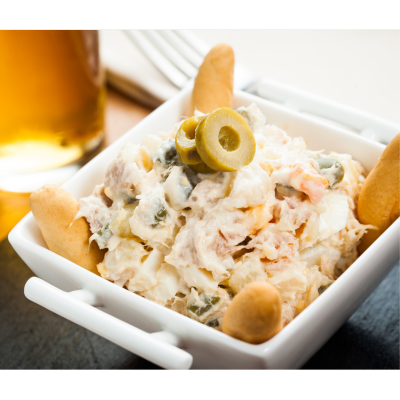
It is commonly consume as a tapa, appetizer, or side dish. Its main consumption occurs in summer, since it is a ready-to-eat dish that does not need heating. Traditionally, it was homemade by boiling the vegetables, chopping them, and mixing them with mayonnaise and tuna. Nowadays, with the rise of fifth-range products, it can be found both in restaurants (as homemade preparations or ready-to-eat versions) and in the supermarket’s prepared food aisle.

What are the physico-chemical characteristics of mayo salad?

To continue, it is necessary to understand the physico-chemical characteristics of Mayo salad, as these determine potential microbiological and organoleptic issues.

From a microbiological perspective, Mayo salad (and similar ready meals) presents high water activity (aw > 0.97) and a pH close to neutrality. Combined with its consumption without final heat treatment moreover, its composition rich in cooked ingredients and plant/animal proteins, it is particularly susceptible to the growth of pathogenic microorganisms such as Listeria monocytogenes.

Listeria is capable of growing at refrigeration temperatures and resisting adverse conditions, so its control requires strategies beyond good hygiene practices. Additionally, as mentioned above, Mayo salad and similar dishes are typical in summer, when high temperatures make it easy for the cold chain to be broken.

What regulation applies to ready-to-eat foods like mayo salad, and what chemical additives are currently used?

As a ready-to-eat product, Mayo salad is subject to the microbiological criteria of Regulation (EC) 2073/2005, updated by Regulation (EU) 2024/2895, which establishes the absence of Listeria monocytogenes throughout the product’s shelf life, except when technical justification based on challenge tests allows the limit of 100 cfu/g.

Traditionally, to control microbiological risk, manufacturers have used preservatives such as sorbates, benzoates, acidulants, or thermal treatments. The issue with these chemical additives is that they lower pH and consequently alter the organoleptic properties of the product. They affect flavour, texture, and consumer perception, giving the final product a “more artificial” appearance. For this reason, the industry is seeking natural solutions that maintain safety without compromising sensory quality.

With this context, we detail the following case study.

Practical case using Amerex protective ferments to improve the microbiological safety of Russian salad without additives that alter sensory quality

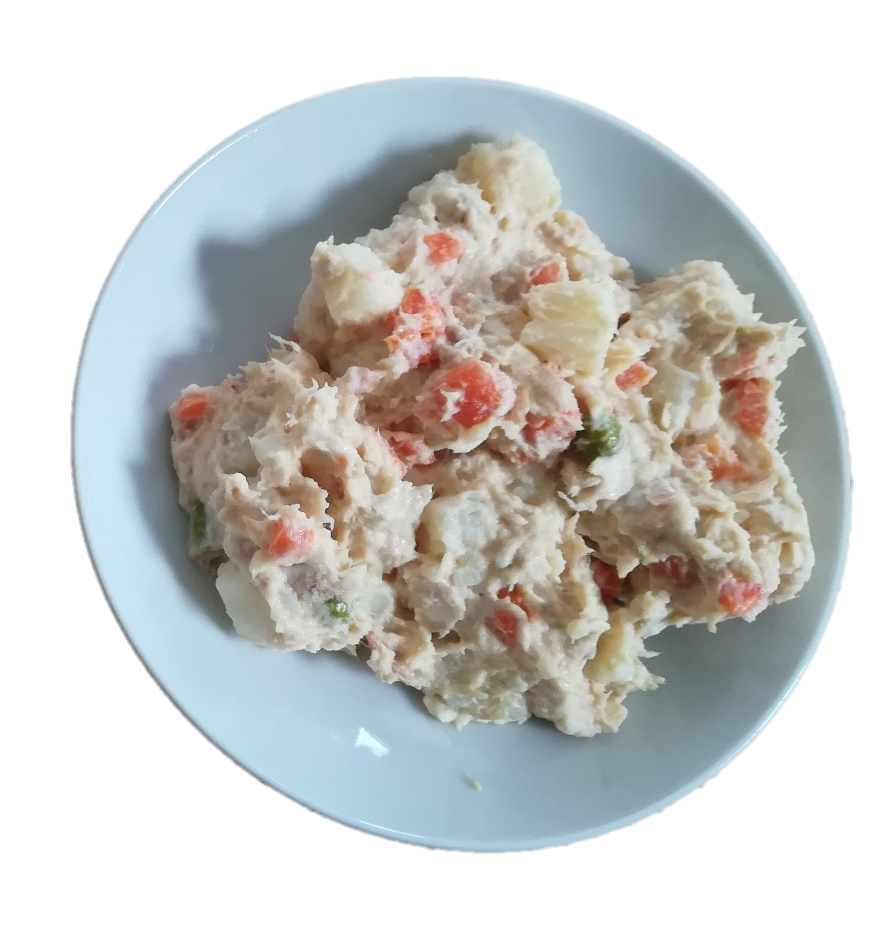
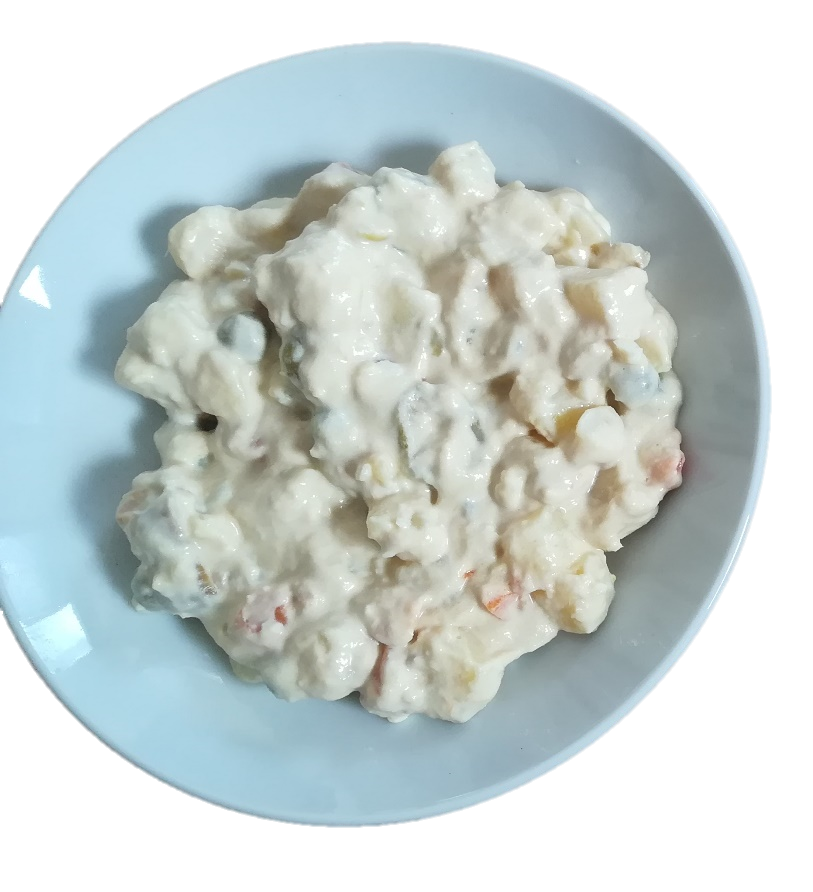
We worked with a Mayo salad from a manufacturer aiming for a homemade and less industrial sensory profile. To achieve this, chemical additives were removed, which otherwise gave the mayonnaise a more liquid and yellowish appearance. The challenge that followed was to guarantee microbiological safety and ensure compliance with the legal requirements described above.

Therefore, Amerex’s goal was to offer a clean label solution effective against pathogens. We carried out a challenge test using one of our protective ferments, Biamex-Aroma-SP (2 g/kg), incorporated into the mayonnaise-based sauce applied to the vegetable matrix.

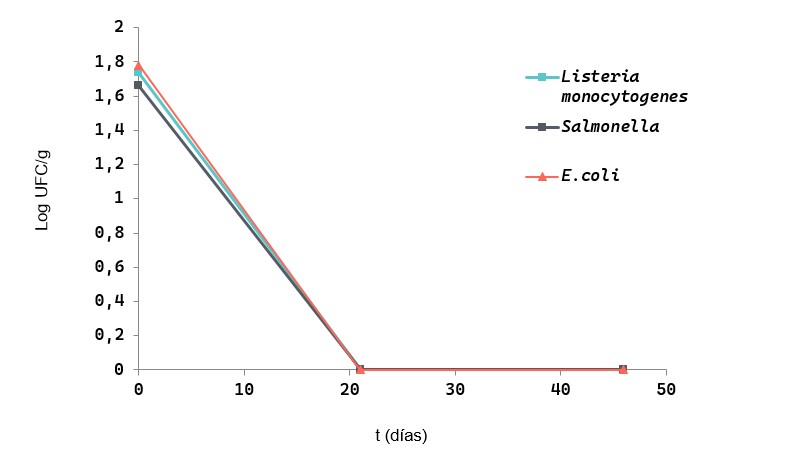
Samples were inoculated with Listeria, Salmonella, and E. coli to evaluate the effectiveness of the natural preservative over time under refrigeration. Additionally, a sensory tasting was conducted to assess changes in flavour, texture, and aroma.

Results obtained without chemical additives: microbiological safety and improved organoleptic profile

Microbiological results:

The addition of Biamex-Aroma-SP showed clear inhibition of Listeria monocytogenes growth in treated samples, with either listericidal or bacteriostatic behavior maintained throughout shelf life. A strong reduction of Salmonella and E. coli was also observed, confirming its protective effect.
Organoleptic results:

The mayo salad treated with Biamex-Aroma-SP was rated as more homemade and traditional compared to the version without protection. It was described as having a balanced flavor, without excessive acidic notes, and a more pleasant texture, as the formulation allowed for reduced use of acidulants and chemical preservatives. Furthermore, the need for aggressive heat treatments was reduced.

Chemical additive o vs  Amerex preservative
Conclusion: a clean label solution for refrigerated ready-to-eat products

This case study demonstrates that Biamex-Aroma-SP is an effective and natural solution to improve microbiological safety and sensory quality in ready-to-eat products such as mayo salad. Its use allows:

  • Effective inhibition of Listeria monocytogenes and other pathogens.
  • Compliance with new European regulatory requirements.
  • Improvement of the product’s sensory profile.
  • Reduction or elimination of artificial preservatives and acidulants.

At Amerex, we work to provide innovative solutions tailored to the real needs of the food industry. If you are developing or reformulating refrigerated ready-to-eat products such as Russian salad, consult us and discover how we can help you ensure safety, flavor, and naturalness.

📩 Contact us for more information and personalized advice:

  • Email: imasd@amerexingredientes.com
  • Phone: +34 91 845 42 14
  • Fill out the form below

Hasta la próxima


Contact us at

1 + 7 = ?

AVOIDING FOOD ALERTS IN INDUSTRY: SOLUTIONS WITH NATURAL BARRIERS

A food alert not only puts public health at risk, but can severely compromise a food company’s reputation, economic stability and long-term viability.

74% of consumers say they no longer trust a brand after being implicated in a food alert, according to recent data. In an increasingly demanding market in terms of quality and transparency, avoiding such incidents must be a top priority for any food operator.

What is a food alert and how does it impact a business?

A food alert occurs when a potential or actual risk to public health is detected in a food already on the market. This may be the presence of pathogens such as Listeria monocytogenes or Salmonella, chemical residues, undeclared allergens, foreign bodies or other contaminants.

The consequences for the company go far beyond product recall. Among the most important impacts are

  • Direct economic costs: recall logistics, destruction of the product, stoppage of production lines, penalties and fines.
  • Loss of consumer confidence: food alerts directly affect brand perception. Regaining that trust can take years or even be irreversible.
  • Legal repercussions: the company may face litigation, compensation and even criminal liability.
  • Negative media coverage: a food crisis is often echoed in the media and social networks, amplifying the reputational damage.

What food alert system is in place in Spain?

The Coordinated System for the Rapid Exchange of Information (SCIRI) is the mechanism established in Spain to manage food alerts. Coordinated by the Spanish Agency for Food Safety and Nutrition (AESAN), its objective is to ensure efficient and rapid communication between competent authorities in the event of food risks. SCIRI is part of the European Union’s Rapid Alert System for Food and Feed (RASFF), thus facilitating the exchange of information at EU level. When a risk is detected in a food or feed, SCIRI makes it possible:

  • Prevent products from reaching consumers.
  • Trace and withdraw the products concerned from the market.
  • To ensure the proper disposal of these products.
  • Take preventive measures to avoid recurrences.

This system is essential to protect public health and maintain confidence in the safety of food available on the market.

What is the key strategy to avoid food alerts?

To minimise the risk of food alerts, the food industry applies the well-known barrier theory. This approach consists of implementing multiple control measures along the entire production chain. The more barriers that are put in place, the less likely it is that a contaminant will reach the consumer.

These barriers include:

  • Heat treatments: pasteurisation, cooking, sterilisation.
  • In-plant hygiene and staff training.
  • Control of suppliers and raw materials.
  • Safe and appropriate packaging for the type of food.
  • Use of natural preservatives and antimicrobials: capable of inhibiting or eliminating pathogenic and spoilage microorganisms during the shelf life of the product.

This approach not only improves product safety, but is also a fundamental tool in preventive risk management, allowing action to be taken before an incident occurs.

How can Amerex help you in the prevention of food alerts?

At Amerex, we have been helping companies protect their products through natural preservation solutions for over 30 years. Our ingredients act as additional barriers to the growth of microorganisms, including pathogens such as Listeria monocytogenes, Salmonella and Escherichia coli.

Thanks to a wide range of formulations, our products adapt to multiple food matrices, providing proven efficacy through studies such as challenge tests and predictive microbiology analysis. All without compromising the clean label or the sensory profile of the food.

With Amerex, you add another safety barrier to your product, minimise the risk of alerts and reinforce confidence in your brand.

Want more information on these products? Contact us for a closer and more personalised advice through:

Amerex see you neXt time


Contact us at

0 + 8 = ?

Tendencias en conservación natural del sector alimentario en 2025

¡Bienvenidos nuestra última entrada del blog! El 2025 ya está aquí y con él llegan avances y tendencias que prometen revolucionar el sector alimentario. Desde soluciones innovadoras en conservación natural hasta alternativas sostenibles a los aditivos tradicionales, este año se perfila como un punto de inflexión hacia un futuro más limpio, sostenible y orientado al consumidor.

En este último blog vamos a estudiar las principales tendencias que marcarán la industria alimentaria en 2025 y cómo estas impactan en el desarrollo de productos y tecnologías.

1. Etiquetado limpio y conservación natural: la prioridad de los consumidores

Desde hace varios años, la prioridad de los consumidores ha sido el etiquetado limpio, libre de aditivos y priorizando que no estén altamente procesados. El deseo por alimentos naturales y sin “ingredientes sospechosos” es una tendencia que sigue en aumento. Los consumidores exigen soluciones que prolonguen la vida útil de los productos sin comprometer la transparencia o la calidad.

  • Conservación natural: Ingredientes como extractos botánicos, fermentos y cultivos protectores están reemplazando a los conservantes artificiales.
  • Aumento del clean label: Los consumidores buscan etiquetas más simples, entendibles y libres de “números E”.

Por nuestra parte, llevamos años ayudando a empresas a conservar sus productos de forma segura y clean label gracias a nuestras soluciones microbiológicas basadas en fermentos naturales.

2. Tecnologías avanzadas para una conservación sostenible

La innovación tecnológica juega un papel crucial en la conservación de alimentos, no solo se busca innovación en cuanto a ingredientes sino a otro tipo de tecnologías, como por ejemplo:

  • Envases activos: Diseñados para interactuar con los alimentos, absorben oxígeno o liberan antioxidantes naturales, alargando su vida útil.
  • Tecnologías de barrera: Revestimientos comestibles basados en algas o quitosano que prolongan la vida útil sin añadir conservantes.
  • Procesos físicos: Como el uso de pulsos eléctricos o luz ultravioleta, que eliminan microorganismos sin necesidad de aditivos químicos.

3. Alternativas a aditivos: se busca lo natural

El mercado sigue buscando alternativas a los aditivos tradicionales, marcando un cambio hacia soluciones más sostenibles y menos procesadas. En esta búsqueda, existen dos ejemplos como son, las proteínas funcionales, usadas para reemplazar estabilizantes en productos lácteos o carnes; y los ya conocidos extractos de hierbas y especias que actúan como conservantes antioxidantes y antimicrobianos.

En Amerex sin embargo, desarrollamos de manera personalizada alternativas clean label que cumplen con las normativas más exigentes y las demandas de los consumidores basadas en microbiología.

4. Fermentación y microbiología: los protagonistas del año

La biotecnología basada en fermentación se posiciona como la herramienta clave para soluciones naturales en conservación.

  • Fermentos protectores: Cultivos específicos que inhiben patógenos y prolongan la vida útil sin alterar el sabor ni la textura.
  • Probióticos y postbióticos: Aumentan la funcionalidad de los alimentos, haciendo que sean más saludables y duraderos.
  • Expertise de Amerex: Con más de 40 años de experiencia, ofrecemos soluciones a medida para la conservación natural y sostenible basada en fermentación protectora. Si quieres saber saber más no dudes en contactarnos.

El 2025 trae consigo grandes oportunidades para quienes apuesten por la innovación y las soluciones naturales. En Amerex, seguimos comprometidos con liderar el cambio, ofreciendo alternativas a los aditivos tradicionales y desarrollando soluciones clean label que marcan la diferencia.

¡Si estás buscando implementar tendencias en conservación natural o necesitas alternativas personalizadas para tus productos, no dudes en contactarnos!

• Escríbenos un correo a: imasd@amerexingredientes.com
• Llámanos al: 91 845 42 14
• Rellena el formulario a continuación

Hasta la próxima

Conoce Nuestros Productos


Contáctanos

8 + 0 = ?

WHAT ARE PROBIOTICS?

Welcome to our blog for another day! In this new post we will talk in more detail about the definition of probiotics, how they work, which are the most used strains and how they are used in the food industry.

By now, you’ve probably heard the term “probiotic” many times before, right? In recent years, research and development for the use of these microorganisms has increased significantly. It has increased not only for their application in health (where there are more and more studies demonstrating their benefits), but also within the food industry with the development of new products.

In the wake of COVID-19, the global probiotics market has been growing steadily, estimated to register a CAGR (Compound Annual Growth Rate) of 8.08% between the years 2022-2027. As we have mentioned in previous posts: INNOVATION IN THE FOOD INDUSTRY: NEW TECHNOLOGIES, the general concern for health and physical well-being, especially among young people, has led to an increase in demand for products that are healthy and safe and, if possible, help to strengthen our immune system. We see this trend reflected in all the functional foods and drinks being developed by major companies and the advertising of these products.

What are probiotics and what are their mechanisms of action?

Probiotics are living organisms that, once administered, remain active in the gut and can alter the host’s gut microbiota, generating benefits such as facilitating digestion and nutrient absorption and strengthening the immune system. In general terms, the World Health Organisation’s definition of probiotics is “live microorganisms that, when administered in sufficient quantities, provide a health benefit to the host”.

There are many foods or supplements that contain live micro-organisms, but in order to be considered a “probiotic” it needs to be a characterised strain that is scientifically proven to have a health benefit. Thus, a probiotic bacterium needs to be identified according to its specific identity (its genus and strain) and its health benefits.

As for the mechanisms of action of probiotics, these will be different depending on their genus and strain. In general terms, the following can be distinguished:

  • By competition: micro-organisms are able to establish themselves in mucous membranes and thus reproduce, preventing a pathogen from doing so.
  • By generation of antimicrobial compounds: thanks to the production of molecules such as lactic, acetic, propionic acid, etc. or bacteriocins, which are small peptides that inhibit the growth of similar bacteria or strains close to those that produce them.
  • By binding to the pathogen: thus preventing it from being able to attach to mucous membranes to reproduce.
  • By immunomodulation: mediating different components of innate, adaptive or acquired immunity.

How are probiotics identified by genus and strain?

As mentioned above, probiotics are identified according to their genus and strain and because of this they will be used for different applications.

A genus can include more than one species, which in turn includes different strains. For example, you may have heard of bifidobacteria, usually found in the large intestine, or lactobacilli, found in the small intestine, two of the most studied probiotics for supporting digestive health. Both are a genus of gram-positive bacteria of which there are different strains, each used for different purposes. Also important among probiotic organisms are yeasts, such as the genus Sacharomyces.

All these microorganisms have the status of QPS (Qualified Presumption of Safety) from the European Food Safety Authority (EFSA), as it is essential that an evaluation of the safety of the microorganisms used in supplements, feed additives, food additives, food enzymes, flavourings, etc. is carried out to ensure safety for consumers. There are also other references such as the Danish list from the Danish Ministry of Health and Veterinary Affairs, or the USDA GRAS list, where most commercial lactic acid bacteria are considered safe.

What foods are rich in probiotics and what are the applications in food?

As we have seen, the definition of probiotic is closely related to health and it may seem that probiotics are only used as “food supplements”, but the scope of application of probiotic bacteria is very wide and we find a multitude of foods containing natural probiotics such as: sauerkraut, natural yoghurt, kombucha, Kimchi, kefir or pickles.

Thus, the global probiotics market could be segmented on the basis of product type as follows:

– Probiotic foods

– Probiotic drinks

– Dietary supplements

– Animal feed

gut health benefits of probiotics

If we go further, knowing the mechanisms of action of probiotics described in section 1, are there more applications of probiotics than just health benefits? The answer is clearly yes!

People in general relate the main activity of probiotics exclusively to health. In other cases, more informed consumers consume probiotic foods, such as those mentioned above, to support their digestive health and improve their immune system. But what many people do not know is that these same probiotic bacteria can be used within the food industry as natural preservatives.

If the necessary quantities of probiotic bacteria are inoculated into a food, depending on the genus and strain and based on the mechanisms described above, protection against pathogenic organisms such as Listeria, E.coli or Salmonella, three examples of the many pathogens and contaminating microorganisms in food, can be generated. Thanks to this, a new research front is emerging that encompasses the general concern for health and physical well-being together with a healthy diet free of chemical additives.

Is there more information on natural conservation?

At Amerex we are experts in products aimed at preserving the final food by means of natural protection mechanisms. We have more than 40 years of experience selling ripening starters to carry out the maturation of food, which is used to ensure its preservation.

For years, we have also had a wide range of products, such as the Biamex® range, to extend the shelf life of foodstuffs. These are natural preservatives with a biotechnological base, being protective ferments that have a direct action against pathogenic microorganisms.

If you want to know more about probiotic foods or natural preservation thanks to the use of different probiotic strains, do not hesitate to contact us!

imasd@amerexingredientes.es

Telephone number: +34 91 845 42 14

Our Products

Contact us

1 + 3 = ?