NEW LISTERIA REGULATION: KEY ISSUES FOR THE FOOD INDUSTRY
Growing health concerns and advances in microbiological control have prompted the European Union to update its legislation on the regulation of listeria in ready-to-eat foods. In November 2024 the European Commission adopted the new Regulation (EU) 2024/2895, which amends Regulation (EC) 2073/2005, introducing significant changes that will affect many food manufacturers from 1 July 2026.
Listeria monocytogenes remains one of the main challenges in the food industry, especially in ready-to-eat products, so in this article we look at what this new regulation is about, which foods are affected, and how companies can prepare to meet these new requirements.
What did the Listeria regulation support before the change?
Prior to the entry into force of Regulation (EU) 2024/2895, existing European legislation – specifically Regulation (EC) 2073/2005 – allowed a maximum limit of 100 cfu/g for ready-to-eat foods susceptible to the growth of Listeria monocytogenes throughout the shelf-life of the product, provided that this value was not exceeded under reasonably foreseeable storage conditions.
In many cases, this was applied even without the need to scientifically demonstrate that the food did not support the growth of the bacteria. With the new regulation, the requirements for ensuring the microbiological safety of products are tightened, obliging companies to justify more rigorously the behaviour of the pathogen in their food.
What does the new European regulation on Listeria provide for?
The new European regulation on Listeria, according to Regulation (EU) 2024/2895, states that all ready-to-eat foods that are likely to support the growth of Listeria monocytogenes must guarantee the absence of the pathogen throughout their shelf life. In other words, foods that have not been shown to be able to remain below 100 cfu/g during their shelf life must guarantee the absence of the micro-organism in 25 g of the product.
However, there is an exception: if the food operator can demonstrate through scientific studies that the level of Listeria monocytogenes will not exceed 100 cfu/g during the shelf-life of the product, this controlled presence will be allowed.
This measure will not apply to food intended for infants or for special medical purposes.
This legislative change emphasises the importance of preventive control, process validation and the use of effective technologies for the inhibition or elimination of Listeria in final products.
Which foods are considered susceptible to the development of Listeria?
A food is considered to be capable of supporting the growth of Listeria monocytogenes if it meets any of the following physico-chemical conditions:
- pH > 4,4
- Water activity (aw) > 0,92
- pH > 5 and aw > 0,94 together.
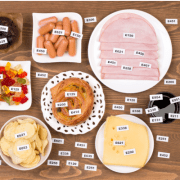
Therefore: refrigerated, high moisture, low salt content products without final heat treatment, such as cooked sausages, soft cheeses, ready meals or vacuum packed fish, are in the highest risk group.
What is the challenge of Listeria in the food industry?
Listeria monocytogenes is particularly dangerous because it can grow even at refrigeration temperatures, it has a high environmental resistance and its infection can have serious consequences, especially in immunocompromised, pregnant and elderly people. This pathogen is a major cause of foodborne illness.
For the industry, a listeriosis outbreak not only implies health risks, but also economic costs, product recalls, reputational damage and loss of consumer confidence. Complying with the new legal requirements is essential, but so is ensuring responsible and safe production. According to a 2022 report by the European Food Safety Authority (EFSA), cases of listeriosis increased by 15.9% compared to 2021 and the number of deaths was one of the highest in the last 10 years.
How to adapt to the new legislation?
In order to comply with this new legislation, manufacturers can demonstrate that their products do not exceed the 100 cfu/g threshold by means of:
- Challenge tests: controlled tests in which the product is inoculated with Listeria and its evolution throughout its shelf life is simulated under real storage conditions.
- Predictive microbiology models, which allow estimating the behaviour of the pathogen depending on parameters such as pH, aw or temperature.
These types of studies must be robust, reproducible and adjusted to real distribution and storage conditions.
What solution does Amerex offer to adapt to this new legislation?
At Amerex we are experts in natural food preservation. Our products act as an additional barrier to the growth of pathogens, and have been validated through numerous challenge tests on ready-to-eat foods or foods that are susceptible to undercooking.
Thanks to their bacteriostatic and, in many cases, listericidal action, our natural ingredients have proven effective in inhibiting the growth of Listeria monocytogenes, meeting the most stringent requirements of Regulation (EU) 2073/2005 and its amendment of 2024.
Our specialist product against Listeria, Fermitrat Export, has been validated in numerous matrices and through challenge tests, demonstrating its efficacy against this pathogen and offering an additional point of safety to food manufacturers.
In a context where food safety and regulatory requirements are increasing, having effective and natural solutions is not only an advantage, but a strategic necessity to protect your product and your brand.
Interested in finding out how Amerex can help you comply with the new Listeria regulations? Contact our technical team and we will advise you with customised solutions for your type of product.
Would you like more information on these products? Contact us for a closer and personalised advice through:
- You can write us an email to: imasd@amerexingredientes.com
- Call us on: +34 91 845 42 14
- Fill in the form below


Nuria Lázaro is the R&D and Quality Manager for Amerex’s technical team. She holds a degree in Biology and a master’s degree in Biotechnology. She brings her experience in food preservation and safety, specializing in legislation and the development of new preservatives and antioxidants.