Posts

FERMITRAT N, FERMENT FOR COLOUR DEVELOPMENT

In both the meat and fish industries, achieving an attractive and stable colour in cured or processed products is essential to ensure consumer acceptance. Traditionally, nitrites have been the most widely used resource for this purpose, but the growing demand for clean labels and more natural foods has driven the search for natural alternatives. At the same time, new legislation requires stricter limits on the use of this chemical additive.

In this context, Amerex’s Fermitrat N is presented as an innovative solution that allows the development of characteristic colour and aroma as a complement to nitrites, enabling compliance with current legislation.

In the following blog, we analyse in detail this new legislation affecting the use of nitrites and nitrates: New regulations on nitrifying agents: reduction in the use of nitrates and nitrites.

1. In which foods are nitrites used and what is their technological functionality?

Nitrites are chemical compounds containing oxygen and nitrogen that occur naturally (in soil and water) and are used as preservatives in the food industry (E-249, E-250).

Nitrates and nitrite salts are commonly added during the production of a wide variety of meat products (cooked and cured hams, sausages such as chorizo, bacon and other injected products), fish and cheese. As mentioned above, they are also found naturally in green leafy vegetables such as spinach, lettuce and rocket, which are our main source of nitrate in the diet, and in drinking water.

Their technological functionality is very well defined. They are used to develop and stabilise the characteristic colour of cured products. They also ensure the typical aroma and flavour of cured products. Furthermore, they have a dual preservative function, as they prevent the growth of pathogens, especially Clostridium botulinum. Finally, their antioxidant properties help to maintain quality throughout the shelf life.

However, the use of nitrites is increasingly being questioned. Excessive amounts of nitrites can impair the blood’s ability to carry oxygen, causing symptoms such as weakness and tachycardia. In addition, they can contribute to the formation of nitrosamines, some of which are carcinogenic. For these reasons, they are a public health concern as they are associated with diseases such as cancer.

2. What are the legislative limits applied to nitrites?

European legislation strictly regulates the use of nitrites in food through Regulation (EC) 1333/2008, recently amended by Regulation (EU) 2023/2108.

Some examples of the current limits that apply are:

Product category Added nitrite limit (ppm) Residual limit (ppm)
Non-heat-treated meat products 120 o 80 67 o 45
Heat-treated meat products 120 o 80 67 o 45
Traditional cured products 150 50-150
Sterilised products 80 40

These limits are mandatory from October 2025 and represent a significant reduction compared to previous legislation, increasing pressure on manufacturers to reformulate their products without compromising their safety, colour and flavour.

3. Ferment complementary to nitrites to comply with legislation.

With the aim of reducing the use of nitrites in food, Amerex has developed innovative solutions based on applied microbiology. One example is our Fermitrat N ferment.

FERMITRAT N is a concentrated ferment of micrococci and staphylococci designed to promote the natural development of colour and aroma in meat products. Its action maintains the sensory and visual quality of food, while complying with consumer demands for clean labelling and natural preservation.

Furthermore, as a natural solution, Fermitrat N not only meets the most stringent regulatory requirements, but also provides additional microbiological safety thanks to its competitive action against unwanted microorganisms.

4. How to apply Fermitrat N ferment

The application of any Amerex ferment, and specifically Fermitrat N, is very simple and adapts to different production processes. We always recommend adding it at the beginning of the process along with the rest of the ingredients and following the usual manufacturing process.

In summary, the steps to follow to apply Fermitrat N ferment are as follows:

  • Dissolution: The contents of the sachet are diluted in water.
  • Distribution: The mixture is added to the dough in the cutter or mixer. Ensure that the product is distributed evenly throughout the food.
  • Application in injected products: Add directly to the brine just before injection.

The recommended dose is 50-100 grams per 100-200 kg of mass, adjusting the amount according to the type of product and the desired colour profile.

Thanks to its versatility, Fermitrat N allows manufacturers to maintain the visual and organoleptic appeal of food without resorting to nitrites, offering a safe and natural path to clean label formulations.

We have several success stories in the meat and fish sector with the use of this natural preservative. If you would like to know more, please contact us and a technician will help you with whatever you need.

You can do so via:


Amerex see you neXt time


Contact us at

4 + 4 = ?

NEW NITRIFYING AGENTS REGULATION: REDUCTION OF NITRATE AND NITRITE USE

For years, the reduction of nitrifying agents (nitrates and nitrites) in the meat industry has been a topic of discussion. Finally, on October 9, 2023, the European Union published Regulation 2023/2108, which came into effect on October 29, 2023, and will require many meat product manufacturers to modify their formulations.

Although companies have a two-year adaptation period (until October 9, 2025), this regulation will bring significant changes to the formulation of numerous meat products in Spain. The permitted levels of nitrites (E-249: potassium nitrite and E-250: sodium nitrite) and nitrates (E-251: sodium nitrate and E-252: potassium nitrate) will be reduced. Additionally, for the first time in the EU, mandatory regulation of residual nitrite levels and indicative nitrate levels has been established.

It is important to note that these new nitrate and nitrite limits will be mandatory starting October 9, 2025. However, meat products marketed before this date can remain on the market until the end of their shelf life.

Below, we will detail the changes in the maximum permitted levels of nitrifying agents and the natural alternatives offered by Amerex Ingredientes.

What Is the Technical Functionality of Nitrites and Nitrates in Meat Products?

To understand this regulation, it is essential to know the technological function of nitrifying agents in meat products, as nitrites and nitrates play a key role in the food safety of meat products.

Their main function is to inhibit the growth of pathogens such as Clostridium botulinum, preventing the development of dangerous toxins. In addition, they contribute to the stability of the colour, aroma and flavour of meat products, thanks to their antioxidant and technological properties. This dual function (preservation and sensory quality) makes them difficult to replace, especially considering the risk of contamination by Clostridium, one of the most dangerous bacteria in the food industry.

As a result, nitrifying agents are widely used in the meat industry.

What New Reference Does the Reform Introduce for Residual Levels of Nitrites and Nitrates?

Initially, the European Commission proposed mandatory residual values for both nitrites and nitrates. However, in the final version of the regulation only nitrites have mandatory residual limits, since nitrates have indicative values only

If indicative nitrate values are exceeded, meat companies must investigate the cause. This could create conflicts with health authorities, as the application of penalties or requirements will depend on the criteria of each regional authority in Spain.


What Are the New Permitted Levels of Nitrates and Nitrites?


Below, we indicate what the new nitrate and nitrite levels will be for the different meat products, in this case, meat companies will be able to choose between two mutually exclusive options for use:

1.      General Use of Nitrifying Agents in Meat Products and Certain Meat Preparations

The authorised uses and maximum quantities of nitrites that may be added during processing are as follows:

NITRITES (E-249 – E-250) Current Legislation New Limits (Effective October 9, 2025)
08.2 Meat Preparations (Spain: marinated pork loin, marinated pork skewer, marinated pork jowl, marinated pork rib) 150 ppm added (NaNO₂) 120 ppm added / 67 ppm residual (NaNO₂) or 80 ppm added / 45 ppm residual (NO₂)
08.3.1 Unheated Meat Products 150 ppm added (NaNO₂) 120 ppm added / 67 ppm residual (NaNO₂) or 80 ppm added / 45 ppm residual (NO₂)
08.3.2 Heat-Treated Meat Products 150 ppm added (NaNO₂) 120 ppm added / 67 ppm residual (NaNO₂) or 80 ppm added / 45 ppm residual (NO₂)
08.3.2 Sterilized Meat Products (F◦ > 3.00) 100 ppm added (NaNO₂) 80 ppm added / 40 ppm residual (NaNO₂) or 55 ppm added / 25 ppm residual (NO₂)
08.3.4 Traditional Cured Products 150-180 ppm added / 50-175 ppm residual (NaNO₂) 150 ppm added / 50-150 ppm residual (NaNO₂) or 105 ppm added / 30-105 ppm residual (NO₂)

As mentioned above, it should be borne in mind that the residual values are mandatory.

As far as nitrates (E-251 – 252) are concerned, their use is still limited in several categories:

NITRATES (E-251 – E-252) Current Legislation New Limits (Effective October 9, 2025)
08.2 Meat Preparations NOT AUTHORIZED NOT AUTHORIZED
08.3.1 Unheated Meat Products 150 ppm added (NaNO₃) 120 ppm added / residual (NaNO₃) or 90 ppm added / residual (NO₃)
08.3.1 Unheated Meat Products (Nitrate-Free Sausages & Large Bacon Pieces) 150 ppm added (NaNO₃) 150 ppm added / residual (NaNO₃) or 110 ppm added / residual (NO₃)
08.3.2 Heat-Treated Meat Products NOT AUTHORIZED NOT AUTHORIZED
08.3.4 Traditional Cured Products 250-300 ppm added / 10-250 ppm residual (NaNO₃) 250 ppm added / 10-205 ppm residual (NaNO₃) or 180 ppm added / 7-150 ppm residual (NO₃)

Residual values for nitrates are only indicative. However, if exceeded, companies must investigate the cause.

2.      Use of nitrifiers in traditional meat products (Category 08.3.4):

Derogations exist for traditional cured products (In Category 08.3.4 ‘Traditional cured meat products with specific provisions for nitrites and nitrates’), such as cured ham, cured shoulder, cured loin, cured beef jerky, chorizo and salami. The new regulation allows flexibility with the mention of ‘and other similar products’.

Here are the new limits:


Category 08.3.4. Traditional and traditionally cured meat products with specific provisions for nitrites and nitrates NITRITES (E-249 – 250)
  CURRENT LEGISLATION NEW LIMITS (from 9 October 2025)
Cured ham, cured shoulder, cured loin, cured pork loin, jerky and similar products: dry-cured with a stabilisation period of at least 10 days followed by a maturation period of at least 45 days Maximum Residual Amount 100 ppm (NaNO2) 100 ppm residual (NaNO2) or 65 ppm residual (NO2)
 Traditional sausage and chorizo and other similar products (matured for at least 30 days) Not Authorised Not Authorised


Category 08.3.4. Traditional and traditionally cured meat products with specific provisions for nitrites and nitrates NITRATES (E-251 – 252)
  CURRENT LEGISLATION NEW LIMITS (from 9 October 2025)
Cured ham, cured shoulder, cured loin, cured pork loin, jerky and similar products: dry-cured with a stabilisation period of at least 10 days followed by a maturation period of at least 45 days Maximum Residual Amount 250 ppm (NaNO3) 205 ppm residual (NaNO3) or 150 ppm residual (NO2)
 Traditional sausage and chorizo and other similar products (matured for at least 30 days) Maximum Residual Amount 250 ppm (NaNO3) 250 ppm additions and 130 ppm residual (NaNO3) or 180 ppm additions and 95 ppm residual (NO3)

Why has it been decided to modify the nitrifiers regulation and reduce their use?

As we mentioned at the beginning of this blog, the need to reduce the use of nitrifiers has been discussed for several reasons.

Firstly, already in 2017 the European Food Safety Agency (EFSA) assessed the safety of nitrates and nitrites in food, concluding that the permitted levels were safe. However, it identified that certain population groups could exceed the Acceptable Daily Intake (ADI) for nitrites. This, coupled with concerns about the formation of nitrosamines, prompted the European Commission to reduce the permitted levels.

European countries such as Denmark already applied stricter limits, which made it difficult to export Spanish meat products to these markets. Pressure from these countries prompted the revision of the regulations, culminating in the publication of Regulation 2023/2108.

In the case of the Spanish meat sector, intensive work has been carried out with the Spanish Agency for Food Safety and Nutrition (AESAN) and the European Commission to achieve a balance between food safety and industrial viability, as the microbiological risk of contamination by Clostridium is not a minor issue and it is essential to ensure consumer safety.

As a result of these negotiations, the limits set in the final regulation were more reasonable and adaptable to the needs of the industry.

Nevertheless, with the entry into force of Regulation 2023/2108, Annex II of Regulation 1333/2008 and the Annex of Regulation 231/2012 have been amended, establishing new limits for nitrifiers in meat products within the EU.

What Nitrite Substitutes Does Amerex Offer?

At Amerex, we are experts in natural preservation and have developed alternative solutions to reduce or replace nitrifying agents.

In our case, our technology is based on the use of starters. Our product Biamex NC, has a very innovative technology for the generation of the typical colour that nitrifiers would provide. In this way, thanks to a fixation reaction of the meat/fish protein itself, you can achieve an optimal replacement of nitrates, nitrites and/or nitro salts. In addition, this product incorporates another of our strains of ferments specialised in the action against sporogens such as clostridium botulinum.

We have several success stories of this product together with other preservatives that can help you to reduce the use of nitrifiers in order to adapt to legislation. We have both preservation and organoleptic technology so that your product is safe and organoleptically optimal for the consumer.

Want to learn more about our solutions to ensure food safety? Contact us and discover how our natural preservatives can help protect your products:

Amerex see you neXt time


Contact us at

2 + 5 = ?

WITHDRAWAL OR REPLACEMENT OF NITRITES WITH NATURAL PRESERVATIVES

In the food industry there are several sectors in which the chemical additives nitrates and nitrites are commonly used. In the meat or fish sector, for example, nitrates and nitrites are considered necessary to carry out the nitrification process that gives a characteristic colour to the final product as well as protection against anaerobic pathogens and sporogens.

Below we explain why nitrites are used in feed and introduce you to Amerex’s specialist product for the natural replacement of nitrites: Biamex NC.

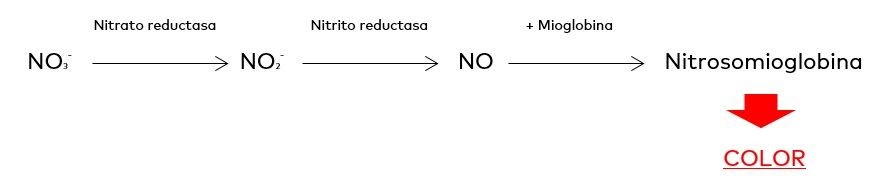
In the nitrification process, nitrate is reduced to nitrite, from which nitric oxide is produced. Nitric oxide combines with muscle myoglobin to form nitrosomyoglobin, which is responsible for the typical colour of cured meats, e.g. in the meat industry. In the case of cooked meats, the temperature causes this nitrosomioglobin to be transformed into nitrosylhaemochrome, which is responsible for the characteristic pink colour.

Nitrates and nitrites have been considered necessary in the food sector, in addition to the generation of colour that they provide to food, making it more attractive to consumers, because they guarantee certain safety in products by preventing the development of pathogenic bacteria, specifically Clostridium botulinum, which causes the well-known botulism disease.

Like any other additive, nitrites are regulated by Annex II of Regulation (EC) No 1333/2008 of the European Parliament and of the Council and the Annex to Commission Regulation (EU) No 231/2012. It regulates the maximum dose that can be incorporated in each foodstuff under a specific legislation.

There is increasing talk of replacing nitrites with other types of natural preservatives and of regulating more strictly the permitted dosage in the various foods in which they are used.

The problem is that, although nitrates occur naturally, for example in various vegetables (e.g. lettuce, celery) or even in water, some of them are converted into nitrites during the digestion process, reacting with amino acids in the stomach and giving rise to nitrosamines, which are carcinogenic substances. In the case of foodstuffs from the above-mentioned sectors they are found directly in the form of nitrites. For this reason it is important to find substitutes that avoid the presence of these additives in products that we normally consume.

There are many natural substitutes for nitrites on the market. As mentioned above, they are found naturally in vegetables such as lettuce and celery, and some companies use natural extracts of this type. We must not forget also the risk of sporogen poisoning that can be caused by poor nitrite substitution.

In our case, we have a transparent natural technology for nitrite substitution: the use of starters.

Our product Biamex NC, has a very innovative technology for the generation of the typical colour that nitrifiers would provide. In this way, thanks to a fixation reaction of the meat/fish protein itself, you can achieve an optimum replacement of nitrates, nitrites and/or nitro salts. In addition, this product incorporates another of our strains of ferments specialised in the action against sporogens such as clostridium botulinum.

Biamex NC, as a nitrite substitute, can be applied in any food where a substitution of this chemical additive is necessary.     

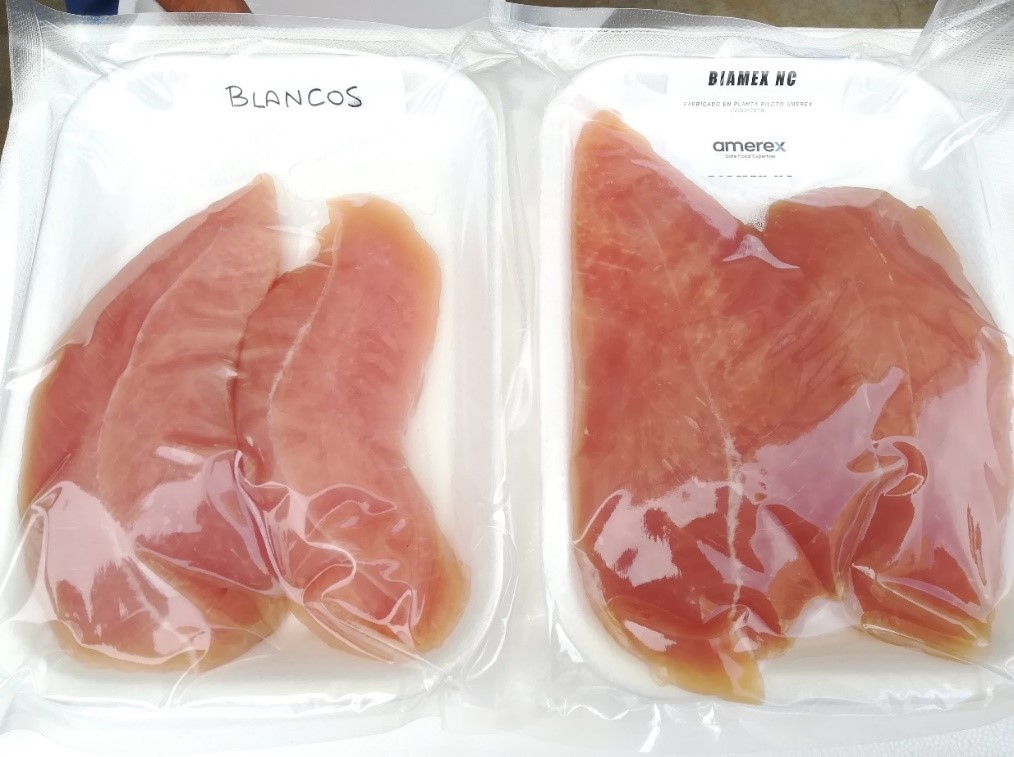
It is very common to substitute nitrites in meat products as we have mentioned above. Here is an example of injected turkey:

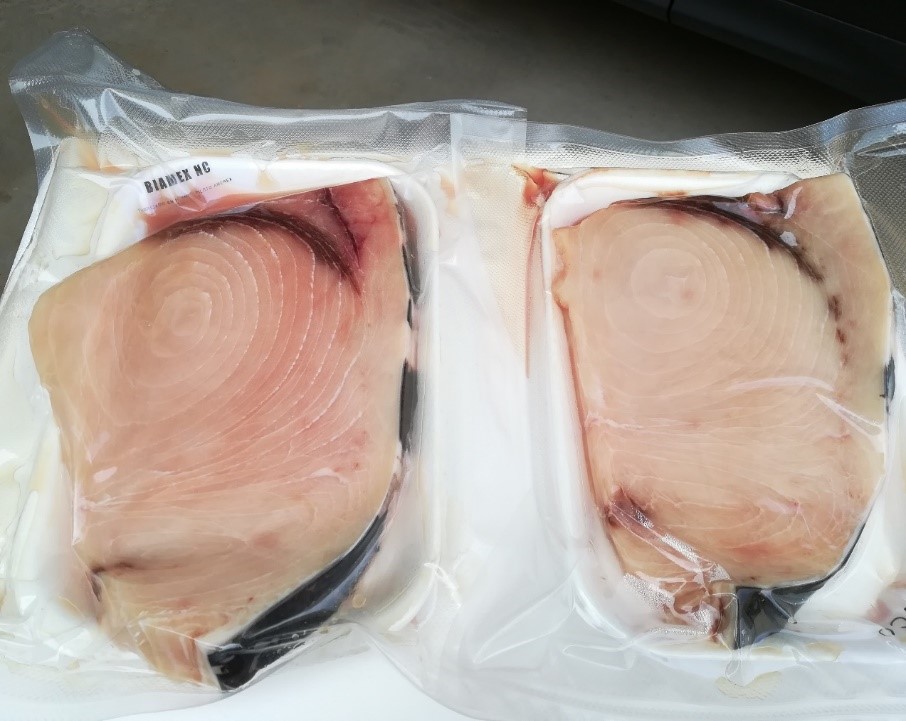
Another food where the use of nitrites is also common is in various fish. Biamex NC also has experience with this type of food. Here is a test on injected swordfish:

In conclusion, we can state that the use of starters is a very good alternative to nitrites, in particular the use of the Amerex Biamex NC product, as it significantly reduces the appearance of this colour in meat and fish products. In addition, this product includes Amerex’s protective technology to maintain product safety equivalent to the protection provided by nitrites.

Would you like more information about this starter culture? You can contact us for a personalised recomendation:

Amerex see you neXt time

Our Products

Contact us

1 + 1 = ?