Posts

WITHDRAWAL OR REPLACEMENT OF NITRITES WITH NATURAL PRESERVATIVES

In the food industry there are several sectors in which the chemical additives nitrates and nitrites are commonly used. In the meat or fish sector, for example, nitrates and nitrites are considered necessary to carry out the nitrification process that gives a characteristic colour to the final product as well as protection against anaerobic pathogens and sporogens.

Below we explain why nitrites are used in feed and introduce you to Amerex’s specialist product for the natural replacement of nitrites: Biamex NC.

In the nitrification process, nitrate is reduced to nitrite, from which nitric oxide is produced. Nitric oxide combines with muscle myoglobin to form nitrosomyoglobin, which is responsible for the typical colour of cured meats, e.g. in the meat industry. In the case of cooked meats, the temperature causes this nitrosomioglobin to be transformed into nitrosylhaemochrome, which is responsible for the characteristic pink colour.
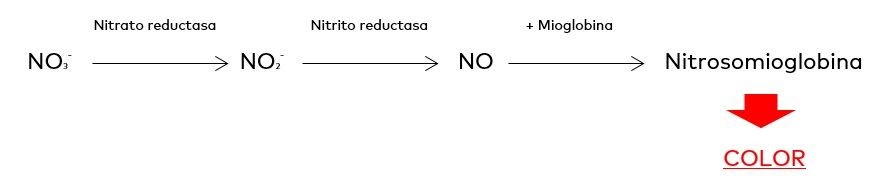
Nitrates and nitrites have been considered necessary in the food sector, in addition to the generation of colour that they provide to food, making it more attractive to consumers, because they guarantee certain safety in products by preventing the development of pathogenic bacteria, specifically Clostridium botulinum, which causes the well-known botulism disease.

Like any other additive, nitrites are regulated by Annex II of Regulation (EC) No 1333/2008 of the European Parliament and of the Council and the Annex to Commission Regulation (EU) No 231/2012. It regulates the maximum dose that can be incorporated in each foodstuff under a specific legislation.

There is increasing talk of replacing nitrites with other types of natural preservatives and of regulating more strictly the permitted dosage in the various foods in which they are used.

The problem is that, although nitrates occur naturally, for example in various vegetables (e.g. lettuce, celery) or even in water, some of them are converted into nitrites during the digestion process, reacting with amino acids in the stomach and giving rise to nitrosamines, which are carcinogenic substances. In the case of foodstuffs from the above-mentioned sectors they are found directly in the form of nitrites. For this reason it is important to find substitutes that avoid the presence of these additives in products that we normally consume.

There are many natural substitutes for nitrites on the market. As mentioned above, they are found naturally in vegetables such as lettuce and celery, and some companies use natural extracts of this type. We must not forget also the risk of sporogen poisoning that can be caused by poor nitrite substitution.

In our case, we have a transparent natural technology for nitrite substitution: the use of starters.

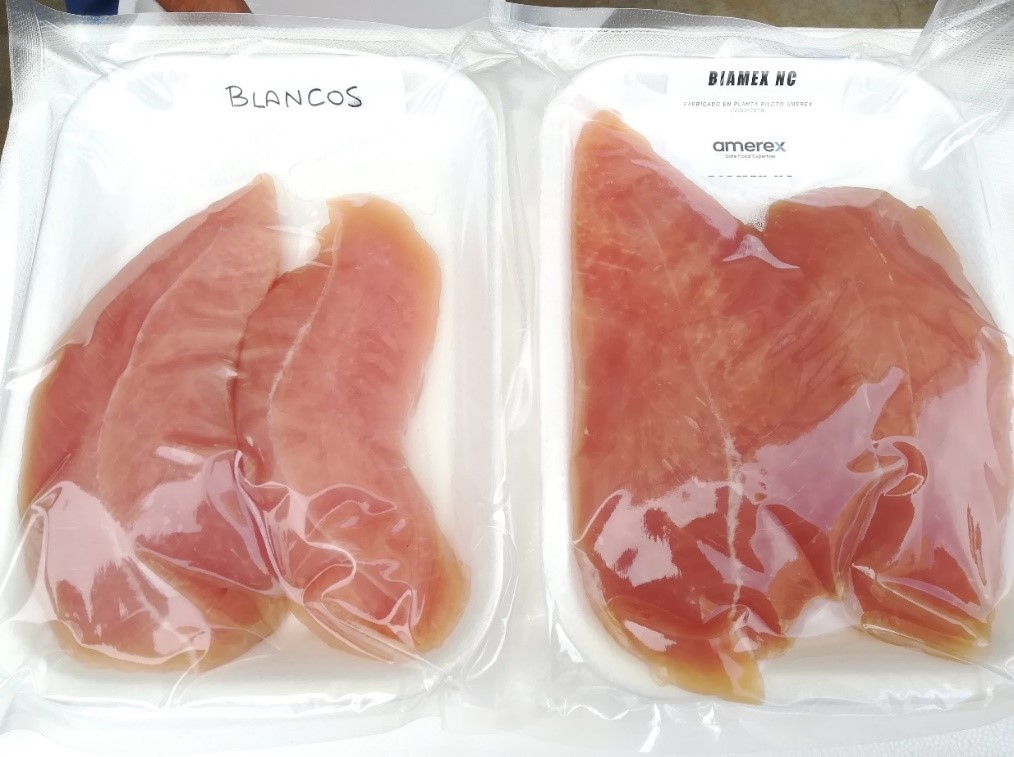
Our product Biamex NC, has a very innovative technology for the generation of the typical colour that nitrifiers would provide. In this way, thanks to a fixation reaction of the meat/fish protein itself, you can achieve an optimum replacement of nitrates, nitrites and/or nitro salts. In addition, this product incorporates another of our strains of ferments specialised in the action against sporogens such as clostridium botulinum.

Biamex NC, as a nitrite substitute, can be applied in any food where a substitution of this chemical additive is necessary.     

It is very common to substitute nitrites in meat products as we have mentioned above. Here is an example of injected turkey:
Another food where the use of nitrites is also common is in various fish. Biamex NC also has experience with this type of food. Here is a test on injected swordfish:
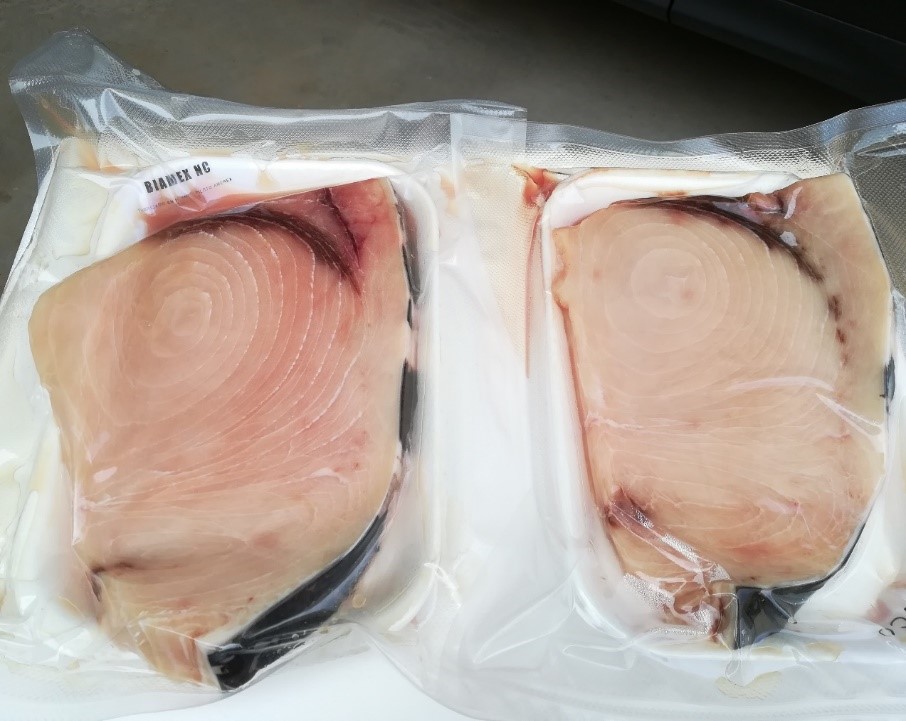
In conclusion, we can state that the use of starters is a very good alternative to nitrites, in particular the use of the Amerex Biamex NC product, as it significantly reduces the appearance of this colour in meat and fish products. In addition, this product includes Amerex’s protective technology to maintain product safety equivalent to the protection provided by nitrites.

Would you like more information about this starter culture? You can contact us for a personalised recomendation:

Amerex see you neXt time

Contact us

0 + 1 = ?

SEEN FOR OURSELVES – Ripening starters for nitrites replacement in food industry

Welcome again to our latest blog post! This post will be the first of many in our brand new section called ‘Seen for Ourselves’, as this section is all about empirical results of trials carried out in the pilot plant of Amerex facilities. You will get to know first-hand the experiences at our plant, how things work there and how each day we get a step closer to our goal of creating fully clean label products. Let’s dive in:

Last month we carried out a number of such trials with a common element: one of our starters specially designed to generate colour on the final product without the presence of nitrites. In food industry, particularly in the meat sector, nitrates and nitrites are considered necessary to start the nitrification process that imparts a characteristic colour to the final product. Here is a simple explanation of what happens during this process:

Metabolic reaction from nitrate to nitrosomyoglobin, generating colour in meat products
Nitrate is reduced to nitrite, which is further reduced to produce nitric oxide. This nitric oxide combines with myoglobin in muscles to form nitrosomyoglobin, which is responsible for the typical colour of cured meat. In case of cooked meat, temperature causes this nitrosomyoglobin to be transformed into nitrosylhemochrome, responsible for its characteristic pink colour.

Nitrates and nitrites have been considered a requisite in the food industry not only for their ability to generate colour, but also because they guarantee certain safety in the products by preventing the development of pathogenic bacteria, especially Clostridium botulinum, which causes botulism disease. In addition, the corresponding authority regulates the maximum dosage that can be incorporated into each food under specific legislation. It is apparent that we need to be cautious when it comes to nitrates because even though they are found naturally, for example in various vegetables such as lettuce, celery or even in water, a part of them is transformed into nitrites during the digestion process. These nitrites, in turn react with the stomach amino acids forming nitrosamines, which are carcinogenic substances. Finding nitrites directly in food is even more dangerous. For this reason, it is necessary to find substitutes to evade the presence of these harmful additives in products that we usually consume.

This has led us to conducting numerous trails throughout February using one of our main starters, capable of performing this nitrification reaction sans a natural or artificial source of nitrates or nitrites. Let’s look at one of our trials to see the difference between using nitrites and one of our cultures selected from a wide array of starters. We selected a specific starter for this trial involving a cooked pork loin as the final product.

For these trials, we used fresh pork loins of about 250 – 300 g, which we injected with different brines. Here is a description of each sample:

  • Sample 1: Control sample
  • Brine 2: Starter at 0.2 g/Kg
  • Brine 3: Substrate at 4 g/Kg
  • Brine 4: Starter at 0.2 g/Kg + Substrate at 4 g/Kg
  • Brine 5: 15 ppm of nitrites
  • Brine 6: Starter at 0.2 g/Kg + 2 ppm of nitrites

The amount of brine corresponding to the weight of each loin was injected. The results of storing them for 48 hours at a temperature of 0-4ºC and afterthe subsequent cooking were the following ones:

Comparison between sample 1 cooked loin and brine 3 cooked loin (substrate). Both look pale due to not using nitrites or starters
Image 1. Comparison between Control sample and Brine 3
Comparison between brine 2 cooked loin (starter) and brine 4 cooked loin (starter + substrate). Both look pink since the starter causes the nitrification and this is enhanced thanks to using an additional substrate
Image 2. Comparison between Brines 2 and 4
Comparison between brine 5 cooked loin (nitrites) and brine 6 cooked loin (starter + nitrites). Both look pink thanks to the starter and nitrites which trigger the nitrification reaction.
Image 3. Comparison between Brines 5 and 6

To start describing the results of the trial, in the first picture we can see that the Control sample and Brine 3 look practically the same. The substrate of Brine 3 is made up of components that enhance the growth of the starters. It can be observed that just by itself, i.e. without the addition of a starter, it does not produce any change in the loin’s colour.

Brine 2 and 4 have undergone a noticeable transition to the characteristic pink colour of cooked products. Even within Brine 2 and 4, the latter seems to display a brighter tone of pink as it is made up of the starter plus the substrate. Therefore, we can definitely conclude that the starter culture is key in this type of application and in the final product for the much-needed generation of the colour as required by the food industry.

The final comparison between Brines 5 and 6 shows that the presence of nitrites at a certain dosage also generates the typical pink colour, perhaps brighter than in the other loins. The result of Brine 6 loins is remarkable as they possess an extremely striking colour appealing to consumers even though they contain only a minute dosage of nitrite (the maximum dosage allowed under regulations is 100ppm).

To sum up, we have demonstrated that the use of starters is a very good alternative to nitrites in cooked products, since it causes the appearance of a characteristic colour that is of real interest for the food industry. When complemented with substrate or nitrites, somehow the intensity of that colour is further augmented.

Subsequently we will show you the results of using the same starter on other final products… Do you want to find out more? Stay tuned!

If you are interested in knowing more about this star culture, please contact us on the following email or phone number for a personalized advice:

imasde@amerexingredientes.es

Phone number: +34 91 845 42 14

Amerex see you neXt time

Contact us

3 + 5 = ?